
Home/Products/Filter Bags/Nylon Filter Bag
Nylon Filter Bag

Nylon Filter Bag

Product ID: nylon-filter-bag|Nylon

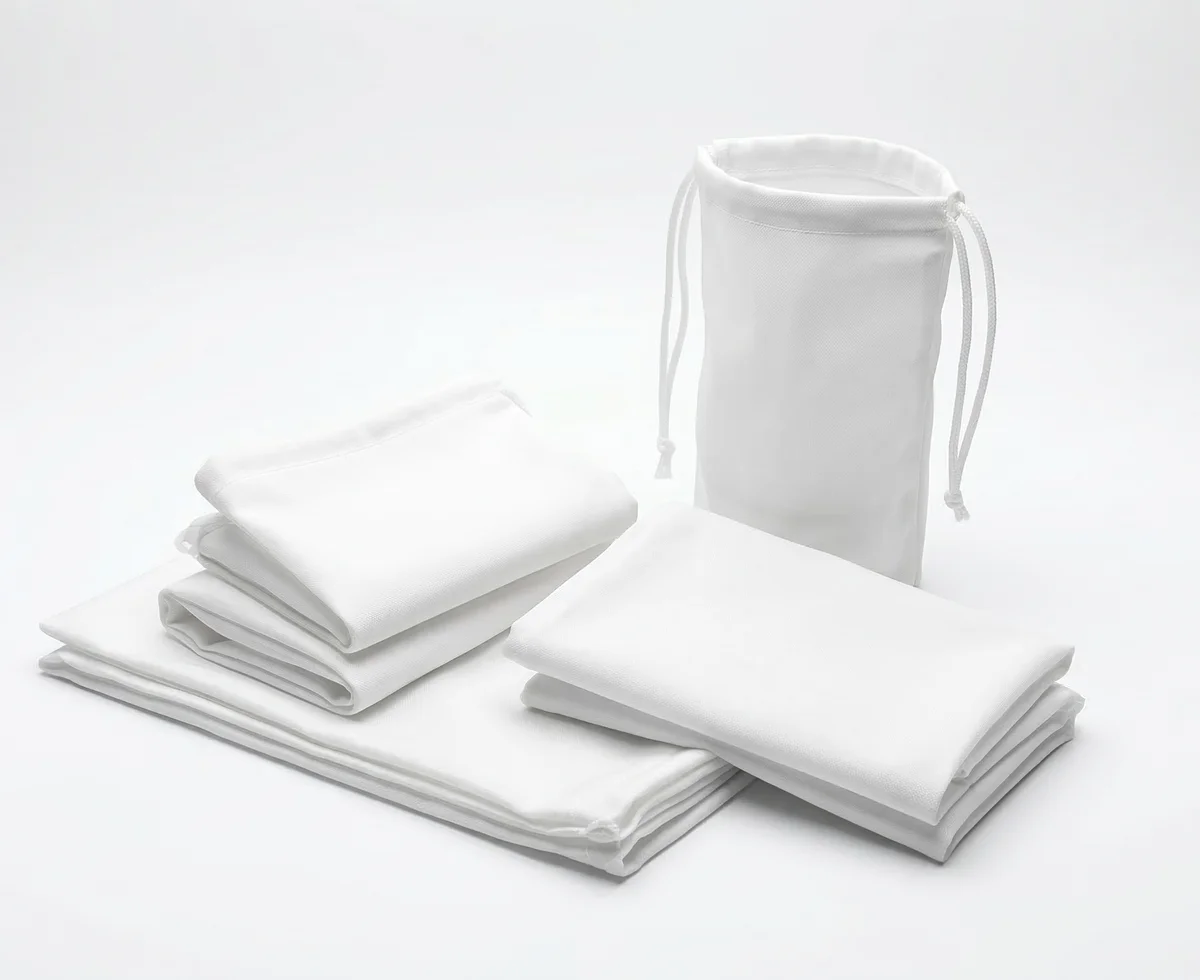
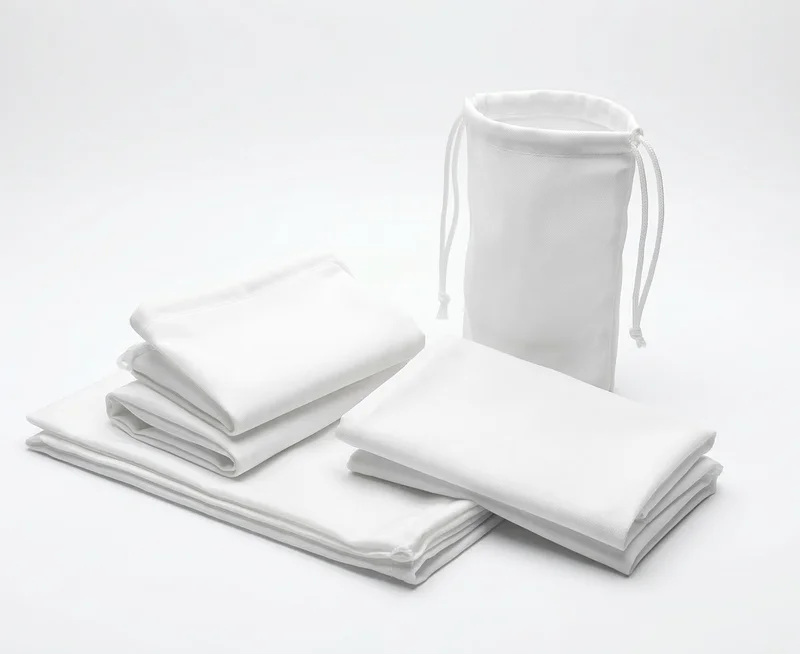
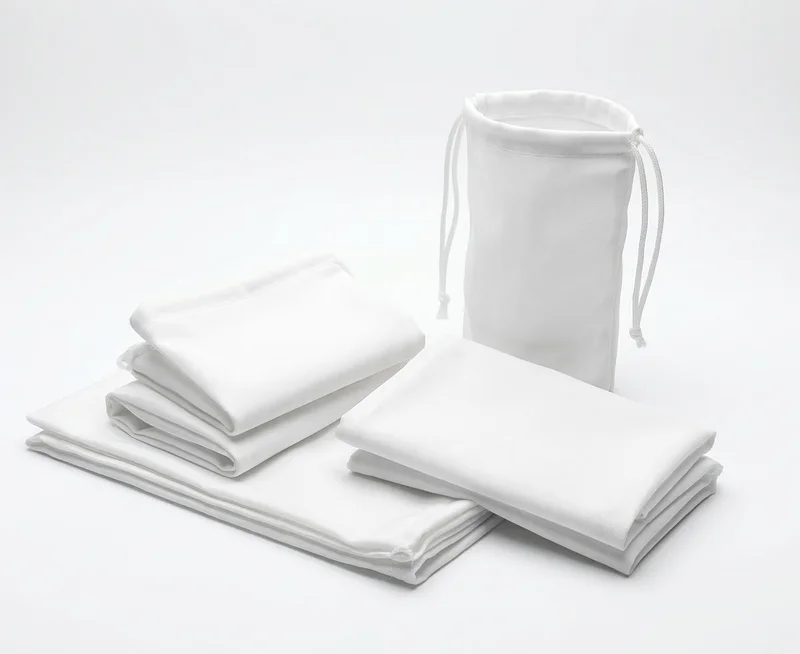
Woven from high-quality nylon filament material, it has precise and fixed filter pore sizes. The structure is strong and the whole sewing process is used to ensure that the bottom is pressure-resistant. It provides excellent flow performance and low pressure difference characteristics, and is especially suitable for handling high-viscosity fluids or large-volume pre-filtration needs. Available in various accuracies from 50µm to 400µm, equipped with PP or stainless steel lifting rings, compatible with various standard bag filters.

  • Woven from high-quality nylon yarn with precise, fixed pore size
  • Strong construction with fully sewn seams for a pressure-resistant base
  • Excellent flow performance and low pressure drop
  • Especially suited to viscous fluids and bulk pre-filtration
  • 50µm to 400µm ratings with PP or stainless-steel handle rings
Micron rating
50 – 400 µm
Bag size code
Standard #1 / #2 / #3 / #4, interchangea
Effective filtration area
Approximately 0.08–0.50 m² per bag depen
Recommended flow rate
The open weave gives very low differenti
Viscous fluid filtration
Bulk liquid pre-filtration
Standard bag housing consumable
Sieving applications needing precise mesh
Filter media / membrane
Woven nylon (PA6 / PA66) monofilament mesh. Unlike a felt, the aperture is set by the weave — it does not deform under differential pressure and the mesh sheds no fibres.
Micron rating
50 / 75 / 100 / 150 / 200 / 250 / 300 / 400 µm
Removal efficiency
Fixed-aperture surface filtration: particles larger than the weave are stopped almost completely and everything smaller passes. The separation curve is far sharper than a depth medium, which suits duties that need a clean particle-size cut.
Bag size code
Standard #1 / #2 / #3 / #4, interchangeable with mainstream bag housings; custom sizes made to the housing bore
Effective filtration area
Approximately 0.08–0.50 m² per bag depending on size code — see the dimension table below
Collar / ring type
A moulded PP collar as standard or a 304 / 316 stainless ring; both survive repeated washing and reuse
Seam construction
Fully sewn, with a reinforced bottom seam to take the impact load of viscous fluids and high-volume pre-filtration
Recommended flow rate
The open weave gives very low differential, so the top of the recommended range applies — about 40 m³/h for a #2 bag. Scale by actual viscosity on viscous duties.
Max operating temperature
120 °C dry. Keep continuous immersion in hot water or humid heat below 100 °C, since nylon loses strength once it takes up moisture.
Max forward differential pressure
0.15 MPa (1.5 bar), used inside a standard support basket
Recommended change-out ΔP
Wash or replace once the differential has risen 0.10 MPa (1 bar) above the clean baseline. Monofilament mesh can be back-washed and reused several times, which is its main cost advantage over felt.
Silicone treatment
Silicone-free, so it can be used ahead of coating and plating lines
Regulatory & validation
Nylon does not stand up to strong acids or oxidisers — switch to PP or PTFE media on acid duties (see the compatibility table below). FDA 21 CFR grade mesh can be specified for food contact.

Note: actual compatibility and service life depend on chemical concentration, temperature, flow, differential pressure, upstream contamination load and housing design. Validate under your real process conditions.

Values shown are typical for this product class; actual supply specification follows the quotation and sample datasheet.

Example part number
JY
-BG41
-02
-M100
-PS
JY
JIUNYUAN Technology
BG41
Woven nylon (PA6 / PA66) monofilament mesh: fixed aperture, back-washable and reusable
02
Size 2 (Ø180 × 810 mm)
M100
100 µm
PS
PP collar | sewn with reinforced base
Selectable options by segment
01

Size code

CodeSpecification
01Size 1 (Ø180 × 410 mm)
02Size 2 (Ø180 × 810 mm)
03Size 3 (Ø105 × 230 mm)
04Size 4 (Ø105 × 380 mm)
CUCustom size (to the housing bore or the anode plate)
02

Retention rating

CodeSpecification
M05050 µm
M07575 µm
M100100 µm
M150150 µm
M200200 µm
M250250 µm
M300300 µm
M400400 µm
03

Collar

CodeSpecification
PPP plastic collar (standard)
S304 stainless collar
L316L stainless collar
04

Seam

CodeSpecification
SSewn with reinforced base

For fine ratings (5 µm and below) choose the welded seam — needle holes in a sewn seam create a bypass path.

Not every combination is a stock item; uncommon combinations are made to order. Confirm with JIUNYUAN sales before ordering.

Standard filter bag
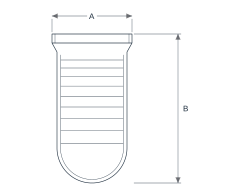
Standard filter bagDrawing shows one representative size; the table below gives the exact diameter and length of each code.
Size codeDiameterLengthEffective areaRecommended flow
#1Ø180 mm410 mm0.25 m²20 m³/h
#2Ø180 mm810 mm0.50 m²40 m³/h
#3Ø105 mm230 mm0.08 m²6 m³/h
#4Ø105 mm380 mm0.13 m²10 m³/h

These size codes are the industry-wide bag standard and interchange with mainstream housings. Dimensions are nominal (±10 mm); area is the geometric sum of the bag wall and base; recommended flow assumes clean water (1 cP), a clean bag and under 20 kPa initial differential — roughly 80 m³/h per m² of media.

ChemicalNylon 66PPEPDM
— 酸 —
Glacial acetic acidNRRR
Hydrochloric acid, conc.NRRNR
Hydrochloric acid, 6NNRRNR
Nitric acid, conc.NRRNR
Nitric acid, 6NNRRNR
Phosphoric acid, conc.NRRR
Sulfuric acid, conc.NRRNR
Hydrofluoric acid, 6NNRNRNR
— 鹼 —
Ammonium hydroxide, 1NRRR
Ammonium hydroxide, 3NRRLR
Potassium hydroxide, 3NRRR
Sodium hydroxide, 3NRRR
Sodium hydroxide, 6NRRR
— 醇類 —
Amyl alcoholRRR
Benzyl alcoholRRR
ButanolRRR
Isopropyl alcohol (IPA)RRR
MethanolLRRR
— 酮類 —
AcetoneRRR
CyclohexanoneRNR
Methyl ethyl ketone (MEK)LRRR
Methyl isobutyl ketone (MIBK)LRRR
— 油類 —
Cottonseed oilRRR
Lubricating oilRRR
Peanut oilRRR
Sesame oilRRR
— 芳香烴 —
BenzeneLRNRNR
TolueneNRNRNR
XyleneLRNRNR
— 鹵代烴 —
Carbon tetrachlorideLRLRNR
ChloroformLRLRNR
Ethylene dichlorideLRLRNR
Freon TFRLRNR
Freon TMCLRLRNR
DichloromethaneNRLRNR
PerchloroethyleneLRNR
TrichloroethyleneLRLRNR
— 二醇類 —
Ethylene glycolRRR
GlycerolRRR
Propylene glycolRRR
— 醚類 —
Diethyl etherNRLRNR
Isopropyl etherRNR
DioxaneRRNR
Tetrahydrofuran (THF)NRLRNR
— 酯類 —
Amyl acetateLRRR
Butyl acetateLRLRR
Cellosolve acetateRR
Ethyl acetateLRLRR
Methyl acetateLRRR
Isopropyl acetateRR
— 其他 —
AnilineLRLRR
Dimethylformamide (DMF)RRR
Formaldehyde, 37%RRR
GasolineLRLRR
Hexane (anhydrous)LRNR
KeroseneRNR
PhenolRRNR
PyridineLRLRR
WaterRRR
AcetonitrileLRLRR
  • R = resistant
  • LR = limited resistance, validate on site
  • NR = not resistant
  • — = no data

Ratings are general material-level guidance, not guarantees. Actual concentration, temperature, exposure time and mechanical stress all affect the outcome — validate with samples under your real process conditions before adoption.

Where it fits

The nylon bag handles viscous fluids and bulk pre-filtration, and sieving duties that need a clean particle-size cut. The difference from felt is one of principle: felt stores particles within its thickness, while monofilament mesh stops them at the surface. This bag sieves rather than absorbs.

Key characteristics

The aperture is set by the weave, so it does not deform under differential pressure and the mesh sheds no fibres — for a process that cannot tolerate shed material downstream, that matters more than the rating number itself. The separation curve is far sharper than a depth medium: everything larger than the weave is stopped, everything smaller passes, and the cut is clean.

The open weave gives very low differential, so the top of the recommended flow range applies at a given size. More importantly it can be back-washed and reused several times, which is its most tangible cost advantage over felt — provided the process permits washing and the labour costs less than a new bag.

Choosing between options

Among the three bags that run in a housing basket:

ItemHigh-strength nylon bag (this)Standard liquid filter bagHigh-performance absolute bag
MechanismFixed-aperture monofilament surface filtrationNeedle-felt depthMelt-blown graded-pore depth
Rating range50 – 400 µm0.5 – 1000 µm0.2 – 20 µm
DifferentialLowest; top of the recommended flow appliesModerateClearly below single-layer felt at the same rating
ReusableBack-washable and reusable several timesNormally single useNormally single use

Operation & change-out

Fully sewn with a reinforced bottom seam, it takes the impact load of viscous fluids. Wash or replace once the differential reaches the threshold, and check the mesh for damage and distortion before a washed bag goes back in. The dry temperature limit is generous, but continuous immersion in hot water or humid heat must be derated — nylon loses strength once it takes up moisture.

!
Nylon does not stand up to strong acids or oxidisers. Switch to PP or PTFE media on acid duty — same dimensions, direct replacement. Do not let a nylon bag run acid on the grounds that it is only a prefilter: when it splits, the whole accumulated load reaches downstream at once.
What fluids is the nylon bag good for?
With its excellent flow and low pressure drop, it is especially suited to viscous fluids and applications requiring high-volume bulk pre-filtration.
What is the pore accuracy and range?
Woven from nylon yarn, it has a precise, fixed pore size and is offered in ratings from 50µm to 400µm.
What rings does it use?
It comes with a PP or stainless-steel handle ring and is compatible with standard bag filter housings, while its fully sewn pressure-resistant base ensures reliable use.