
Home/Products/Hollow Fiber Membrane Filters/Polysulfone Hollow Fiber Filter
Polysulfone Hollow Fiber Filter

Polysulfone Hollow Fiber Filter

Product ID: follow-fiber-filter-polysulfone|Polysulfone

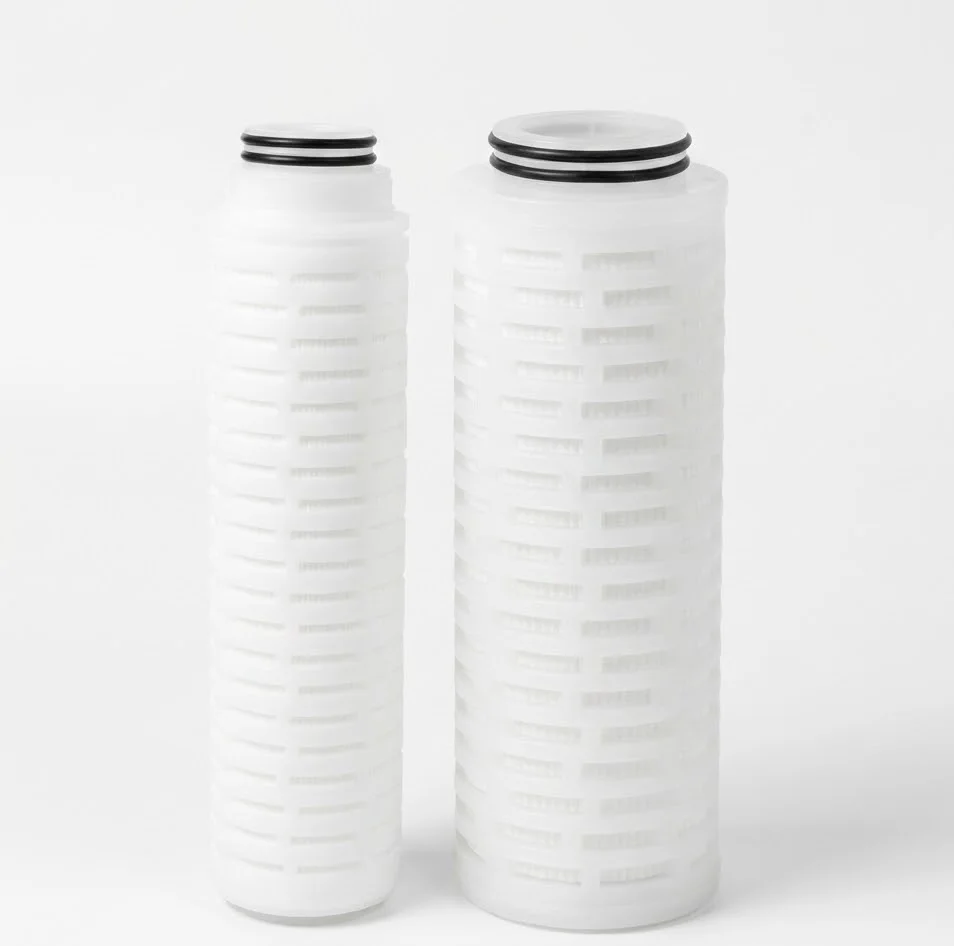
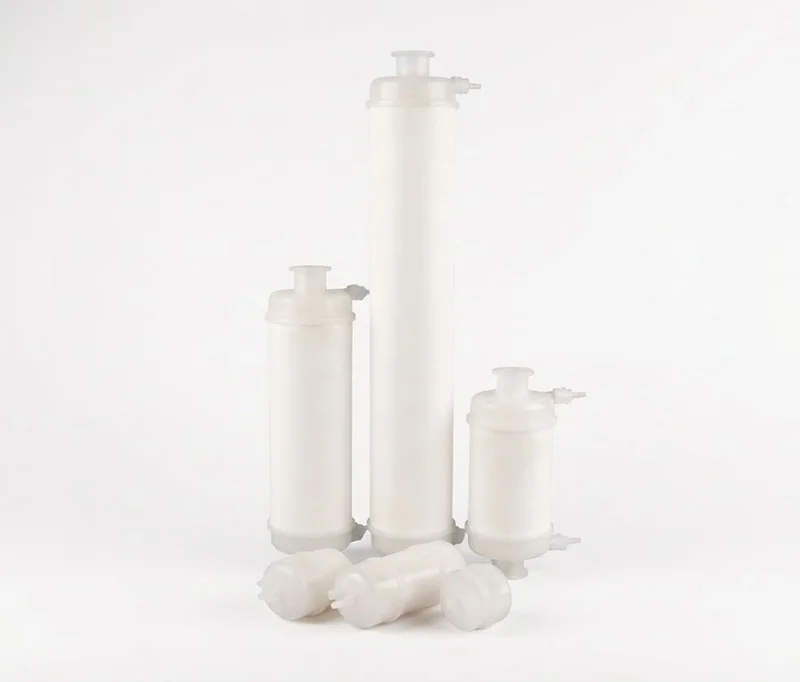
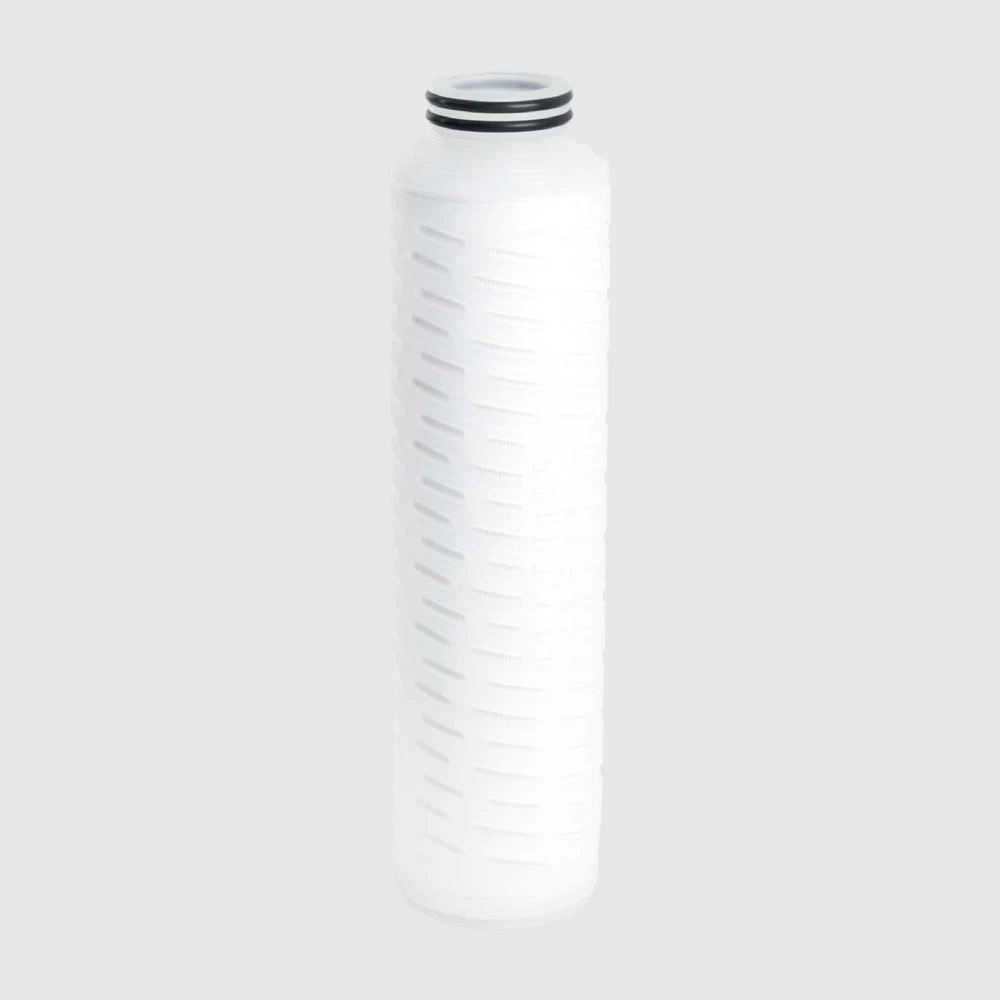
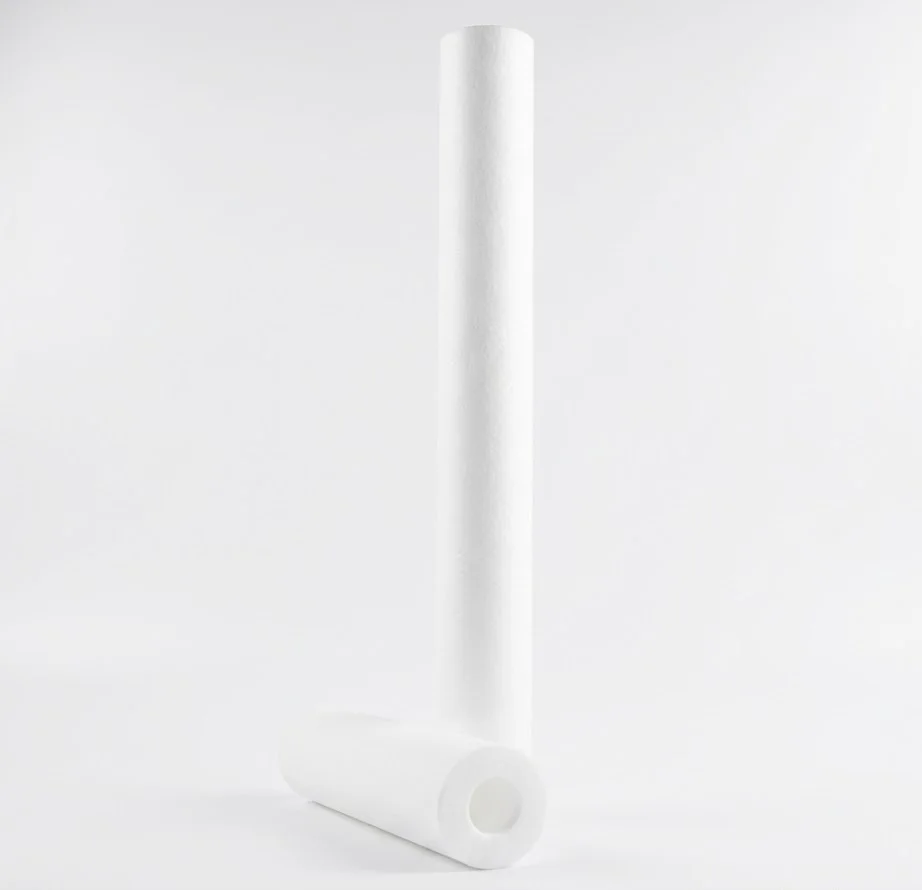
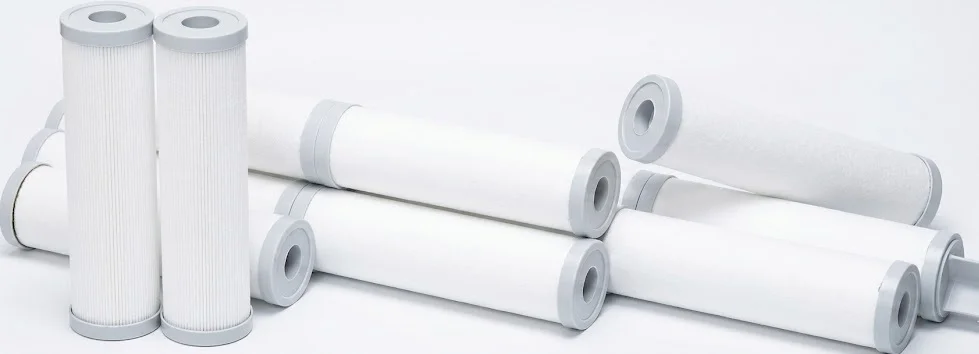
High-efficiency hollow fiber membrane specially designed for precision filtration. Made of highly heat-resistant and chemical-resistant polystyrene (PSF/PS) material, it provides an absolute filtration accuracy of 0.04µm to 0.8µm. It has excellent porosity and specific surface area, and its lifespan is 2-3 times that of traditional pleated filters. It is the best choice for biotechnology pharmaceuticals, food and beverages (sake/tea) and pure water refining.

  • Heat- and chemical-resistant polysulfone (PSF/PS) material
  • 0.04µm to 0.8µm absolute filtration rating
  • Excellent porosity and specific surface area
  • Service life 2-3x that of conventional pleated cartridges
  • Hollow fiber membrane structure for precision filtration
Micron rating
0.04 – 0.8 µm
Max operating temperature
80 °C
Nominal lengths
10" / 20" / 30" / 40"
Removal efficiency
Absolute rating.
Biopharmaceutical filtration
Food & beverage (sake / tea)
Pure water polishing
Precision filtration
Filter media / membrane
Polysulfone (PSF / PS) hollow fibre membrane, heat- and chemical-resistant. The hollow fibre geometry gives excellent porosity and specific surface area, which is where the extended service life comes from.
Micron rating
0.04 – 0.8 µm
Removal efficiency
Absolute rating.
Nominal lengths
10" / 20" / 30" / 40"
End cap / connection
Single open end, 226 flat with gasket
Max operating temperature
80 °C
Recommended change-out ΔP
Service life is roughly 2–3× that of a conventional pleated cartridge. Replace when ΔP rises appreciably or throughput drops off.

Note: actual compatibility and service life depend on chemical concentration, temperature, flow, differential pressure, upstream contamination load and housing design. Validate under your real process conditions.

Values shown are typical for this product class; actual supply specification follows the quotation and sample datasheet.

Example part number
JY
-FWB1
-P20
-20
-T6
JY
JIUNYUAN Technology
FWB1
Polysulfone hollow fibre membrane, absolute rated, with roughly 2–3× the life of a conventional pleated cartridge
P20
0.2 µm
20
20"
T6
Single open end, 226 flat with gasket
Selectable options by segment
01

Retention rating

CodeSpecification
R4040 nm
P100.1 µm
P200.2 µm
P450.45 µm
P800.8 µm

The specification lists no nominal outer diameter, so this series has no diameter segment — the rating follows the series code directly. Confirm housing compatibility from the 226 end-cap dimensions.

02

Length

CodeSpecification
1010"
2020"
3030"
4040"
03

End cap

CodeSpecification
T6226 / flat

The specification lists only the single-open-end 226 flat with gasket, so this segment is fixed at T6.

Not every combination is a stock item; uncommon combinations are made to order. Confirm with JIUNYUAN sales before ordering.

ChemicalPES
— 酸 —
Glacial acetic acidNR
Hydrochloric acid, conc.R
Hydrochloric acid, 6NR
Nitric acid, conc.
Nitric acid, 6N
Phosphoric acid, conc.
Sulfuric acid, conc.NR
Hydrofluoric acid, 6N
— 鹼 —
Ammonium hydroxide, 1NR
Ammonium hydroxide, 3NR
Potassium hydroxide, 3NR
Sodium hydroxide, 3NR
Sodium hydroxide, 6NR
— 醇類 —
Amyl alcoholR
Benzyl alcoholR
ButanolR
Isopropyl alcohol (IPA)R
MethanolR
— 酮類 —
AcetoneNR
CyclohexanoneNR
Methyl ethyl ketone (MEK)
Methyl isobutyl ketone (MIBK)NR
— 油類 —
Cottonseed oil
Lubricating oilNR
Peanut oil
Sesame oilR
— 芳香烴 —
BenzeneLR
TolueneNR
XyleneNR
— 鹵代烴 —
Carbon tetrachlorideLR
ChloroformNR
Ethylene dichlorideNR
Freon TFR
Freon TMCNR
DichloromethaneNR
PerchloroethyleneLR
TrichloroethyleneLR
— 二醇類 —
Ethylene glycolLR
GlycerolLR
Propylene glycolLR
— 醚類 —
Diethyl etherR
Isopropyl ether
Dioxane
Tetrahydrofuran (THF)NR
— 酯類 —
Amyl acetate
Butyl acetate
Cellosolve acetateR
Ethyl acetateLR
Methyl acetateNR
Isopropyl acetateR
— 其他 —
AnilineNR
Dimethylformamide (DMF)NR
Formaldehyde, 37%R
GasolineR
Hexane (anhydrous)LR
KeroseneR
PhenolNR
PyridineNR
WaterR
AcetonitrileR
  • R = resistant
  • LR = limited resistance, validate on site
  • NR = not resistant
  • — = no data

Ratings are general material-level guidance, not guarantees. Actual concentration, temperature, exposure time and mechanical stress all affect the outcome — validate with samples under your real process conditions before adoption.

Where it fits

A hollow fibre cartridge is used for fine filtration in purified water polishing, biopharma and beverage production (sake, tea). Its niche is duty where change-out frequency is the constraint — when the bottleneck on a line is not retention but the number of shutdowns to swap elements, the hollow fibre geometry starts to pay.

Key characteristics

Hollow fibre rolls the membrane into individual fine tubes, packing far more membrane area into the same cartridge envelope than pleated flat sheet, which raises both porosity and specific surface area. Service life is typically 2–3 times that of a conventional pleated cartridge — a consequence of the geometry, not of the polymer.

The membrane is polysulfone (PSF / PS), with good heat and chemical resistance and an 80 °C ceiling. The 0.04 – 0.8 µm range is an absolute rating, and the end cap is a single open end 226 flat with gasket.

Choosing between options

Three ways to do fine filtration, differing in construction:

ConstructionMembraneRating rangeWhy choose it
Hollow fibre (this)Polysulfone PSF / PS0.04 – 0.8 µmLong life, when change-out frequency is the pain point
PS pleatedAsymmetric polysulfone0.05 – 1 µmLow protein binding plus 121 °C steam sterilisation
PES pleatedAsymmetric polyethersulfone0.05 – 5 µmWidest choice of ratings and sterilising-grade validation

Operation & change-out

Replace when ΔP rises appreciably or throughput drops off. Hollow fibre channels are narrow, so without adequate pre-filtration the life advantage is eaten by coarse solids — design it in with a depth or pleated pre-filter.

i
Values for this product are typical for its class; actual supply specification follows the quotation and sample datasheet.
How long does the hollow fiber filter last?
Thanks to its excellent porosity and specific surface area, its service life is about 2-3 times that of conventional pleated cartridges, reducing change-out frequency and consumable cost.
What is the filtration rating range?
It offers an absolute rating from 0.04µm to 0.8µm, suiting precision filtration and pure-water polishing where high purity is required.
Which industries is it suited to?
Made of heat- and chemical-resistant polysulfone, it is widely used in biopharma, food & beverage (such as sake and tea) and pure-water polishing processes.

Further Reading

2026-05-04

Hollow Fiber Membrane Material Selection for Chemical Process Filtration

The five principal hollow fiber membrane materials — PES, PVDF, PTFE, PSU/PESU, and nylon — each occupy a distinct and non-interchangeable chemical service domain. This article applies a four-step selection logic (solvent compatibility first, then pH, temperature, and sterilization mode) to ten representative chemical application scenarios, including photoresist solvents, concentrated KOH/NaOH, dilute HF, biopharmaceutical buffers, and DI water polishing, enabling engineers to narrow material candidates quickly and avoid the systematic failures caused by incorrect membrane specification.

2026-05-04

Hollow Fiber Membranes for Precision Chemical Filtration: Advantages and Hard Limits

Hollow fiber membranes offer chemical process engineers more than 10× the filtration area of pleated cartridges in the same housing, low transmembrane pressure, and in-line integrity testing capability. This article examines inside-out versus outside-in flow direction selection, UF (1–100 nm) and MF (0.1–0.45 µm) pore size distinctions, and four hard operational limits: high-solids fiber plugging, swelling-prone solvent incompatibility, backpressure surge fiber rupture, and dead-end concentrate build-up — with a detailed scenario table matching chemical applications to the correct filtration approach.

2026-04-22

Polysulfone Family Filters: PPSU vs PSU vs PES Compared

PSU, PPSU, and PES share the same –SO₂– backbone but differ in the linker — yielding very different personalities. This article walks through a 14-spec comparison, common pitfalls, and a cross-comparison with PVDF/Nylon/MCE.