


Particle Challenge Test

Particle Challenge Test

Product ID: filter-testing-retention-test-particle-challenge|Particle Challenge Test

Professional filter filtration efficiency verification services. Highly monodisperse standard particles such as SiO2 (50/100nm), Gold (5/10/20/30nm) and Fe2O3 (15nm) are provided as challenge particles. Calculation of retention efficiency (Retention Efficiency), LRV and dirt holding capacity assessment for semiconductor-grade filter elements to help customers accurately define filter element specifications to meet 7nm/5nm/3nm process requirements.

  • SiO2 (50/100 nm) silica standard particle challenge
  • Gold (5/10/20/30 nm) nanoparticle challenge
  • Fe2O3 (15 nm) iron-oxide standard particle challenge
  • Highly monodisperse particles ensure reproducible results
  • Combined retention efficiency, LRV and capacity assessment
  • Spec definition aligned to 7/5/3 nm process needs
Semiconductor-grade cartridge retention validation
Filter selection for 7/5/3 nm advanced nodes
Precise cartridge specification and benchmarking
Dirt-holding capacity (service life) assessment
Monodisperse standard particle challenge outsourcing
Service scope
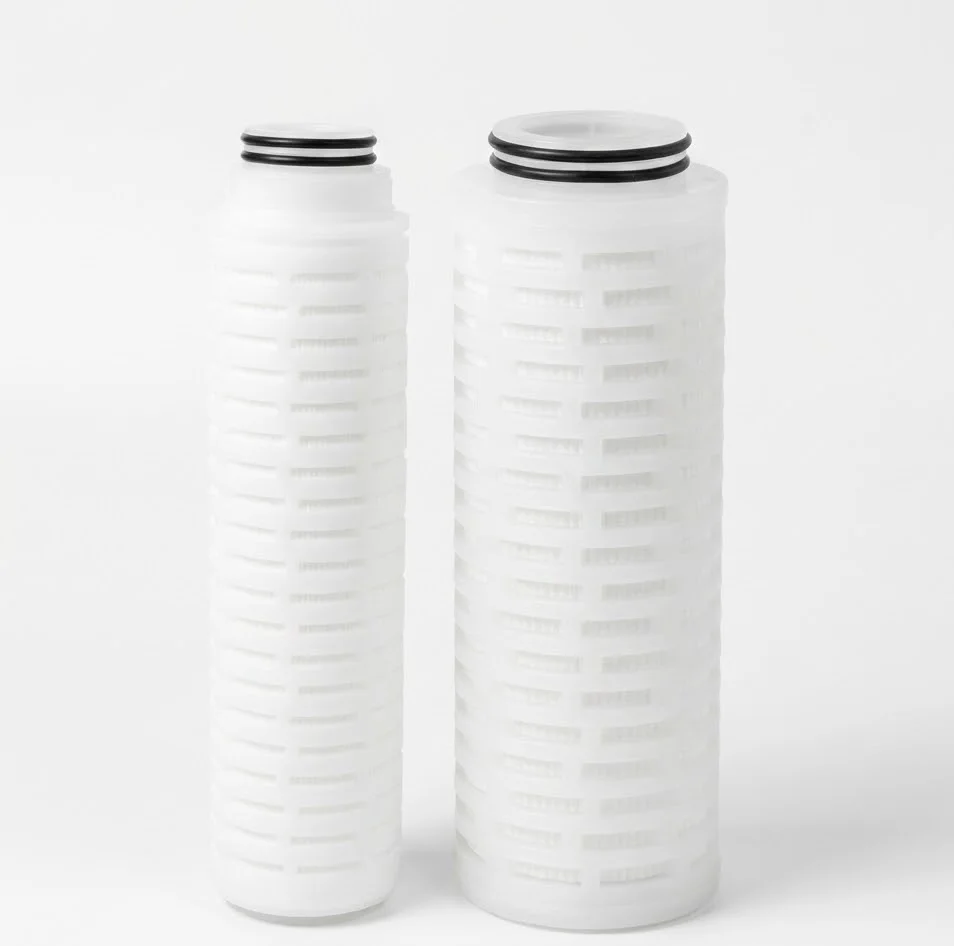
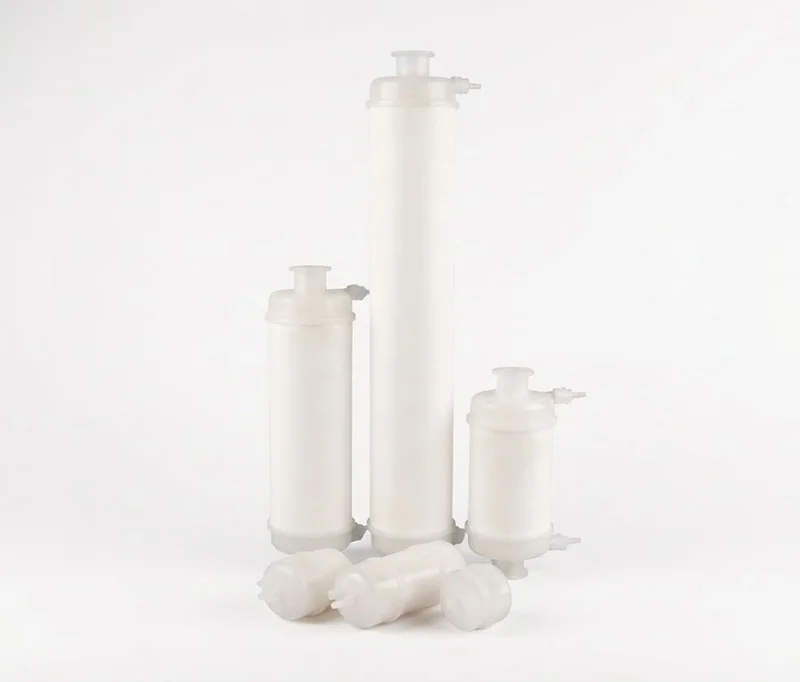
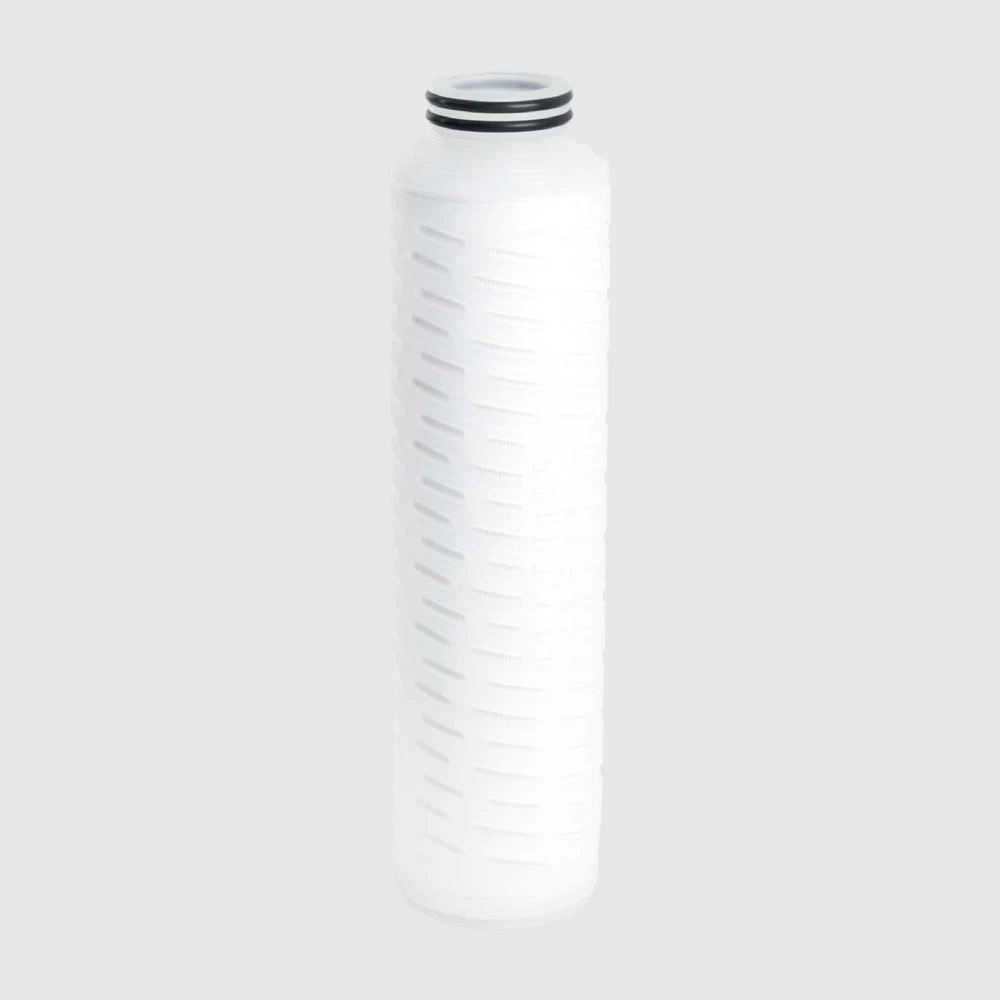
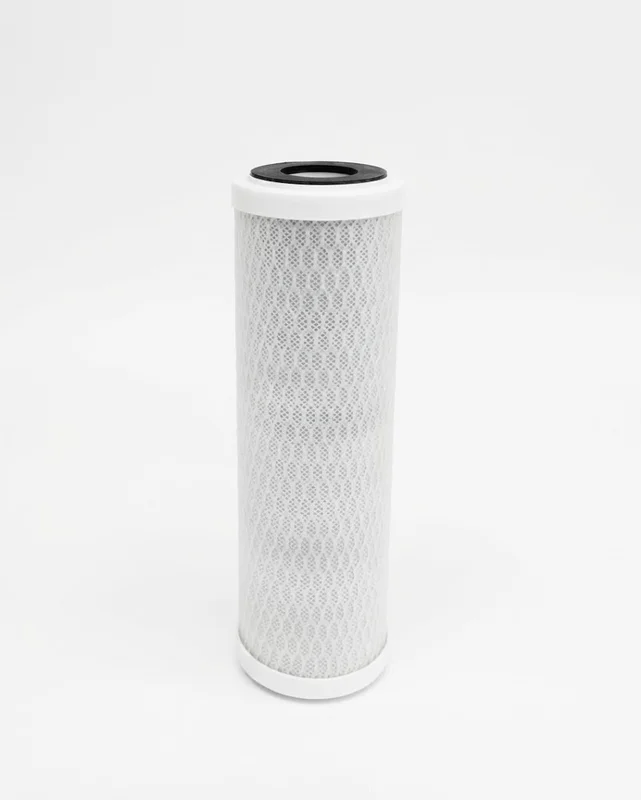
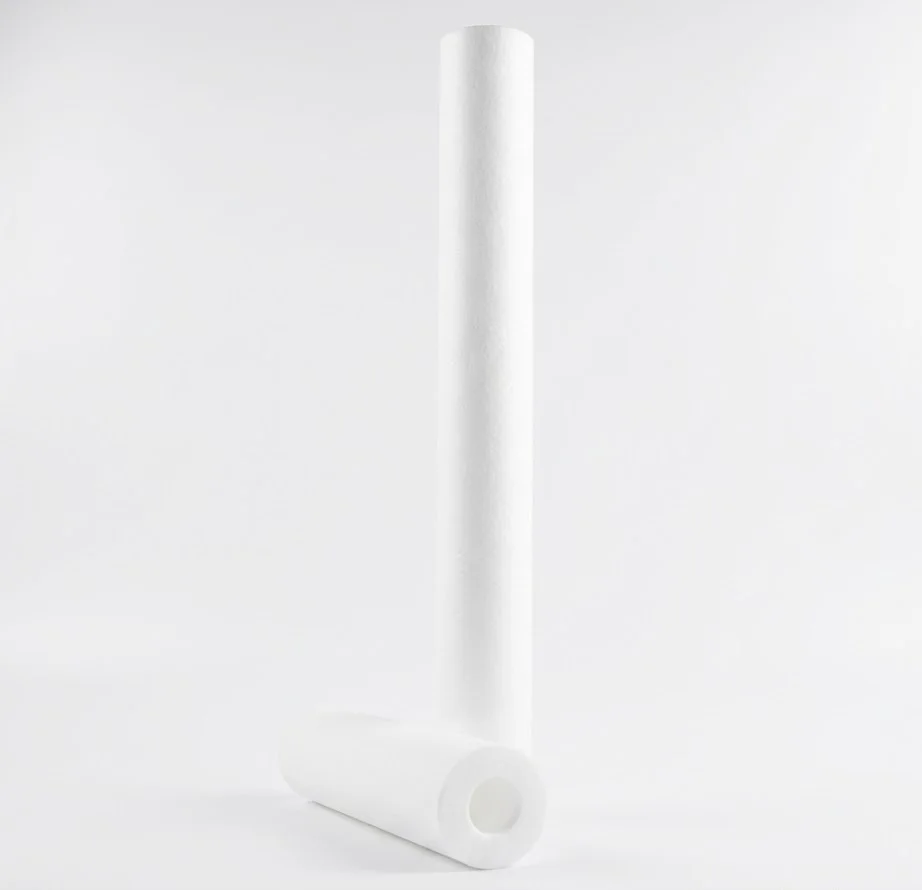
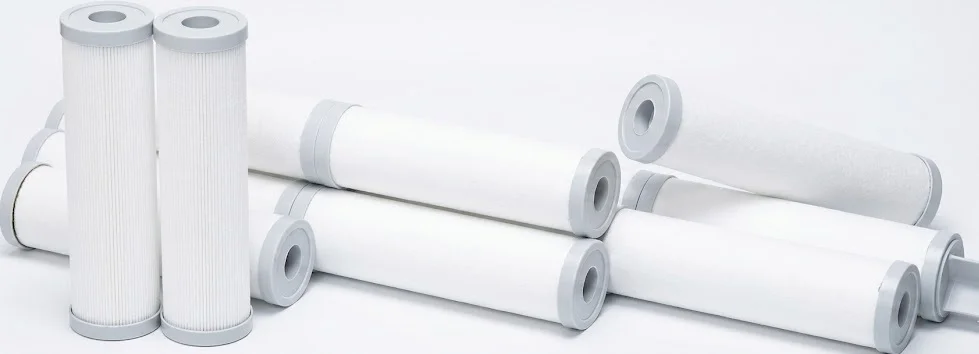
A complete cartridge performance platform — retention, integrity, flow rate and dirt-holding capacity in one workup. Semiconductor-grade cartridges are challenged with highly monodisperse standard particles so specifications and change-out intervals can be defined precisely for the particle control demanded at the 7 nm / 5 nm / 3 nm nodes. Both new and used cartridges are accepted.
Test method / standard
Particle challenge combined with cartridge performance testing: SiO₂ (50 / 100 nm), gold (5 / 10 / 20 / 30 nm) and Fe₂O₃ (15 nm) standard particles are used to calculate retention efficiency and LRV, while integrity, flow-rate and dirt-holding (loading capacity) testing characterise service life. Pore size distribution and pore morphology can be cross-checked against the nominal rating in the same run.
Instrumentation
DMA-CPC and ICP-MS / ICP-QQQ for upstream and downstream particle concentration; a custom-built integrity tester (all sizes and formats; air pressure at the 30 psi standard or per customer requirement); a porometer (2 nm – 500 µm, capillary flow or liquid-liquid porometry); and SEM (resolution < 2 nm, both top-view and cross-section imaging).
Sample requirement
Cartridges of the same model, new or used; a dirt-holding assessment is best run on an additional cartridge from the same batch. Please provide the nominal rating, end-cap style and operating flow range, and state the process chemistry the cartridge contacts.
Deliverables
A combined report covering retention efficiency and LRV, integrity test results, flow versus differential pressure data and the dirt-holding assessment, optionally with pore size distribution curves and SEM top-view / cross-section images as supporting evidence.
Standard lead time
Confirmed with the quotation, based on scope and sample count. Standard flow: requirement received → samples received → joint review → quotation → project start → laboratory testing → report and walkthrough → customer feedback → additional checks → closure; samples are held for one month after closure before disposal.
Regulatory & validation
Integrity testing uses the 30 psi air-pressure standard, or the condition the customer specifies; cartridges from the same batch are compared under identical challenge conditions so results can be used directly for specification and selection.
Challenge particleAvailable sizes
SiO₂50 / 100 nm
Gold (Au)5 / 10 / 20 / 30 nm
Fe₂O₃15 nm

All are highly monodisperse standard particles for reproducible challenges; detection is by DMA-CPC or ICP-MS / ICP-QQQ depending on particle type.

Note: actual compatibility and service life depend on chemical concentration, temperature, flow, differential pressure, upstream contamination load and housing design. Validate under your real process conditions.

Where it fits

When the question is not only whether a filter holds back particles but also how long it lasts, whether its structure is intact and whether its pressure drop is reasonable, this is the service. It is a complete cartridge performance platform covering retention, integrity, flow rate and dirt-holding capacity in one workup, so specifications and change-out intervals can be defined precisely. New and used cartridges are both accepted.

Key characteristics

Challenges use highly monodisperse standard particles — silica, gold and iron oxide, with the available sizes listed in the specification table above. Monodispersity is the precondition for reproducibility: if the particle size distribution is itself broad, the retention curve cannot separate the behaviour of the filter from the behaviour of the particles.

Pore size distribution and pore morphology can be cross-checked against the nominal rating in the same run. The porometer reads from 2 nm to 500 µm, and SEM at better than 2 nm resolution captures both top-view and cross-section images — when retention data and the nominal rating disagree, the cross-section often shows why straight away.

Integrity testing runs on a custom-built system covering all sizes and formats, with air pressure at the 30 psi standard or the condition the customer specifies. Cartridges from the same batch are compared under identical challenge conditions, which is what makes the results usable for specification and selection.

Choosing between options

Against the two neighbouring services, the split is capability versus cleanliness:

ServiceWhat is measuredTypical trigger
Cartridge performance testing (this)Retention, integrity, flow and dirt-holding togetherDefining specifications and change-out intervals, advanced-node selection
Nanoparticle retention testingThe nanometre-range retention curve onlyConfirming the true filtration grade
Filter cleanliness testingOrganic extractables, metal extractables, particle sheddingIncoming inspection and contamination tracing

Operation & change-out

What to send: cartridges of the same model, new or used. For a dirt-holding assessment, include an additional cartridge from the same batch, since that test runs the element to exhaustion. Please provide the nominal rating, end-cap style and operating flow range, and state the process chemistry the cartridge contacts. Turnaround is confirmed with the quotation from scope and sample count; samples are held for one month after closure.

Sending a new and a used cartridge together is the most useful submission: only a side-by-side comparison under one set of conditions separates "that is how the specification is" from "it degraded in service". A used cartridge on its own gives data with no baseline.
What standard challenge particles and sizes are available?
Three highly monodisperse standard particle families: SiO2 (50/100 nm), Gold (5/10/20/30 nm) and Fe2O3 (15 nm). Size is selected to match your cartridge's nominal rating and target process, simulating real particle challenges with reproducible results.
Can the test assess cartridge service life?
Yes. Beyond calculating retention efficiency and LRV, the service includes dirt-holding capacity assessment, helping you understand the cartridge's loading capacity and service life under real conditions for change-out and cost planning.
How does it support advanced-node selection?
We perform objective retention efficiency and LRV measurement on semiconductor-grade cartridges, helping you precisely define specifications and confirm whether they meet the strict particle-control demands of 7/5/3 nm processes, reducing selection risk.