


Home/Products/Validation & Reclaim Services/ICP-MS Metal Cleanliness Analysis
ICP-MS Metal Cleanliness Analysis

ICP-MS Metal Cleanliness Analysis

Product ID: icp-ms-analysis-service|Metal Cleanliness

ICP-MS (Inductively Coupled Plasma Mass Spectrometer) OEM analysis services designed specifically for advanced semiconductor processes, high-purity chemicals and battery materials. Equipped with the industry's top tandem mass spectrometry (ICP-QQQ) technology, it effectively eliminates polyatomic interference and pushes the detection limit to the ppt (ng/L) level; actual limits vary by element and sample matrix and are confirmed during method development. The entire laboratory is equipped with Class 100/1000 clean rooms for sample preprocessing to eliminate environmental background pollution. We provide exclusive method development for complex chemicals such as IPA, PGMEA, strong acids and alkalis, and provide the most authoritative data endorsement for your product yield or filter element performance confirmation.

  • Industry-leading tandem mass spectrometry (ICP-QQQ)
  • Eliminates polyatomic interference for reliable data
  • Detection limits at the ppt (ng/L) level; actual limits vary by element and matrix
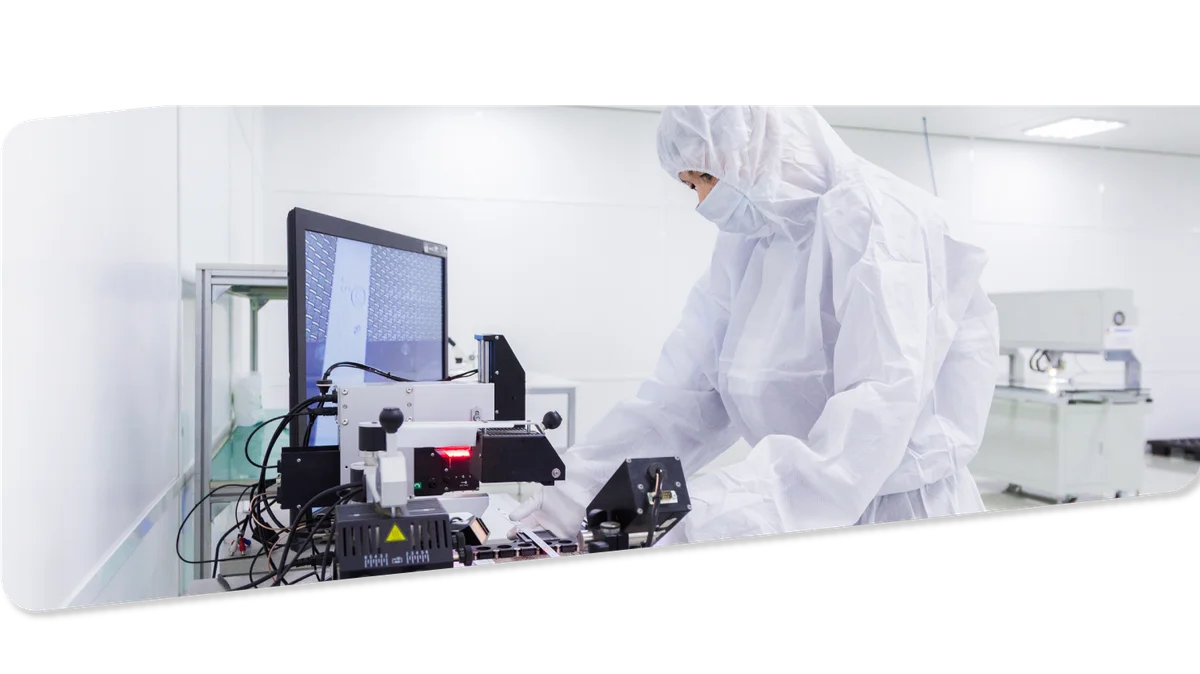
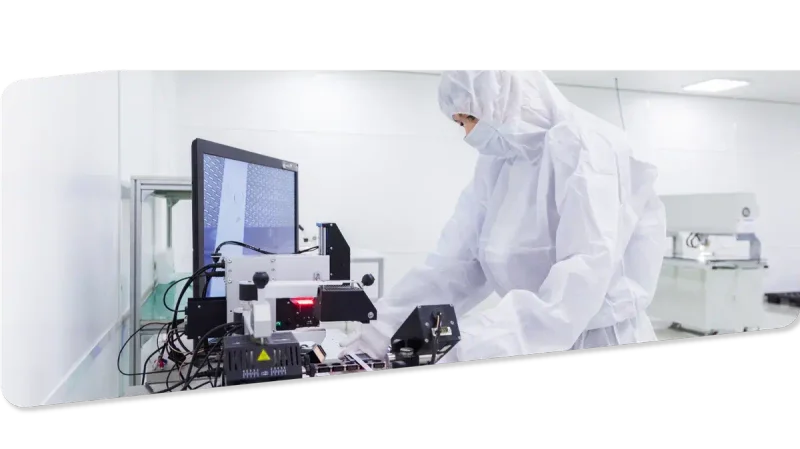
  • Sample preparation in Class 100/1000 cleanrooms
  • Prevents environmental background contamination
  • Custom method development for IPA, PGMEA, strong acids/bases
Metal cleanliness analysis for advanced semiconductor nodes
Trace-metal testing of high-purity chemicals
Metal-impurity analysis of battery materials
Metal-background data for filter performance validation
Yield-related metal contamination tracing
Service scope
Ultra-trace metal element analysis, not limited to filters: high-purity chemicals, process chemistries, battery materials and filter extraction liquors are all accepted, covering the common 30 metals plus difficult elements such as silicon, boron, sulfur and phosphorus. Used for metal cleanliness checks on advanced nodes, yield contamination tracing, and metal-background data supporting filter performance validation.
Test method / standard
Quantitative ICP-MS analysis. Tandem ICP-QQQ mode removes polyatomic and matrix interference to make low-level data reliable; for complex matrices such as IPA, PGMEA and strong acids or bases, dedicated method development and verification is performed before the target element list is quantified.
Instrumentation
ICP-MS / ICP-QQQ with a detection limit on the order of 1 ppt (the achievable limit varies by element and matrix and is stated at method verification). Extended items such as wafer-surface metals by VPD-ICP-MS are run jointly with partner analytical laboratories nationwide.
Sample requirement
Liquid samples in their original packaging or a clean container. Please provide the matrix composition (UPW, IPA, PGMEA, strong acids or bases, etc.), the target element list and the detection level required; unusual matrices and first-time submissions are best preceded by method development.
Deliverables
A per-element concentration table with element-by-element detection limits, a description of the analytical method and interference handling, and a record of the sample preparation environment; multi-batch comparison summaries are available on request.
Standard lead time
Confirmed with the quotation, based on scope and sample count. Standard flow: requirement received → samples received → joint review → quotation → project start → laboratory testing → report and walkthrough → customer feedback → additional checks → closure; samples are held for one month after closure before disposal.
Regulatory & validation
Sample preparation is carried out in Class 100 / 1000 cleanrooms so environmental background does not distort ultra-trace results; for complex matrices, the dedicated method development and verification record is supplied with the report.

Note: actual compatibility and service life depend on chemical concentration, temperature, flow, differential pressure, upstream contamination load and housing design. Validate under your real process conditions.

Where it fits

This is the one service of the six that is not about filters: high-purity chemicals, process chemistries, battery materials and filter extraction liquors are all accepted. Typical triggers are metal cleanliness checks on an advanced node, contamination tracing behind a yield excursion, or supplying the metal background data another validation exercise depends on.

Key characteristics

Coverage runs to the common 30 metals plus difficult elements such as silicon, boron, sulfur and phosphorus. Tandem ICP-QQQ mode removes polyatomic and matrix interference — at ultra-trace levels, credibility is usually lost not to the instrument sensitivity on the datasheet but to interference that was never cleaned up.

The detection limit is on the order of 1 ppt; what is actually achievable varies by element and matrix and is stated at method verification rather than glossed over with one generic figure. For complex matrices such as isopropanol, PGMEA and strong acids or bases, dedicated method development and verification comes first, and the target element list is quantified against it.

Sample preparation is carried out in Class 100 / 1000 cleanrooms. At this level the environmental background can exceed the sample signal, and without controlling the preparation environment the measurement describes the laboratory rather than the sample.

Choosing between options

Against the two other services that include metals, the difference is scope and output:

ServiceWhat you sendCoverageOutput
Ultra-trace ICP-MS analysis (this)Liquid samples, filters or otherwiseThe common 30 metals plus Si / B / S / PPer-element concentrations with per-element detection limits
Filter cleanliness testingFilters, ideally new and used as a pairOrganic extractables, metals, particle sheddingReported per device
Extractables and leachables testingFilters, tubing, packaging, wetted componentsMetals, organic species and non-volatile residueIdentification and quantification by species

Operation & change-out

What to send: liquid samples in their original packaging or a clean container. Please provide the matrix composition (UPW, isopropanol, PGMEA, strong acids or bases and so on), the target element list and the detection level required. Unusual matrices and first-time submissions are best preceded by method development before any volume work. Extended items such as wafer-surface metals by VPD-ICP-MS are run jointly with partner analytical laboratories nationwide. Turnaround is confirmed with the quotation from scope and sample count.

Say so at the quotation stage if you need batches compared: running every sample against one method and one set of standards is what makes batch-to-batch differences real differences. Split submissions with separately verified methods do not necessarily belong on the same chart.
How low are the detection limits?
The service is equipped with industry-leading tandem mass spectrometry (ICP-QQQ), which effectively removes polyatomic interference and pushes detection limits to the ppt (ng/L) level, meeting advanced-process ultra-trace needs. Actual limits vary by element and sample matrix and are confirmed during method development.
Can complex chemical matrices be analyzed?
Yes. For complex chemicals such as IPA, PGMEA and strong acids/bases, we provide dedicated method development paired with ICP-QQQ to remove matrix interference, ensuring accurate and reliable ultra-trace metal data.
How is contamination during prep avoided?
The entire laboratory uses Class 100/1000 cleanrooms for sample preparation, preventing environmental background contamination from affecting results and providing authoritative data to validate your product yield or filter performance.