

Where it fits
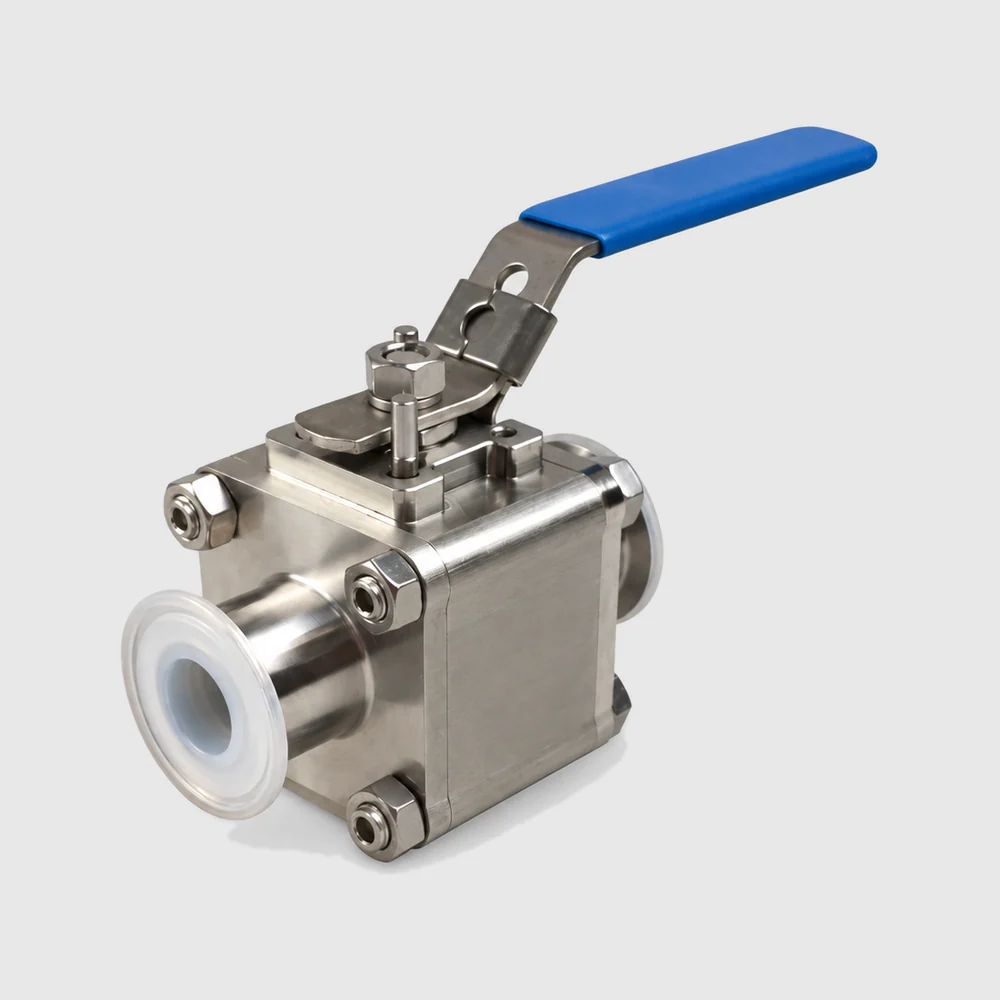
A ball valve earns its place by switching fast and running close to straight-through when fully open, which suits points that need quick shut-off or changeover. This PFA-lined Tri-Clamp ball valve has a high-purity PFA lining and a PFA ball, so that advantage carries over to corrosive chemicals and ultrapure fluids: semiconductor chemical distribution systems (CDS), ultrapure fluid lines in wet processing, display and solar wet-process lines, and pharmaceutical lines designed to the BPE standard.
What sets it apart from the other lined valves in this category is the outer body: where they use 316L stainless, this one uses Hastelloy C. At points where the chemical itself or the surroundings are especially aggressive, the shell has to hold up too.
Key characteristics
- Hastelloy outer body: fluoropolymer linings let some small-molecule chemicals (hydrochloric or hydrofluoric acid, for example) permeate slowly, and acid fumes in the surroundings attack the metal from outside. Hastelloy resists corrosion better than ordinary stainless steel, giving an extra margin on both sides.
- PFA ball and lining: a PFA ball inside a high-purity PFA lining, so the wetted surface is entirely fluoropolymer.
- Three-piece body: bolted at the four corners, with DN25 Tri-Clamp ends; operated by a cast 316L stainless lever with a blue grip. Designed to the BPE standard and FDA compliant.
- Operating envelope: resistant to acids, alkalis, chemicals and steam; -30 to +150 °C; vacuum to 1.0 MPa (at 20 °C). The PFA resin can be specified to suit the cleanliness requirement — an ultra-high-purity grade from a leading international brand, or a cost-effective high-purity grade — and material certificates are available.
Choosing between options
Among PFA-lined valves, whether to choose a ball or a diaphragm valve, and whether the outer body needs to be Hastelloy, can be decided like this:
| Requirement | Choice | Why |
|---|---|---|
| Fast open / close, straight-through flow | Ball valve (this one) | Quick lever action and low resistance when fully open |
| Particle-laden media or throttling | Diaphragm valve | No ball cavity, and the diaphragm can be part-opened; see the PFA-lined Tri-Clamp diaphragm valve |
| Especially aggressive chemical or surroundings | Hastelloy outer body (this one) | A corrosion-resistant metal behind the lining as well |
| Larger than DN25, or flanged ends | Flanged ball valve | More sizes, but a narrower design temperature of -20 to +120 °C; see the PFA-lined flanged ball valve |
This series comes in one combination only — DN25, Tri-Clamp, manual — as JY-VLC7-DN25-C-M.
Operation & change-out
A ball valve should not be left part-open to throttle for long periods: in that position the flow scours the ball and the edge of the lining directly, and wear concentrates there. Use a diaphragm valve where flow needs adjusting.
When installing, keep the Tri-Clamp gaskets centred and tighten the clamps evenly. The four corner bolts hold the body together — never loosen them while the line is under pressure. Check regularly for a lever that has become stiff and for seat leakage when closed. The higher the temperature, the less pressure PFA can take, so check hot, high-pressure duty with our sales team first.