





Where it fits
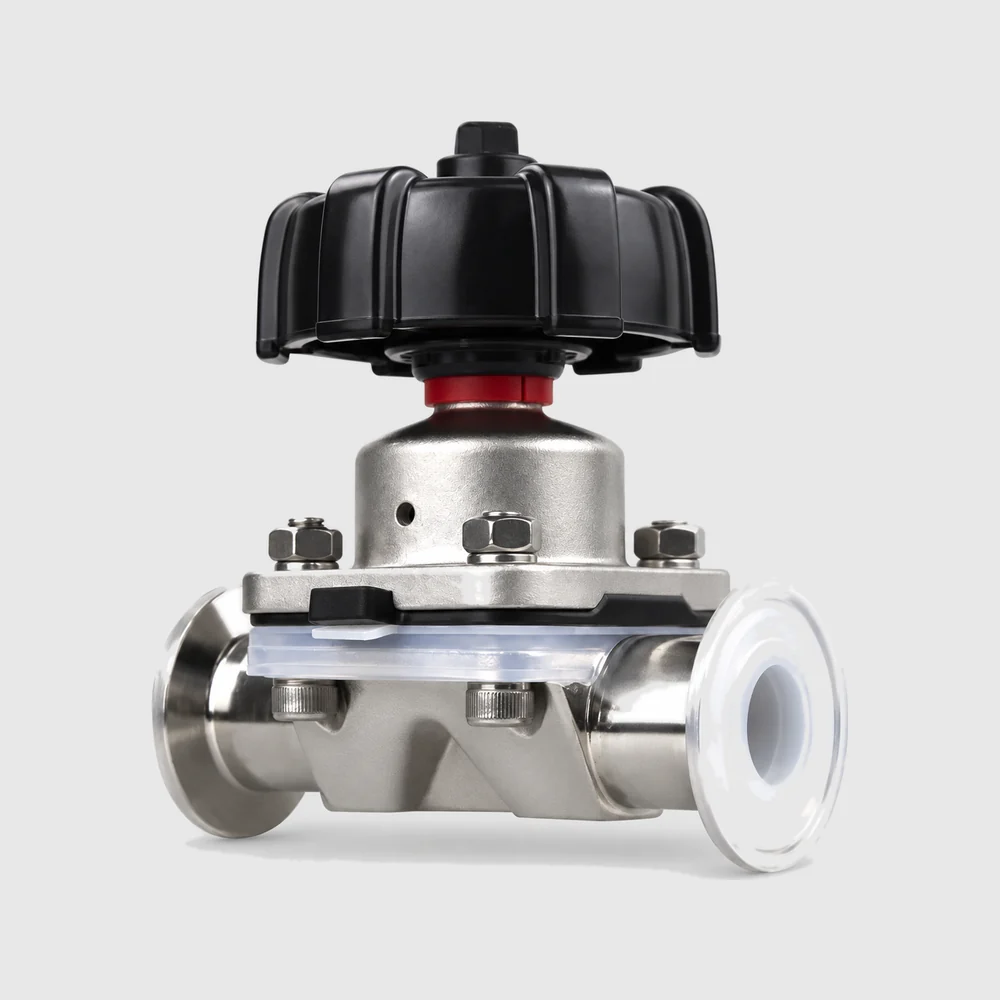
This BPE-based diaphragm valve is mainly used on pharmaceutical lines, and also on chemical delivery in a fab's CDS (chemical distribution system), ultra-pure wet-process fluid lines, and display and solar wet-process lines. The Tri-Clamp ends seal with a clamp and a gasket, so the valve comes out for cleaning, inspection or a diaphragm change without unbolting anything — a good fit for small-bore lines that are taken apart often.
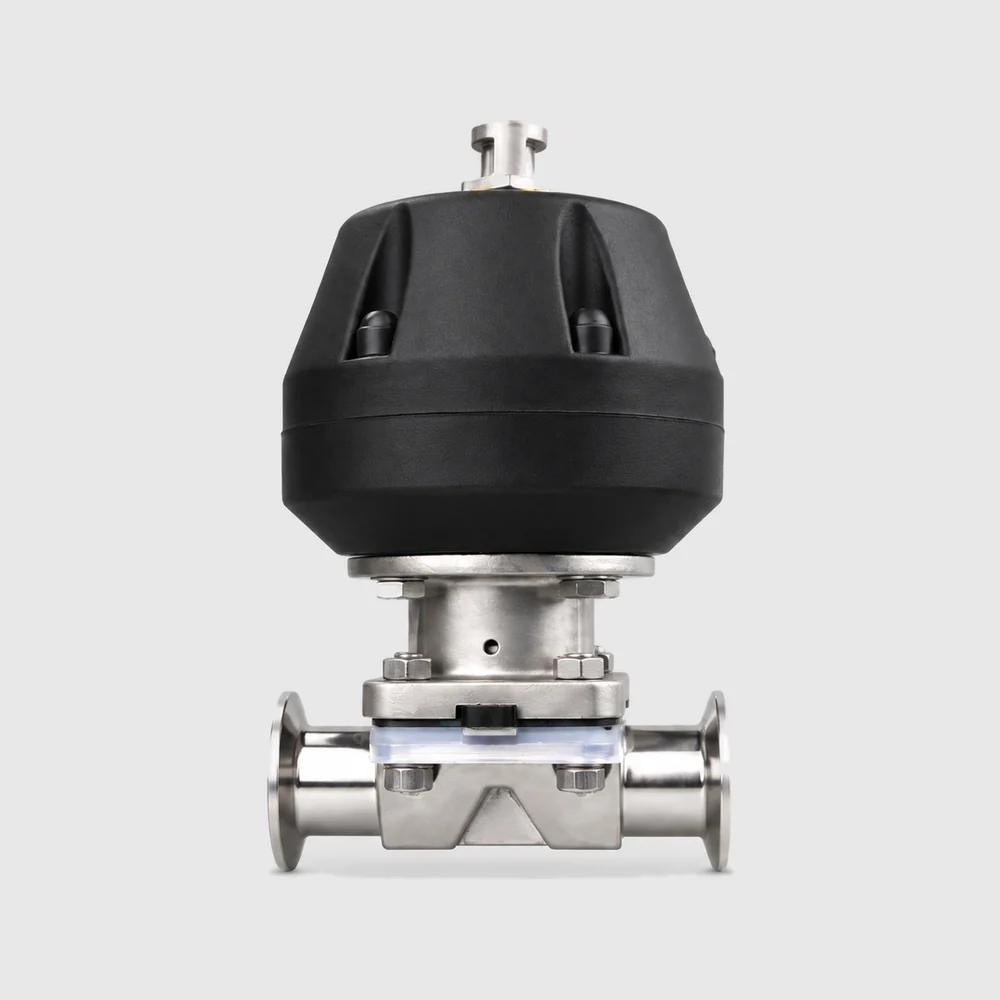
Manual and pneumatic versions share the same sizes: DN15, 25, 40, 50 and 65. The manual version suits isolation points operated by hand; the pneumatic version goes on supply, dosing and switching points that tie into automated control.
Key characteristics
Like the flanged diaphragm valve, this series is built around a PFA lining and a composite diaphragm; the differences are in the connections and the actuators:
- Fluoropolymer wetted path: a 316L stainless body lined with high-purity PFA, and a PTFE / EPDM composite diaphragm with PTFE facing the fluid, so the fluid never touches metal. Resistant to acids, alkalis, chemicals and steam.
- Cast 316L manual actuator: the actuator is cast in 316L stainless steel and ensures shut-off in any working state.
- PES pneumatic actuator: normally open or normally closed, with accessories such as a feedback signal or a positioner available.
- A design basis for pharmaceutical duty: designed to the BPE standard and FDA compliant. PFA resin can be specified to suit the cleanliness requirement — an ultra-pure grade from a leading international resin maker, or a cost-effective high-purity grade — with material certificates.
Choosing between options
Compared with the flanged diaphragm valve in the same category:
| Aspect | Tri-Clamp diaphragm valve (this series) | Flanged diaphragm valve |
|---|---|---|
| Connection | Tri-Clamp, BPE-based design | Flange to HG/T 20592 |
| Sizes | DN15 – DN65 (same for manual and pneumatic) | Manual DN15 – DN100; pneumatic DN20, 25, 40, 50 |
| Pneumatic actuator | PES, normally open or normally closed | Stainless steel, normally closed |
| Pneumatic options | Feedback signal or positioner | Limit switch, anti-static |
| Design temperature | -30 to +150 °C | -20 to +150 °C |
| Best suited to | Pharmaceutical duty and small-bore lines that are taken apart often | Semiconductor CDS main lines and large-bore isolation points |
Normally open (NO) or normally closed (NC) depends on where the line should end up if the air fails: chemical supply and dosing points, which should stop when air is lost, take normally closed; cooling, drain or any service that must keep flowing takes normally open. A feedback signal (limit switch) confirms whether the valve is open or closed; a positioner holds the valve at the opening the control signal asks for, for modulating duty. Choose one of the two.
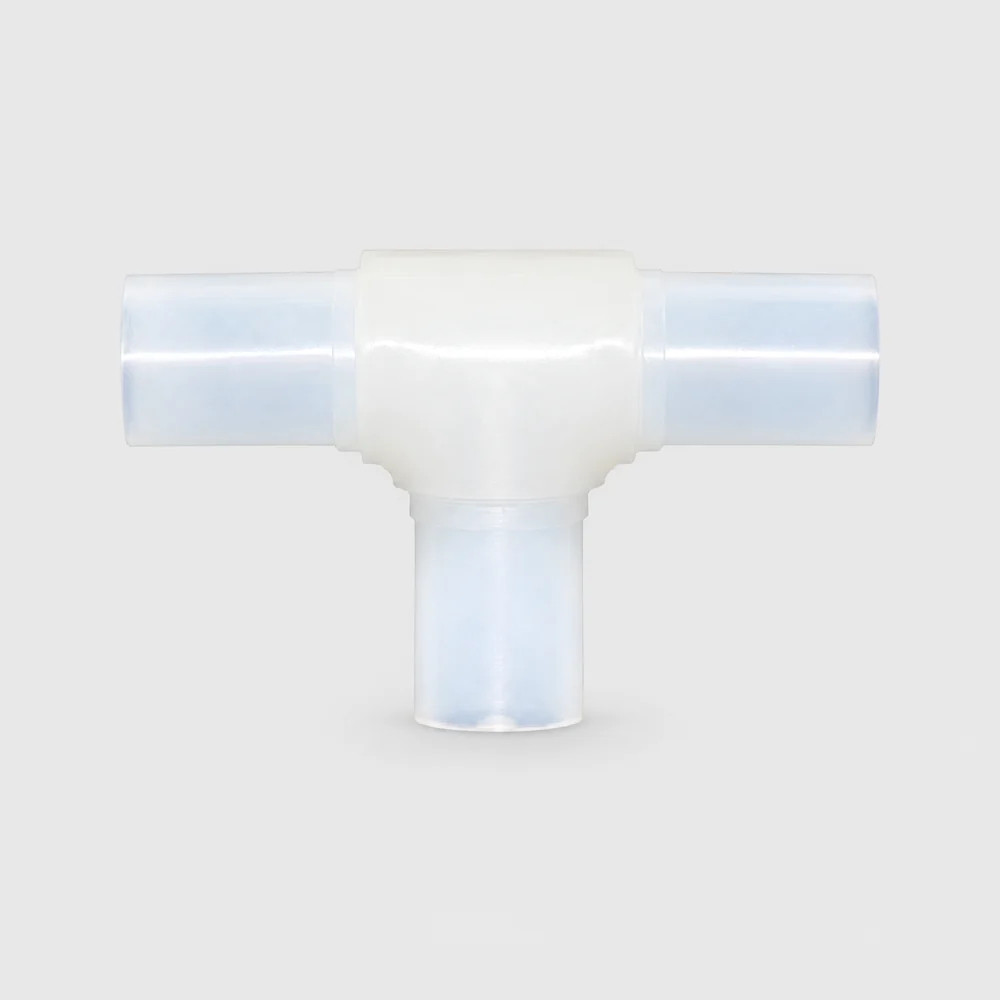
Staying with Tri-Clamp connections: for a tee branch or a tank-bottom outlet, see the PFA-lined tee and tank-bottom diaphragm valves; for a sampling point, see the PFA-lined sampling valve. Above DN65, or on flanged lines, see the PFA-lined flanged diaphragm valve.
Operation & change-out
Choose a clamp gasket material compatible with the medium, and check that the gasket sits centred and is not pinched as you fit it. Tighten the clamp only until the joint closes — over-tightening deforms the PFA sealing face. Fluoropolymers creep under load, so check the clamp tension again after the first heat-up or steam clean.
Supply the pneumatic version with clean, dry instrument air so that moisture and oil stay out of the actuator. The design pressure is a 20 °C figure and falls as temperature rises; steam cleaning must stay within the +150 °C design limit. The diaphragm is a wear part whose life depends on cycling frequency, temperature and medium; check regularly for leaks at the bonnet and for diaphragm deformation, and replace it with a PTFE / EPDM composite diaphragm of the same specification.