
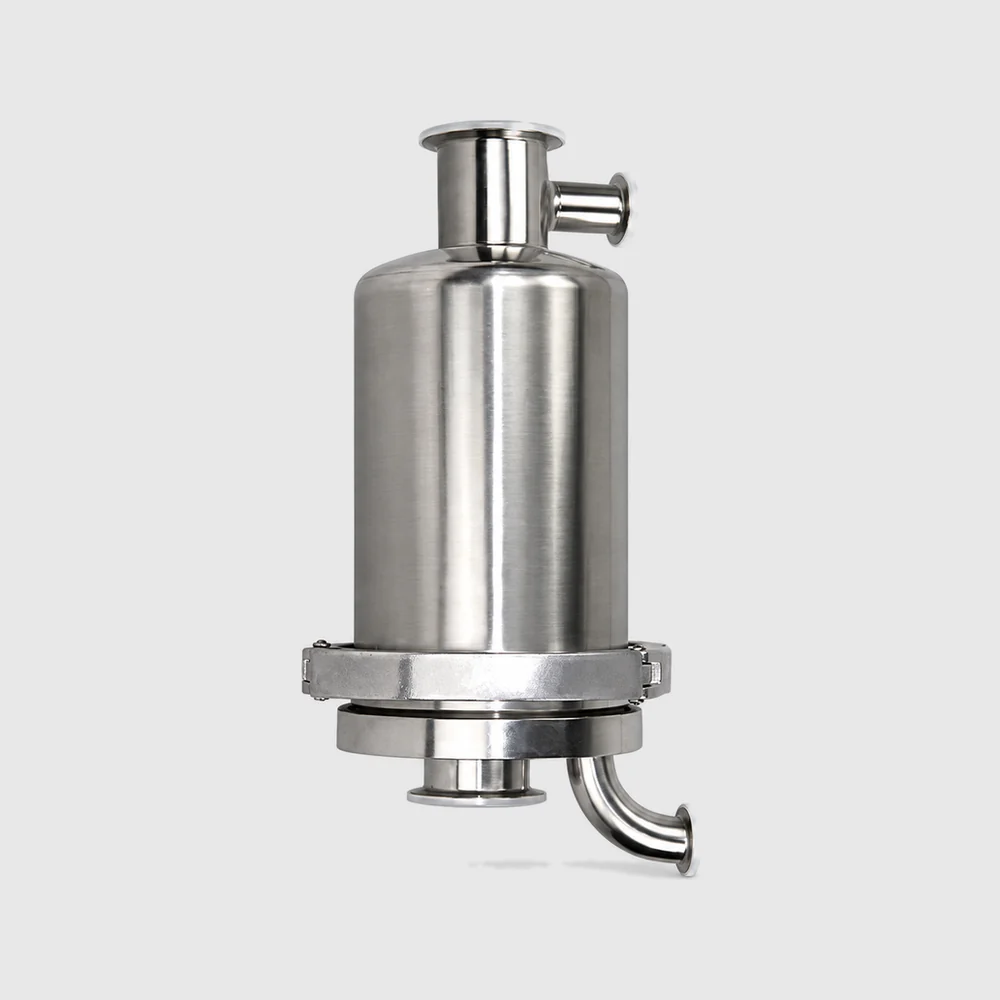
Where it fits
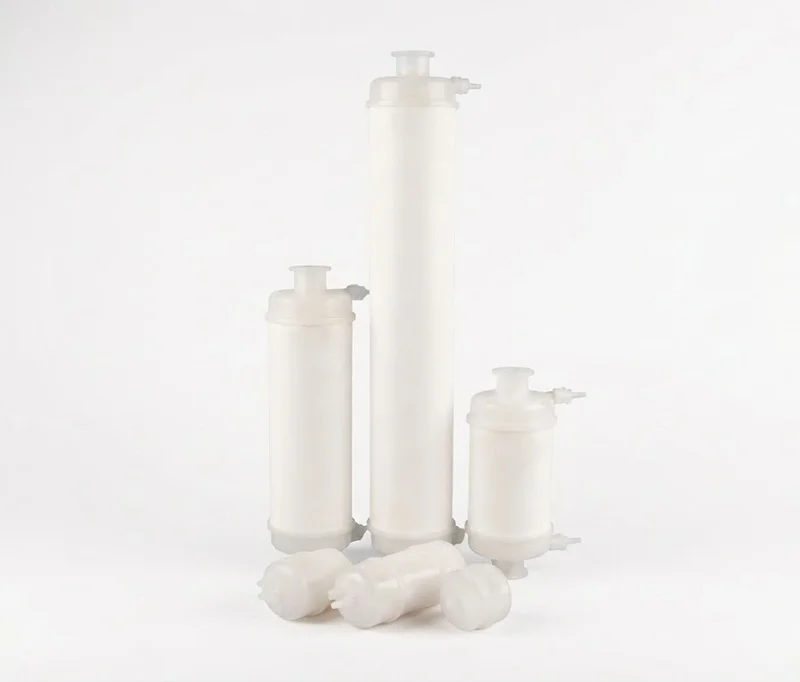
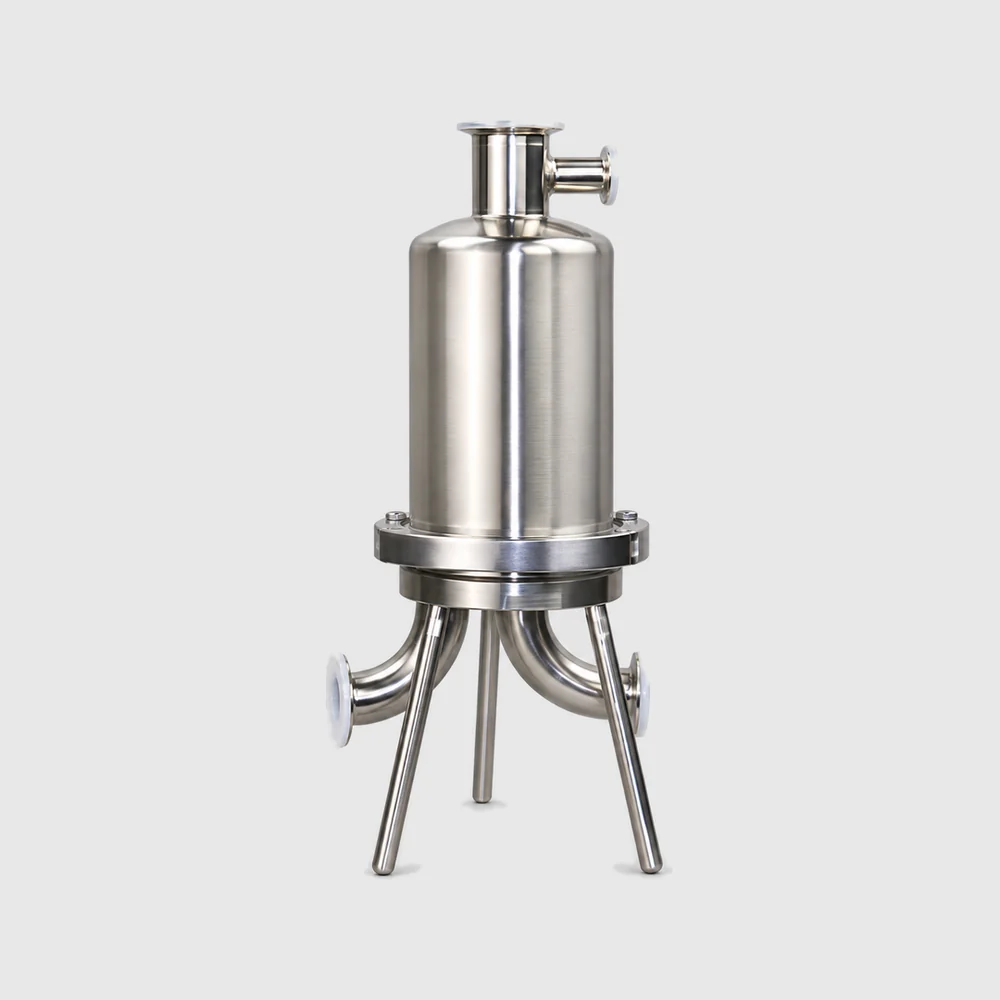
This series covers two housings: a single-cartridge filter housing for liquid lines, and a vent breather for the vent on top of a tank. Both are 316L stainless lined with high-purity PFA, with PFA gaskets and Tri-Clamp connections — a fluoropolymer wetted surface inside a shell that keeps the mechanical strength of stainless steel.
The housing goes on liquid lines in chemical transfer or pharmaceutical processes. The breather deals with the tank "breathing": as the liquid level rises and falls, air moves in and out through the vent, and without filtration the particles in outside air come in with it. Applications include semiconductor chemical distribution systems (CDS), ultrapure fluids in wet processing, display and solar wet processing, and pharmaceutical processes.
Key characteristics
- PFA inside, stainless outside: 316L stainless lined with high-purity PFA, so the housing wetted surface is entirely fluoropolymer; the gaskets are PFA too.
- Tri-Clamp connections: the inlet and outlet are Tri-Clamp, so the housing connects directly to the sanitary-style piping common on pharmaceutical and chemical tanks.
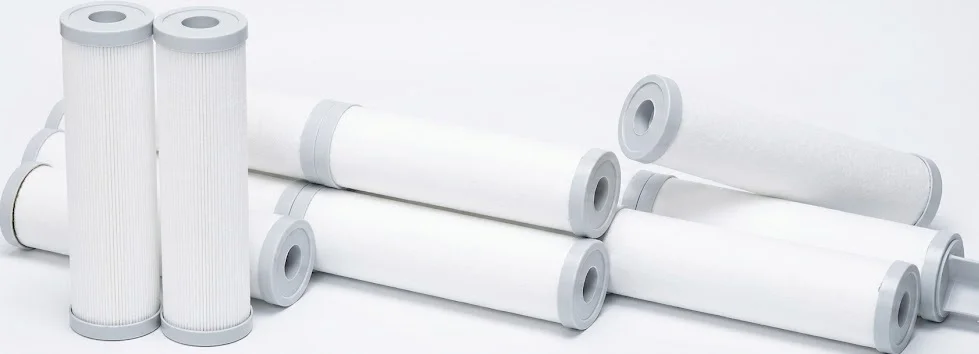
- Two duties, one construction: the housing takes a single 5", 10" or 20" cartridge, the breather is 5", and both share the same materials, so spares and inspection can be handled the same way.
- Operating envelope: resistant to acids, alkalis, chemicals and steam; -30 to +150 °C; vacuum to 1.0 MPa (at 20 °C). The PFA resin can be specified to suit the cleanliness requirement — an ultra-high-purity grade from a leading international brand, or a cost-effective high-purity grade — and material certificates are available.
Choosing between options
There are two housings with a fluoropolymer wetted surface on this site; they differ in how the shell is made and how it connects:
| Item | This housing (JY-HSC2) | All-PFA housing (JY-HSC1) |
|---|---|---|
| Shell | 316L stainless lined with high-purity PFA | Injection-moulded PFA throughout |
| Connections | Tri-Clamp | Semiconductor-style fluoropolymer fittings |
| Best suited to | Pharmaceutical processes, chemical tanks and transfer lines | Wet-process chemical and UPW lines in semiconductor fabs |
| Reason to choose it | You need the strength of a metal shell and sanitary-style connections | You want no metal in the shell at all |
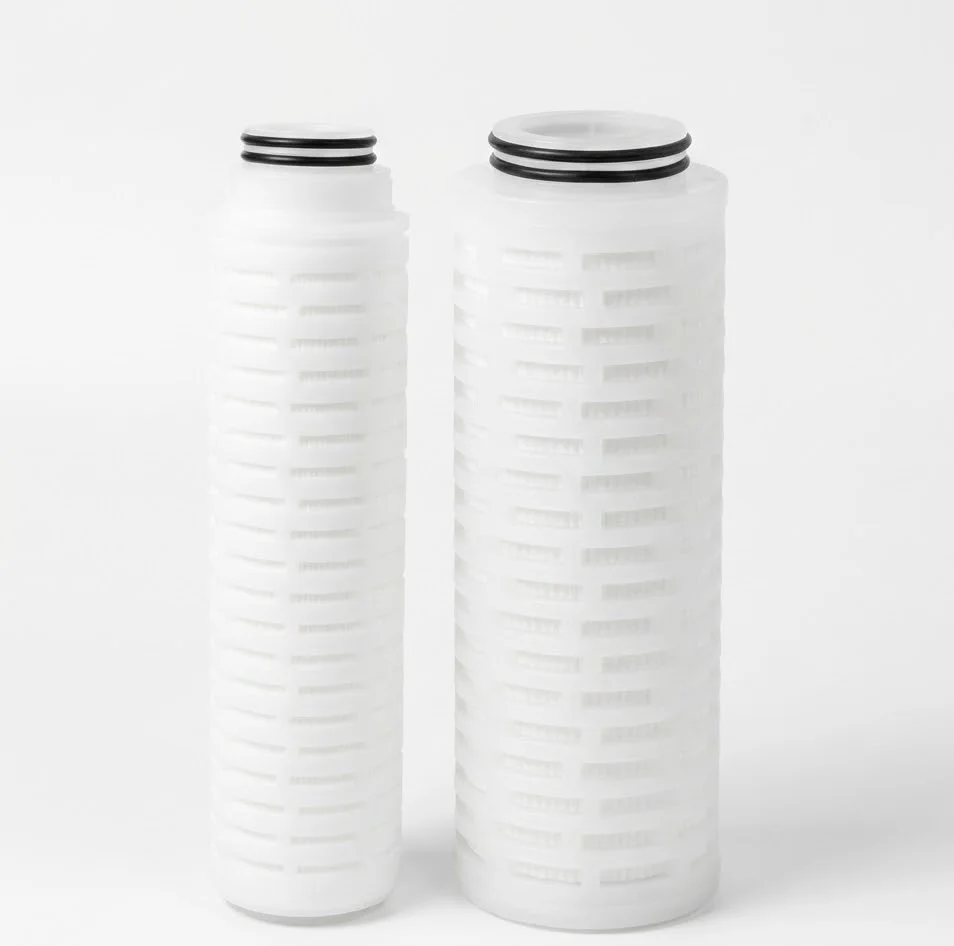
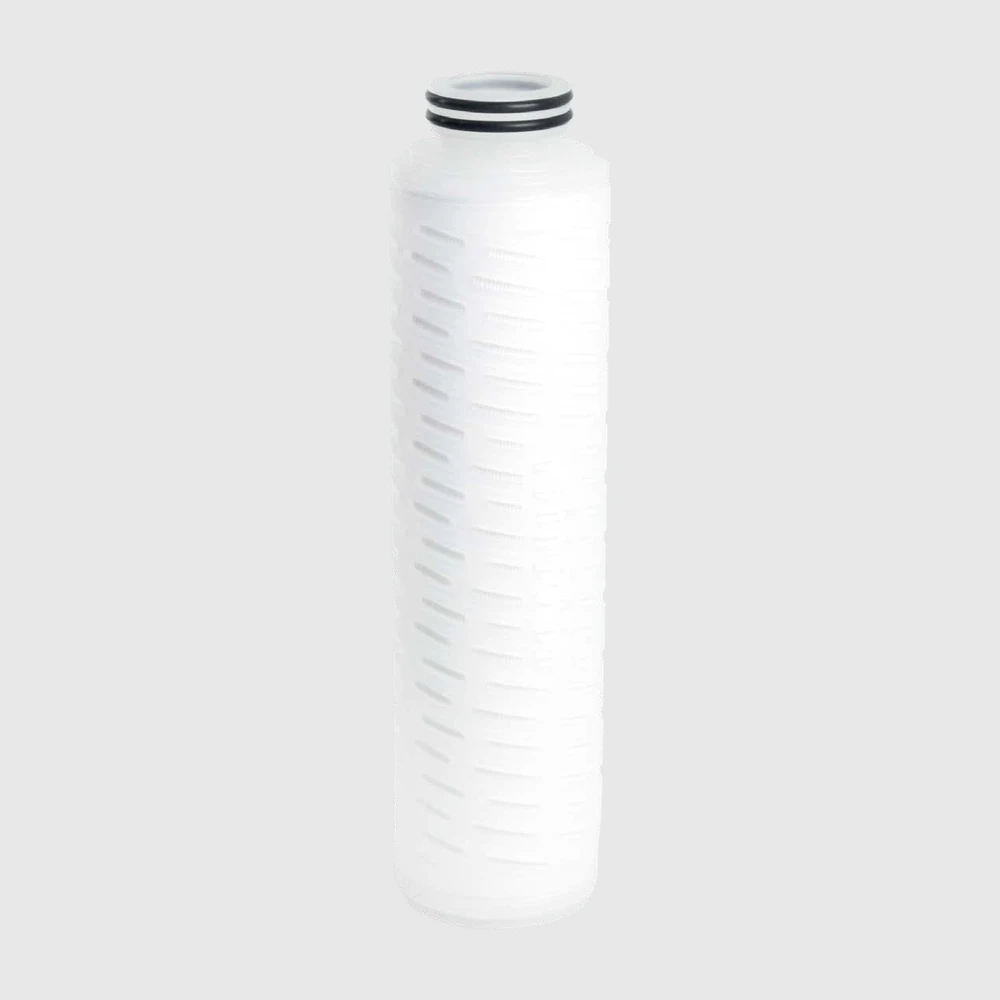
For the all-PFA version, see the PFA filter housing with fool-proof lock. Cartridges are ordered separately, and the cartridge interface of this housing is confirmed at enquiry. For liquids, pair it with a JIUNYUAN cartridge chosen for the chemical and the retention you need (see our chemical compatibility guide for filter materials); the breather normally takes a hydrophobic PTFE pleated cartridge, whose membrane passes gas without being wetted out and blocked by liquid or condensate.
Operation & change-out
The housing's design pressure is what the shell can withstand, not the differential pressure the cartridge can take. The cartridge has its own maximum operating differential pressure and temperature limit, often lower than the housing's, and the assembly runs to whichever of the two is lower.
To change a cartridge, depressurise and drain first, then remove the clamp and open the housing. Inspect the PFA gaskets for indentation or deformation and replace any that are deformed rather than reusing them. On reassembly, centre the gasket and tighten the clamp evenly. On the breather, check regularly that splashing has not wetted the cartridge — once a hydrophobic cartridge is blocked by liquid, the tank can no longer breathe freely.