





Where it fits
This series brings PFA-lined 316L construction to lines built around Tri-Clamp connections: hygienic pharmaceutical piping designed to the BPE standard, inlet and outlet piping on chemical tanks and equipment, and chemical transfer in semiconductor CDS, display and solar wet processing.
The appeal of Tri-Clamp is quick assembly: a spool can come off whole for cleaning or inspection. The problem is that an ordinary hygienic Tri-Clamp fitting is wetted by stainless steel, which cannot stand strong acids or fluoride- and chloride-bearing chemicals. This series keeps the same Tri-Clamp line and turns the wetted surface into PFA.
Key characteristics
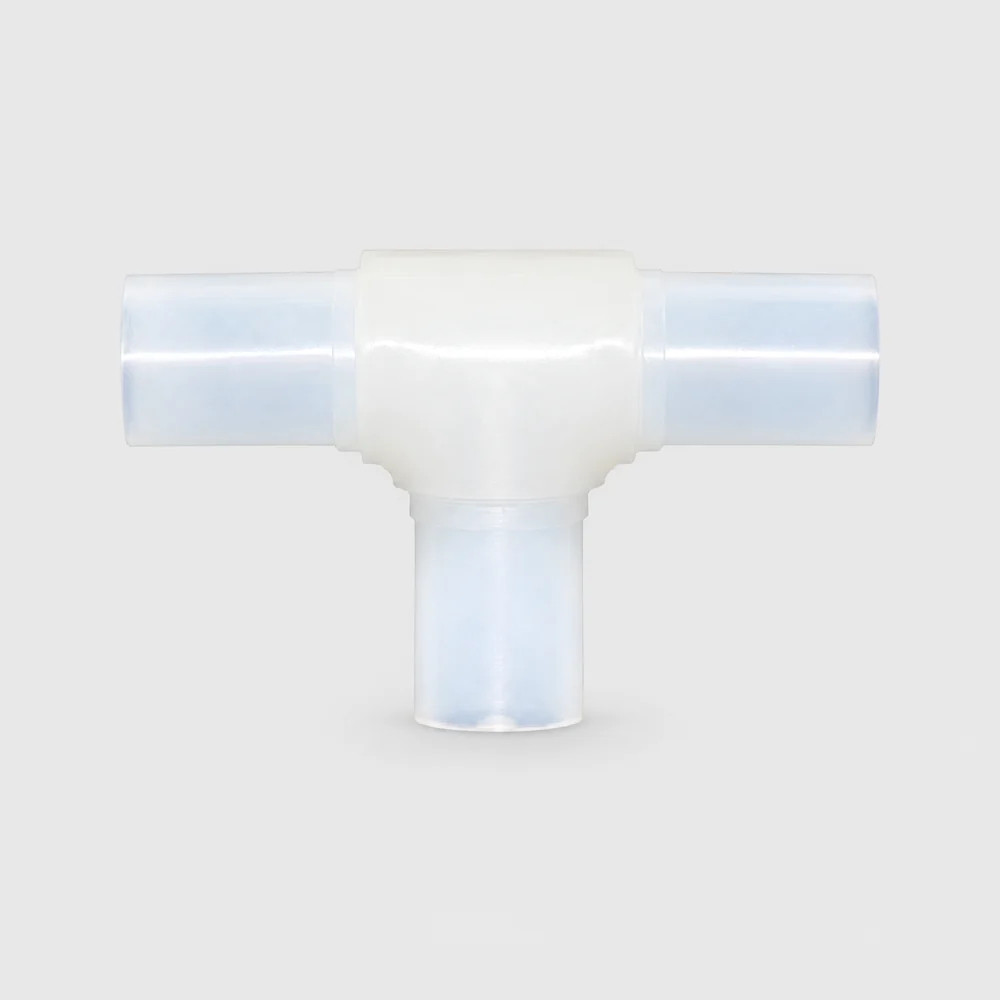
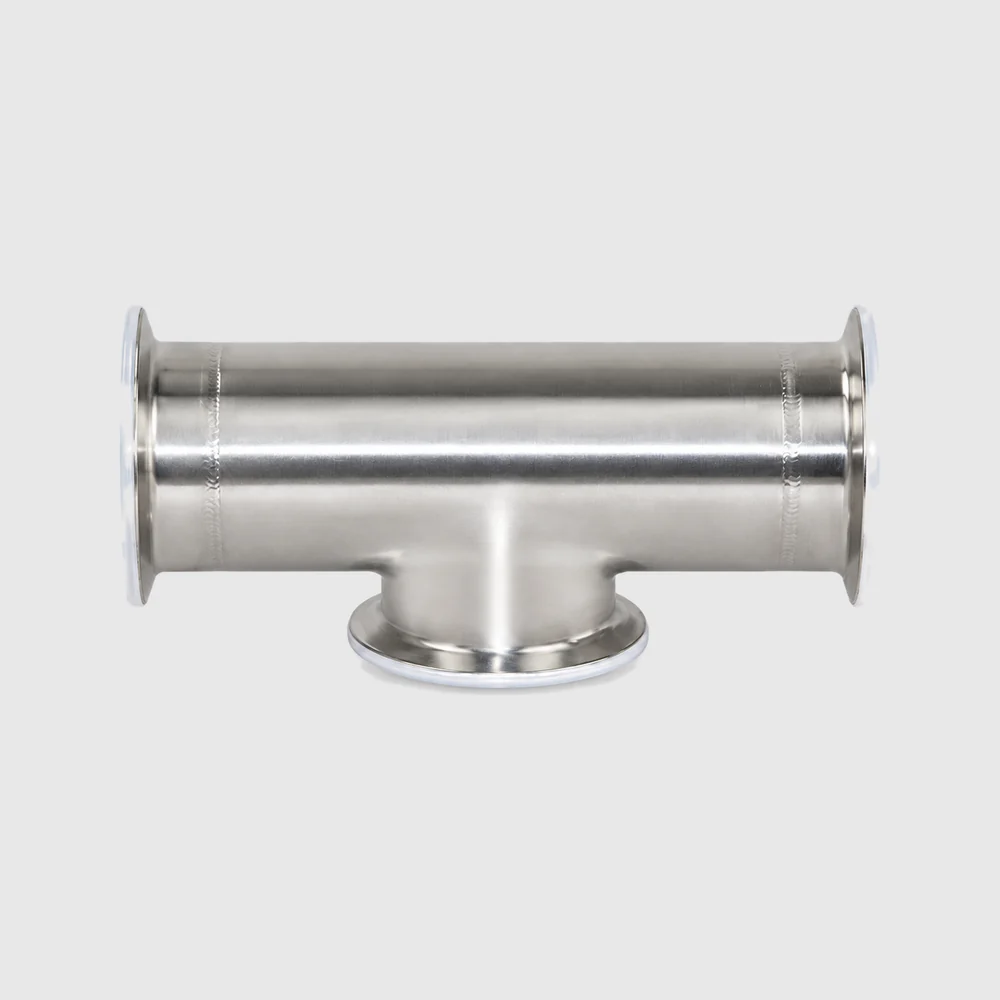
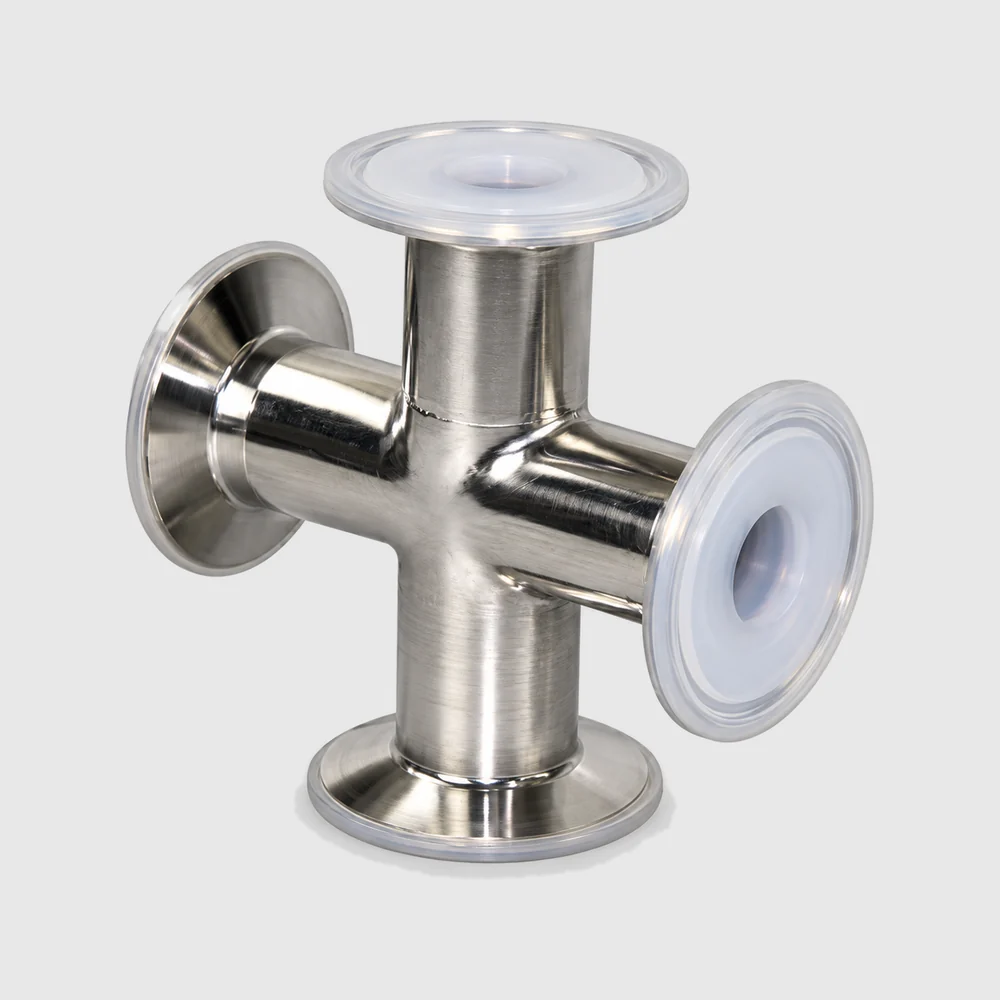
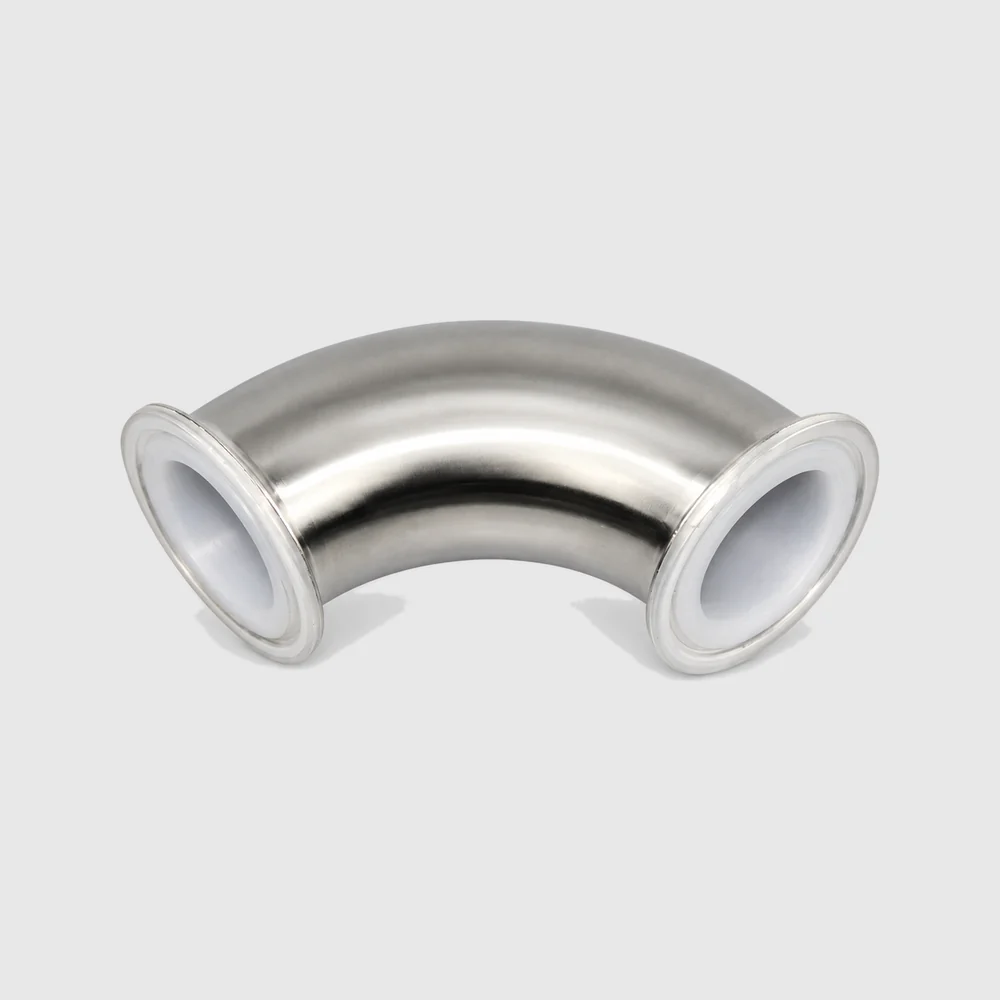
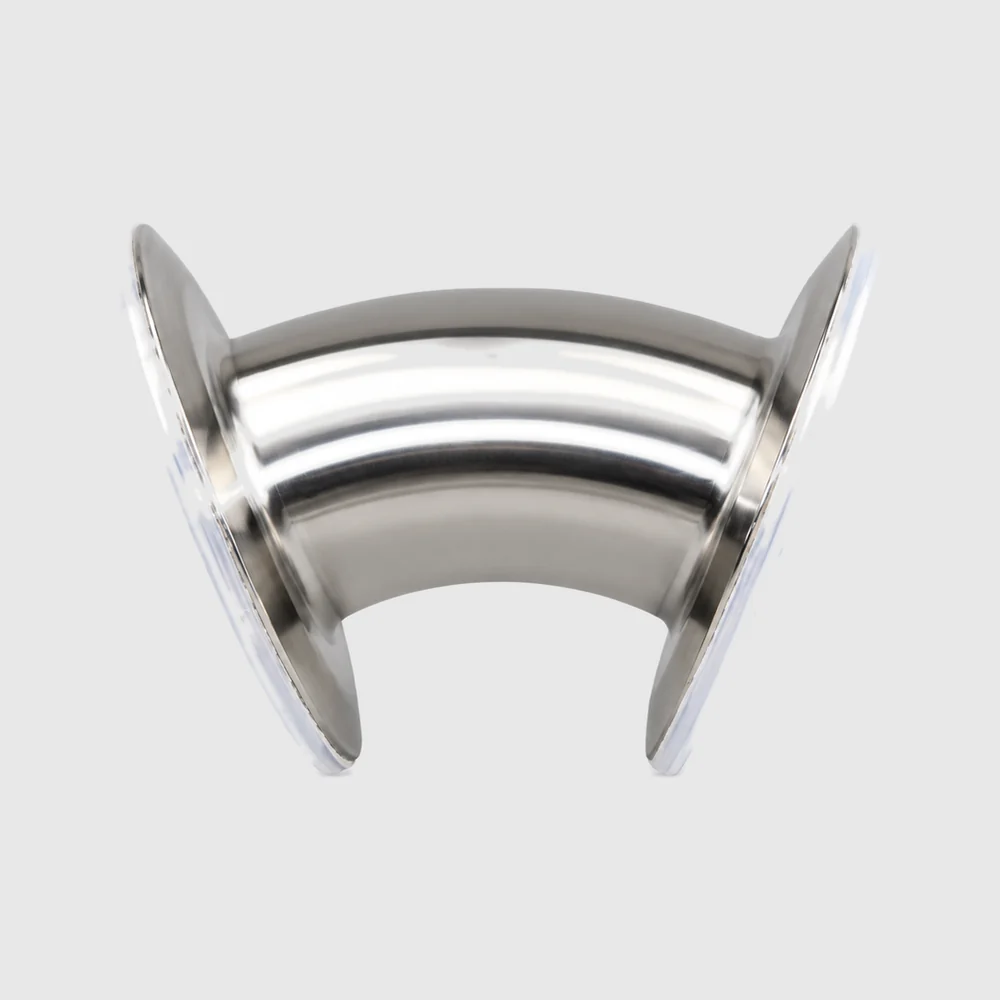
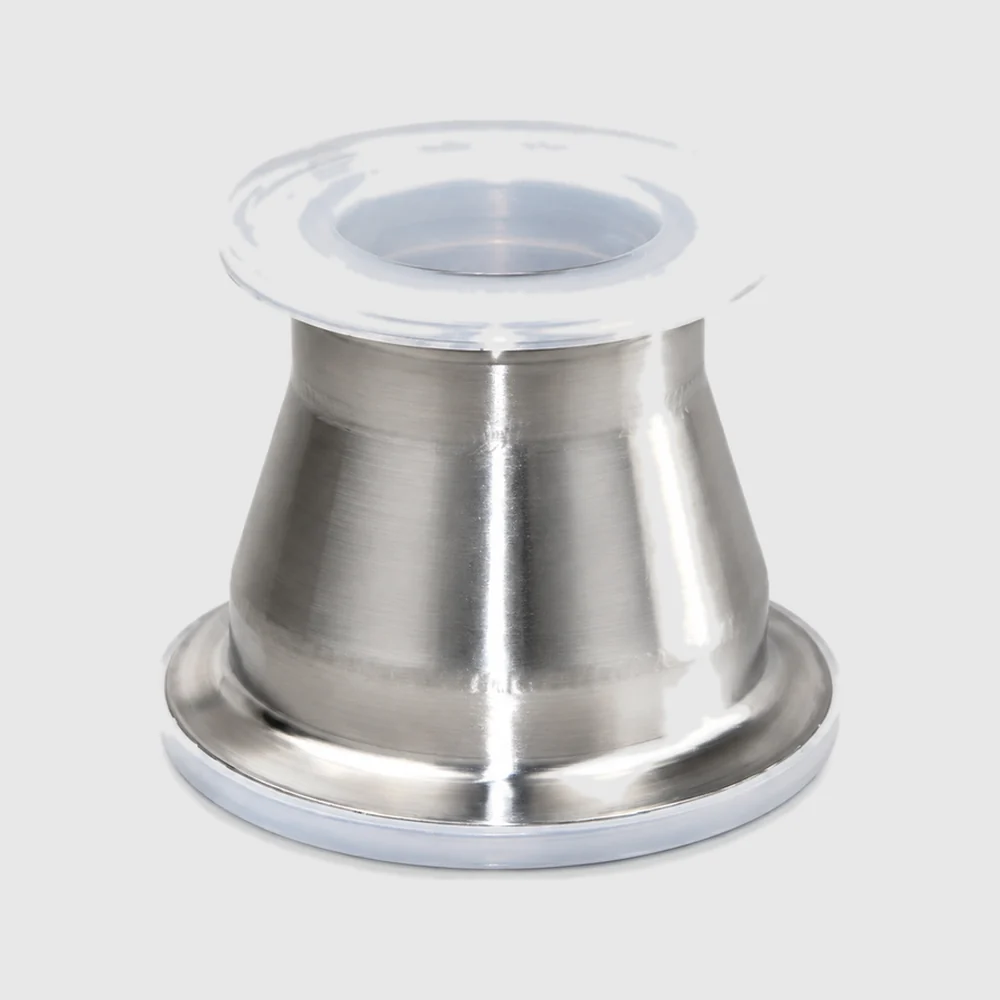
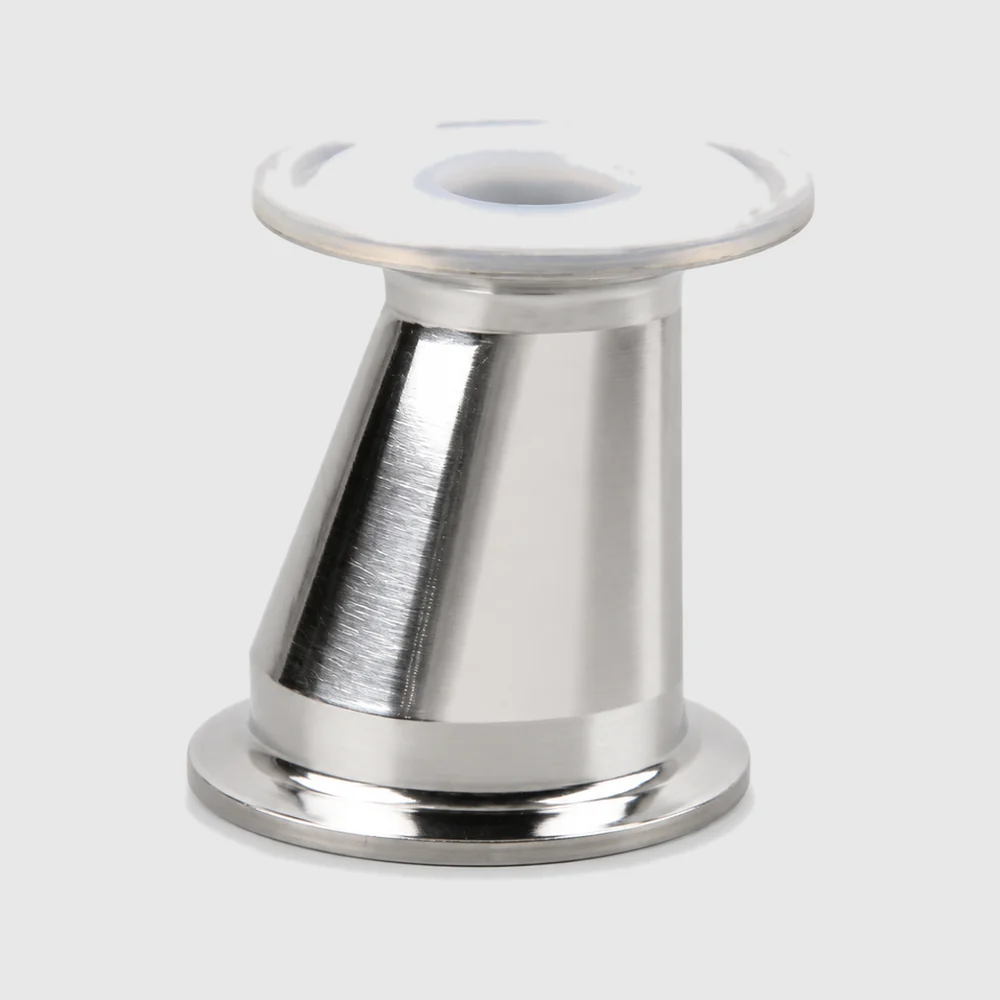
One material set and one rating cover ten configurations: equal and reducing tees, cross, 90° and 45° elbows, concentric and eccentric reducers, flange adapter, straight pipe and borosilicate sight glass. Most of the shapes a line needs come from the same series, with the same gaskets, clamps and ratings.
- 316L stainless body lined with high-purity PFA, with PFA gaskets, so the wetted path is fully fluoropolymer.
- Designed to the BPE standard; design pressure vacuum to 1.0 MPa (at 20 °C), design temperature -30 to +150 °C; FDA.
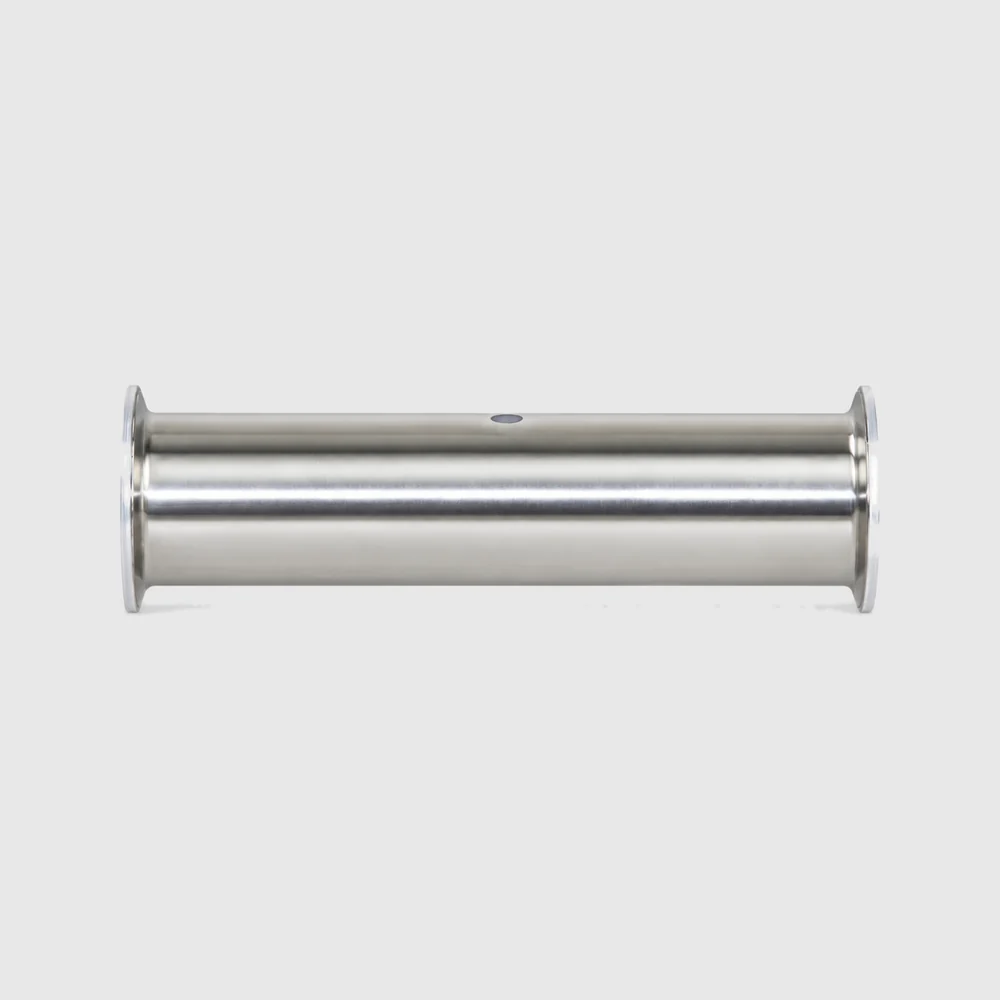
- The straight pipe (SP) is lined with PTFE, not PFA, and is made to the length of your line.
- The PFA resin can be specified as an ultra-pure grade from a leading international producer or a cost-effective high-purity grade; material certificates are available.
Choosing between options
The right shape depends on how the line runs. These are the places where the choice most often goes wrong:
| Situation | Suggested type | Why |
|---|---|---|
| Size change on a horizontal run | RE eccentric reducer | Flat side down lets the run drain completely; flat side up stops gas collecting ahead of a pump inlet |
| Size change on a vertical run | RC concentric reducer | A vertical run does not pool, and a concentric part keeps the flow symmetrical |
| Change of direction where pressure loss matters | E4 45° elbow | A gentler turn means less resistance and turbulence; use the E9 90° elbow where space is tight |
| Branch smaller than the main line | TR reducing tee | Branch and size change in one part; one less Tri-Clamp joint is one less seal |
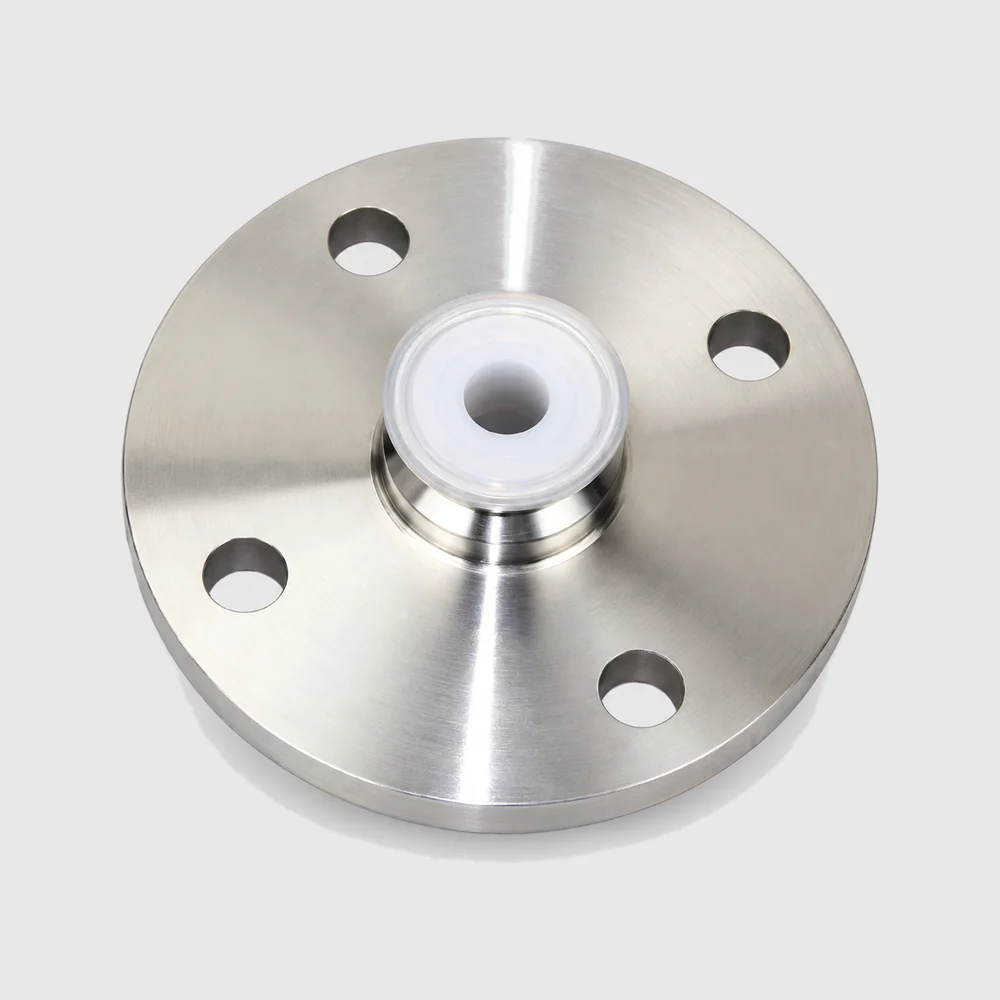
| Tri-Clamp line meeting flanged equipment | FA flange adapter | Tri-Clamp on one end, flange on the other; confirm the flange standard at enquiry |
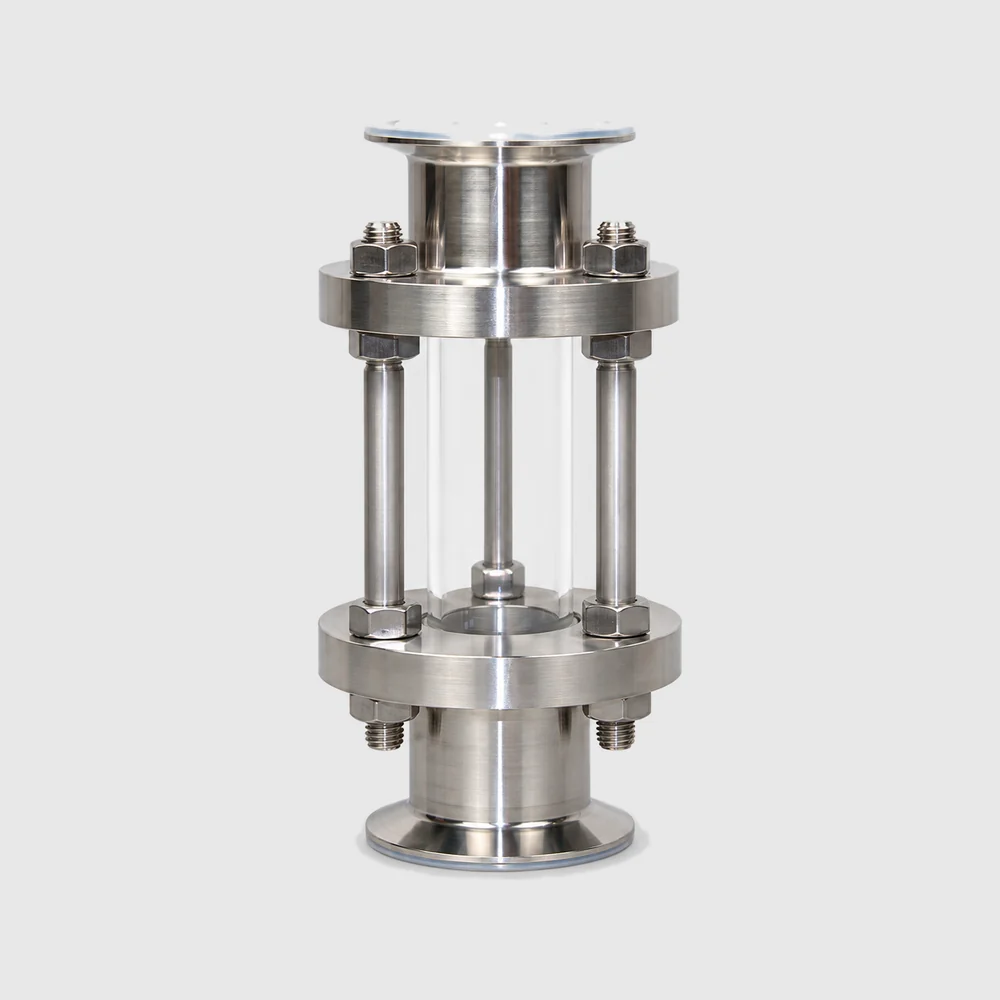
| Need to see the fluid | SG borosilicate sight glass | For a fixed run; where glass breakage is a concern or the route must bend, use the PFA sight-glass hose |
The other point that matters on BPE piping is dead legs: the longer the branch of a tee, the more likely it is to become a stagnant pocket, so keep branches short and make sure cleaning reaches them. For small-bore sections that need a fluoropolymer wetted path without a metal shell, compare the injection-moulded PFA fittings; for flange-based lines, see the PFA-lined flanged fittings.
Operation & change-out
A PFA gasket is harder than a rubber one, so seat the clamp fully and keep the gasket centred. PFA creeps slightly after thermal cycling, so check and re-tighten the clamps after the line has run hot for a while. Each time a spool is opened, inspect the gasket and the PFA sealing faces for indentation or scratches, and replace a damaged gasket rather than reusing it.
Protect the sight glass from rapid heating or cooling and from impact. Straight pipe is made to the length of your line, so give the length and both end details at enquiry.