

Where it fits
Hose goes where rigid pipe cannot: pump and equipment ports that need to absorb vibration, connections between equipment with installation tolerances, and chemical unloading that has to move. An ordinary rubber or plastic hose liner degrades and leaches in strong acids and alkalis; this series puts PFA on the inside, so the hose section shares its wetted material with the PFA-lined fittings and valves.
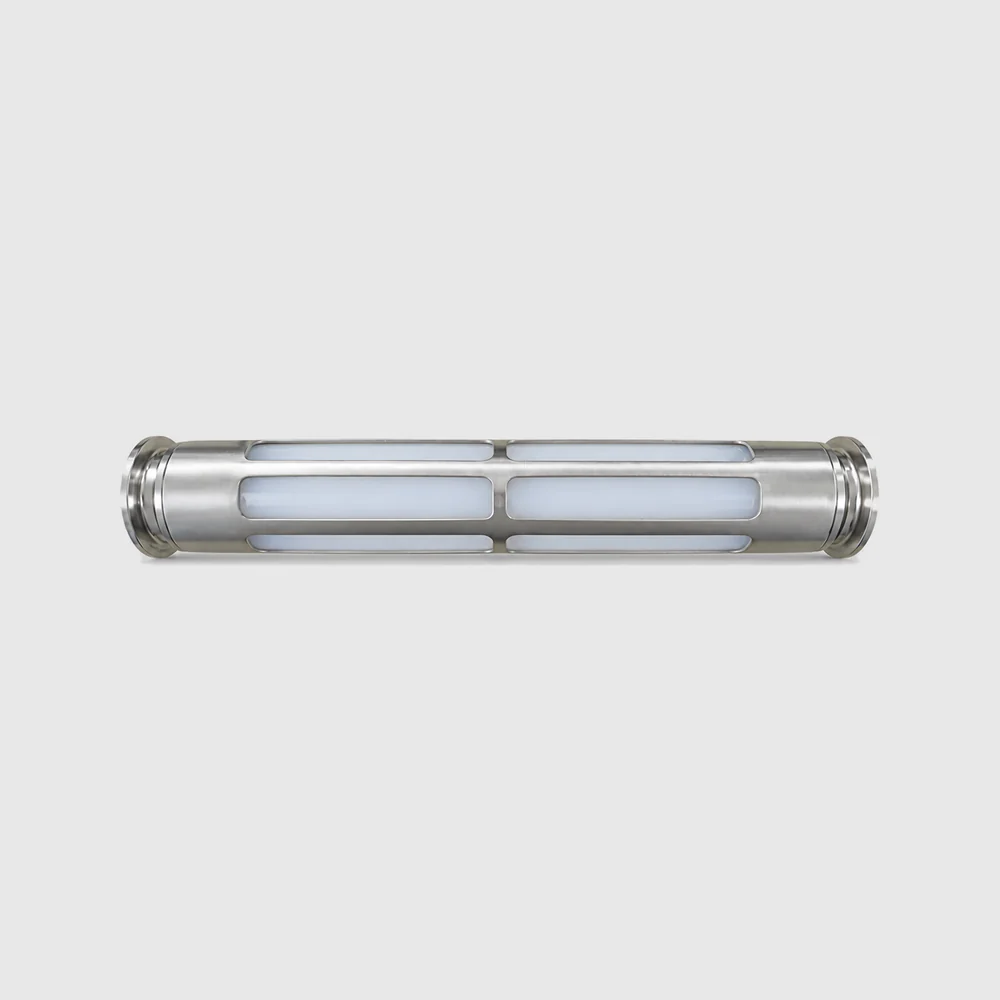
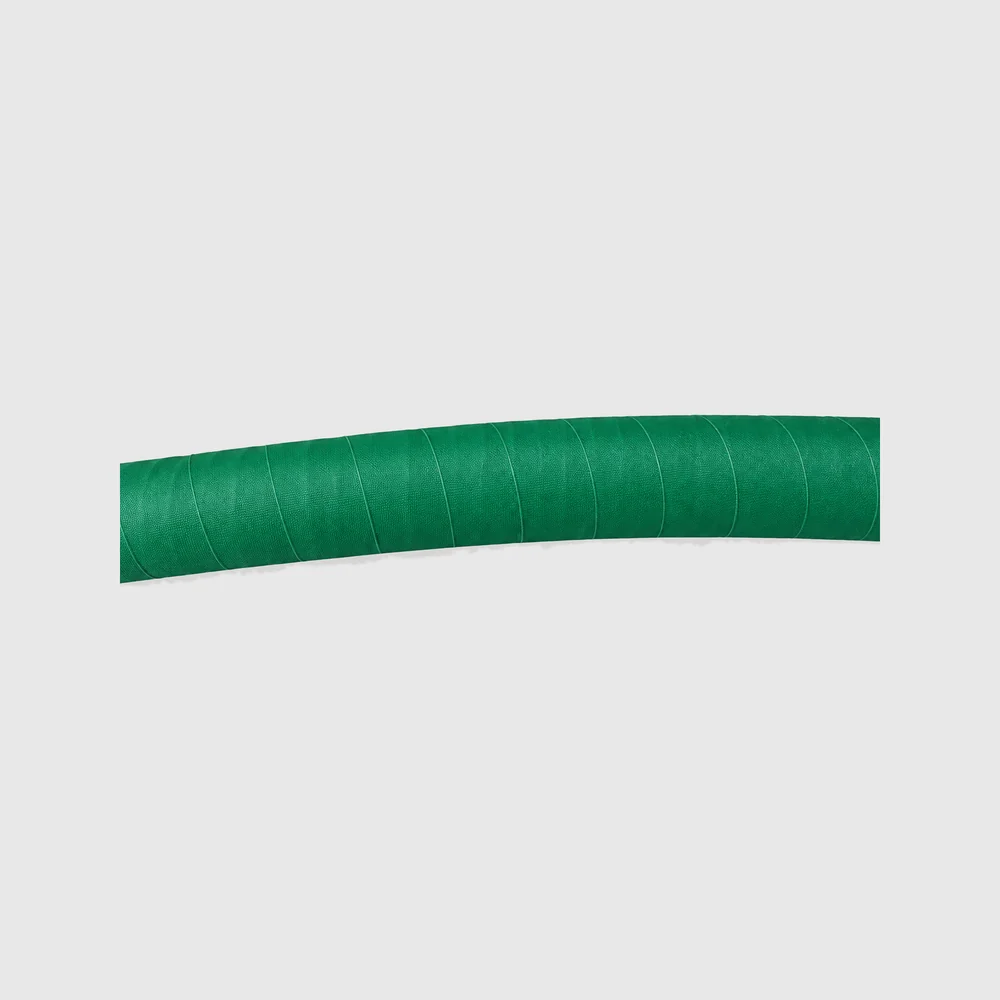
The two types start from different needs. Type R is an electronic-grade chemical hose for transfer in semiconductor CDS and display and solar wet processing. Type G is a PFA sight-glass hose with a translucent bore that replaces glass sight glasses; it is common in dairy and food processing and also works as a visual check section on chemical lines.
Key characteristics
- Type R: high-purity PFA liner reinforced with helical stainless wire and woven fabric under a green rubber cover; -50 to +100 °C and -0.9 to 10 bar, so vacuum rated; ultra-low extractables, resistant to acids, alkalis, chemicals and steam.
- Type G: translucent smooth-bore PFA liner inside a stainless sheath; -30 to +100 °C and 0 to 10 bar; FDA and USP. With no glass, there is no sight glass to break.
- Both types have a bore roughness of Ra 0.4 to 0.8 µm and are cut to length and assembled with both end fittings.
The stainless wire in type R is wound helically to keep the bore round under vacuum and to resist flattening when the hose bends; on vacuum duty or pump suction, this is the layer that matters.
Choosing between options
| Item | R electronic-grade PFA-lined rubber hose | G PFA sight-glass hose |
|---|---|---|
| Sizes | 3/4", 1-1/2" | 3/4", 1", 1-1/2", 2", 2-1/2" |
| Design temperature | -50 to +100 °C | -30 to +100 °C |
| Design pressure | -0.9 to 10 bar (vacuum rated) | 0 to 10 bar |
| Outer construction | Helical stainless wire and woven fabric, green rubber | Stainless sheath |
| End fittings | Tri-Clamp, flanged, threaded | Tri-Clamp, threaded |
| Qualification | Electronic grade, ultra-low extractables | FDA, USP |
| Choose it when | Semiconductor chemical transfer, pump suction and other negative-pressure points | Points where the fluid must be seen, in place of a glass sight glass |
Watch the temperature: the hose tops out at +100 °C, below the +150 °C of the PFA-lined fittings, so the hose sets the limit for the whole line. Where a fixed run needs a viewing point above the hose range, use the borosilicate sight glass (SG) in the PFA-lined Tri-Clamp fittings. For the transition between hose and rigid pipe, see the PFA-lined hose adapters.
Operation & change-out
Do not twist the hose during installation or bend it tighter than its minimum bend radius (confirm the figure at enquiry); once the PFA liner is creased, cracking or permeation can start from that point. A hose is not meant to carry pipe weight, so support both ends, and do not use it to take up large misalignment.
Routine checks focus on the outside: cracking or bulging of the rubber cover on type R, broken strands or deformation of the stainless sheath on type G, and any weeping at the end fittings. A hose ages with service, so put it on a scheduled inspection and replacement plan.