
PES Filter

PES Filter

Product ID: j-steripure-b-pes-filter|Sterilizing-grade PES

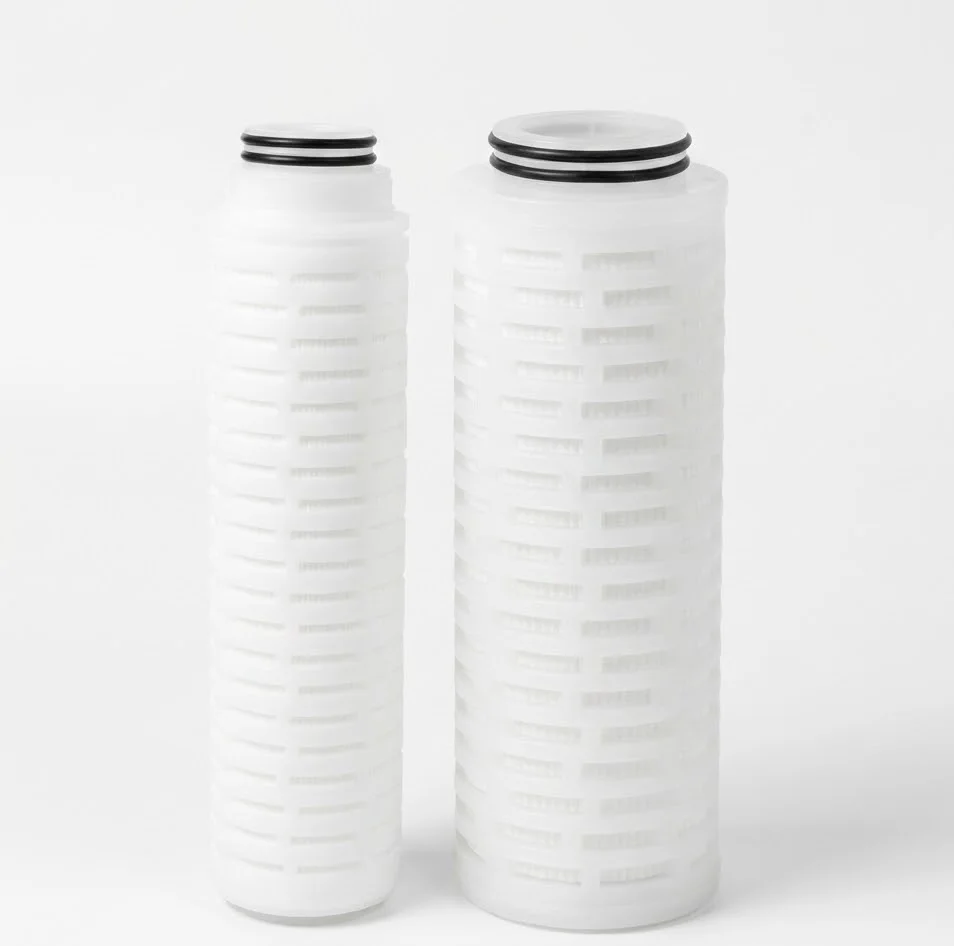
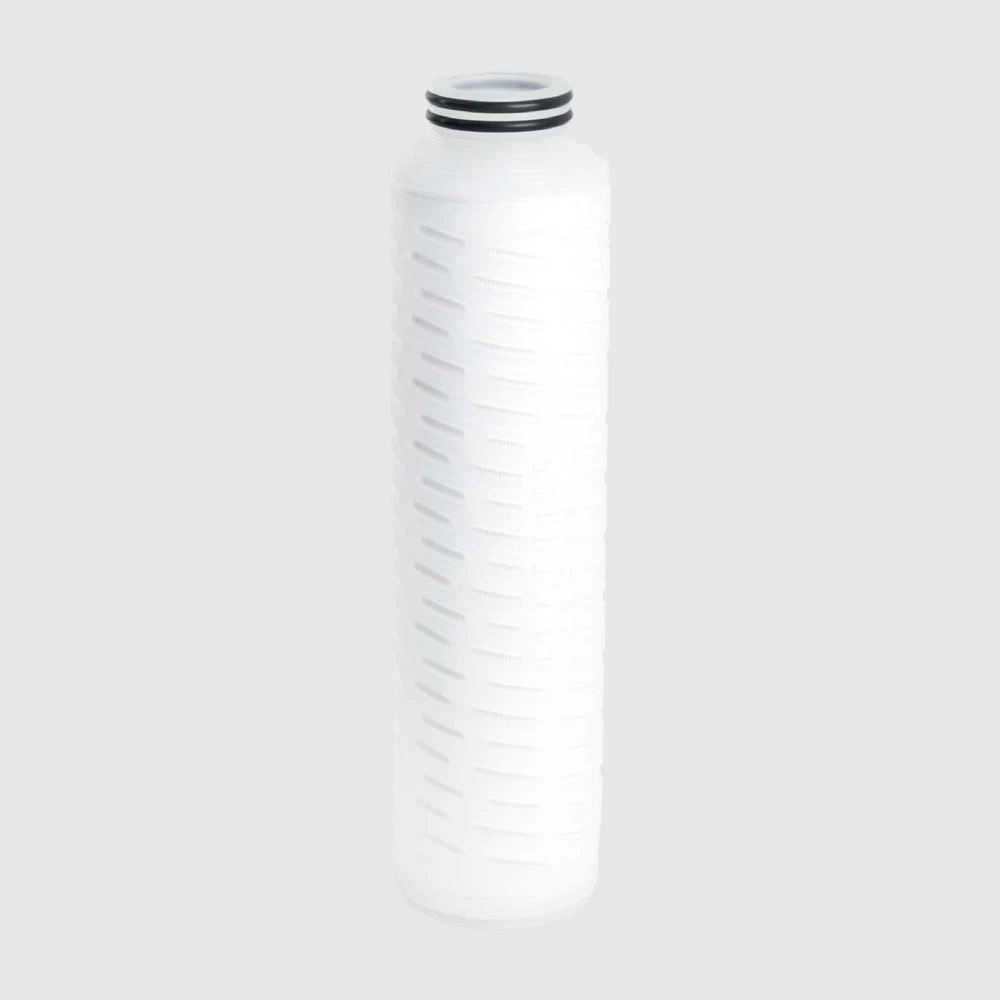
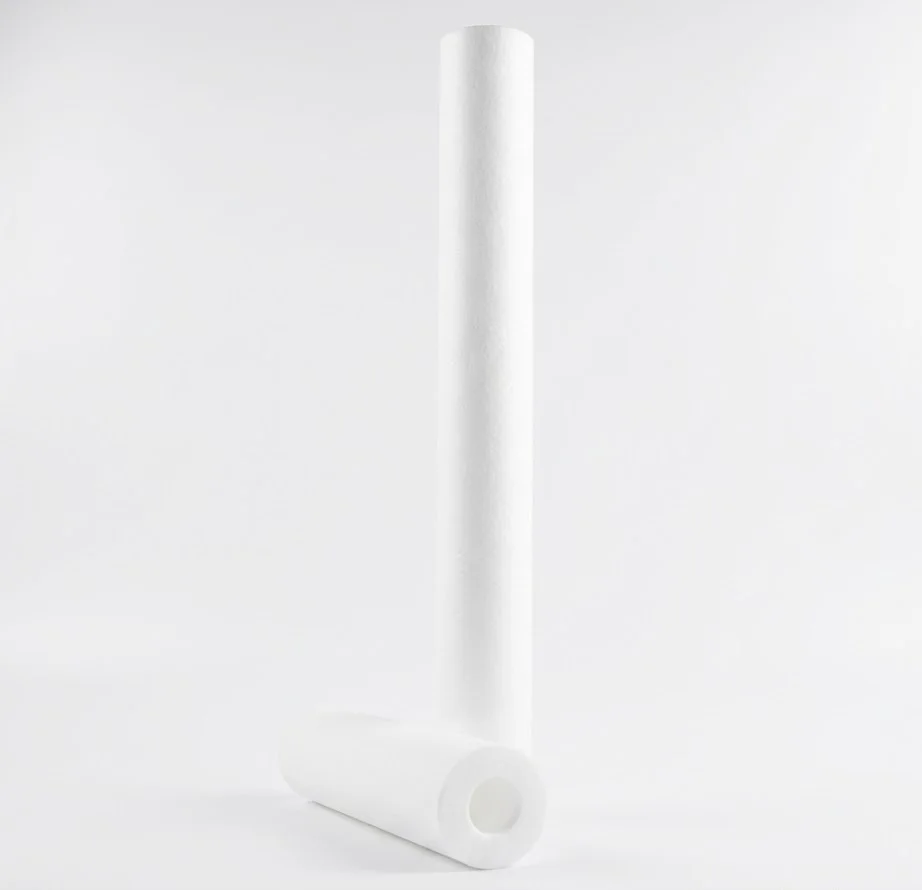
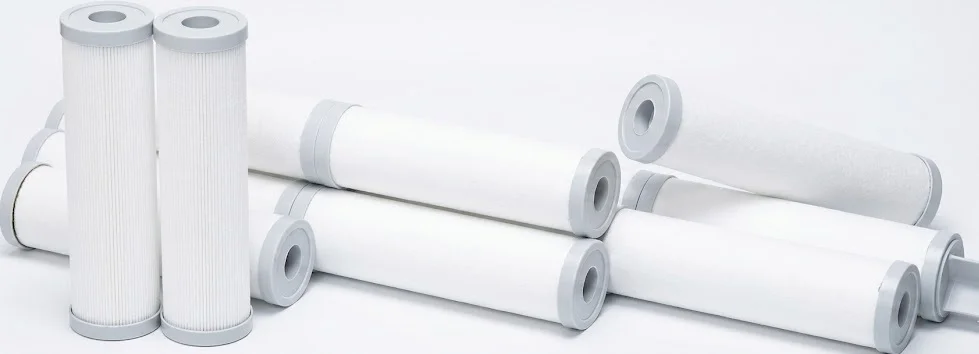
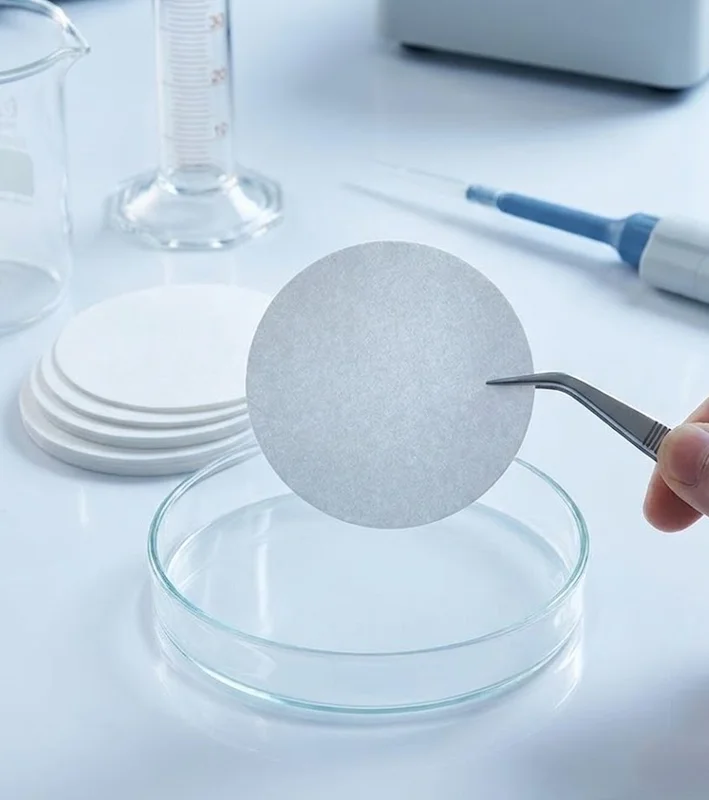
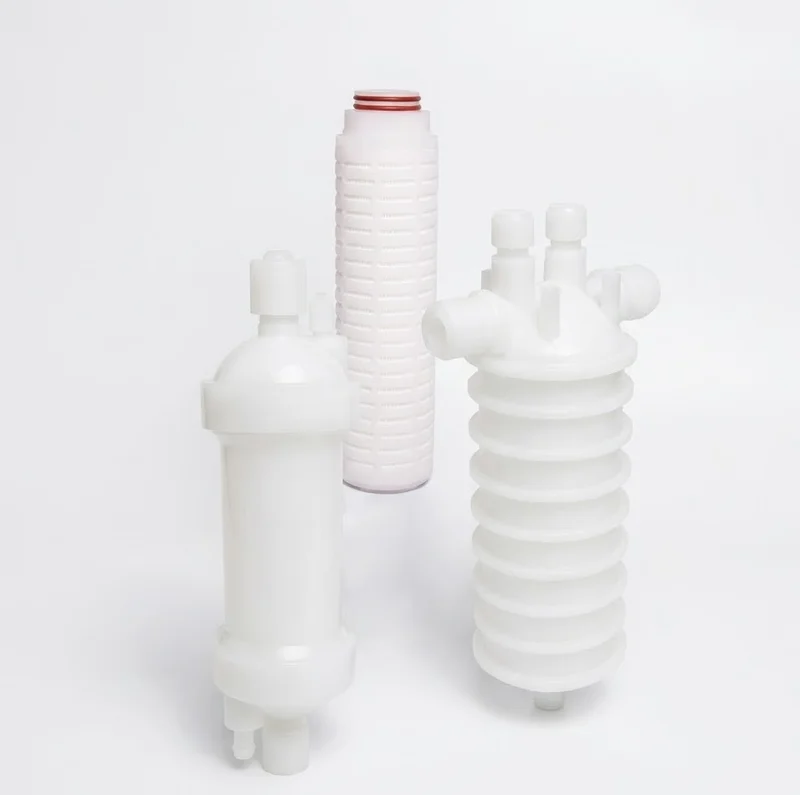
Flagship PES filter designed for biopharmaceutical and sterile processing. Using Asymmetric Polyethersulfone filter membrane, it has excellent high dirt holding capacity and flow rate performance. It has passed strict bacterial retention verification (B. diminuta) and multiple high-temperature sterilization tests, making it the best sterile barrier for vaccines, antibody drugs and water for injection (WFI).

  • Asymmetric polyethersulfone (PES) membrane with high-throughput design
  • Outstanding dirt-holding capacity for longer service life
  • Excellent flow performance boosting process throughput
  • Validated for B. diminuta bacterial retention
  • Passed repeated steam sterilization testing for reuse
  • Ideal sterile barrier for vaccines, antibody drugs and WFI
Micron rating
0.1 µm / 0.2 µm / 0.45 µm
Max operating temperature
80 °C (upper temperature of the rated pr
Effective filtration area
4": ≥ 0.35 m²
Nominal lengths
5" / 10" / 20" / 30" / 40"
Biopharmaceutical aseptic processing
Vaccine sterile filtration
Antibody drug filtration
Water for injection (WFI) filtration
Sterile liquid final filtration
Filter media / membrane
Asymmetric polyethersulfone (PES) sterilising-grade microporous membrane, naturally hydrophilic with low protein binding
Support & drainage layers
Polypropylene (PP) support & drainage layers
Cage, core & end caps
PP cage and end caps; core in PP, thickened PP, reinforced PP or 316L stainless
Seals / O-rings
Silicone / EPDM for aseptic service; FKM, NBR or Teflon-encapsulated options available
Micron rating
0.1 µm / 0.2 µm / 0.45 µm
Removal efficiency
0.2 µm grade validated for complete retention under a ≥ 1×10⁷ CFU/cm² Brevundimonas diminuta challenge (ASTM F838)
Effective filtration area
4": ≥ 0.35 m²; 10": ≥ 0.8 m²
Nominal outer diameter
Ø68 mm
Nominal lengths
5" / 10" / 20" / 30" / 40"
End cap / connection
222/flat, 222/fin, 226/fin, 226/flat, 226 stainless-steel lining/flat; DOE also available
Max operating temperature
80 °C (upper temperature of the rated pressure data)
Max forward differential pressure
5.2 bar @ 25 °C;1.9 bar @ 80 °C
Max reverse differential pressure
2.1 bar @ 25 °C
Recommended change-out ΔP
Change out when ΔP reaches 3–5× the clean initial value or 0.24 MPa (2.4 bar / 35 psi), whichever comes first
Sanitisation & cleaning
Withstands repeated 121 °C autoclave and steam-in-place (SIP) cycles; hot-water or chemical sanitisation also applicable
Wetting & flushing
Naturally hydrophilic — no alcohol pre-wetting required. Flush forward with process liquid or purified water and vent trapped air before use
Extractables & cleanliness
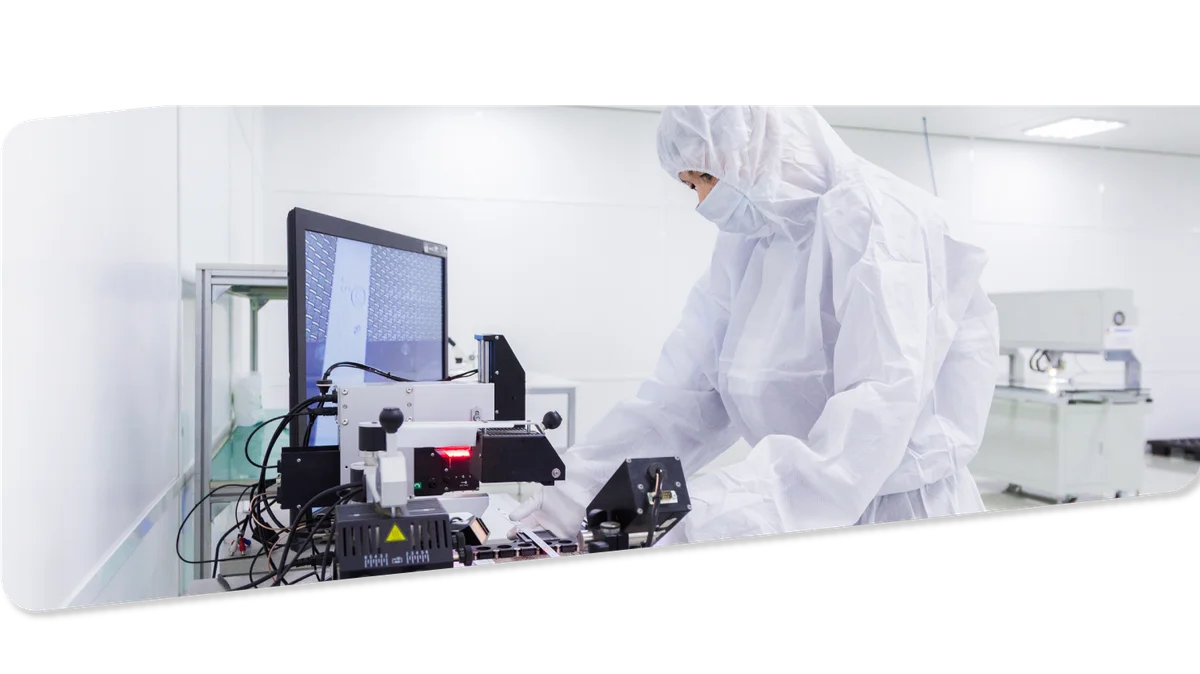
Cleanroom manufactured and heat-fusion welded with no adhesives; flushed with purified water and endotoxin tested before shipment
Integrity test
100% pre-shipment integrity tested; user-side bubble point or diffusive flow verification supported before and after use
Packaging
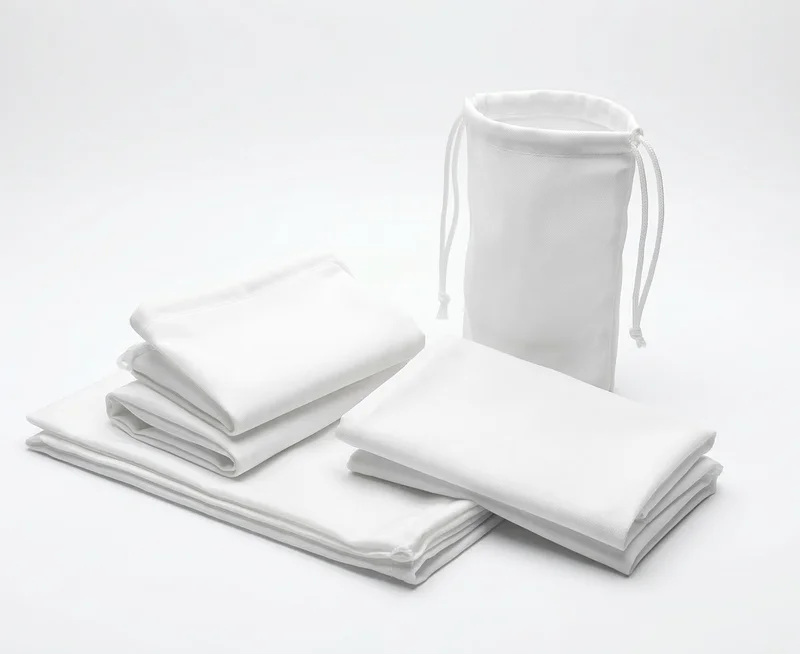
Double-bagged in cleanroom; sterile packaging available on request
Regulatory & validation
Membrane passes USP XXII <87> and <88> biological reactivity tests; plastic components comply with FDA 21 CFR and RoHS; suitable as a sterile barrier for vaccines, antibody drugs and WFI

Note: actual compatibility and service life depend on chemical concentration, temperature, flow, differential pressure, upstream contamination load and housing design. Validate under your real process conditions.

Example part number
JY
-BP11
-68
-P20
-10
-F6S
JY
JIUNYUAN Technology
BP11
Asymmetric PES sterilising-grade membrane on PP hardware, low protein binding
68
Ø68 mm
P20
0.2 µm
10
10"
F6S
226 fin | silicone O-ring
Selectable options by segment
01

Outer diameter

CodeSpecification
68Ø68 mm

Ø68 mm only; ≥ 0.35 m² at 4" and ≥ 0.8 m² at 10". The core can be PP, thickened PP, reinforced PP or 316L stainless.

02

Retention rating

CodeSpecification
P100.1 µm
P200.2 µm
P450.45 µm

Three sterilising grades only. P20 (0.2 µm) is validated for complete retention under a ≥ 1×10⁷ CFU/cm² Brevundimonas diminuta challenge (ASTM F838); P45 serves as a prefilter and P10 as a tighter sterile barrier.

03

Length

CodeSpecification
055"
1010"
2020"
3030"
4040"
04

End cap

CodeSpecification
T2222 / flat
F2222 / fin
F6226 / fin
T6226 / flat
DODouble open end (DOE)

Aseptic processes normally use the locking 226/fin (F6). A 226/flat with stainless lining is also available — ask sales for the code. DOE is supplied on request.

05

O-ring material

CodeSpecification
SSilicone
EEPDM
FFKM / Viton

For repeated 121 °C autoclave and SIP cycles choose silicone (S) or EPDM (E); FKM (F) is for special fluids. Sterile packaging is available on request.

Not every combination is a stock item; uncommon combinations are made to order. Confirm with JIUNYUAN sales before ordering.

Single open end, 226 with fin
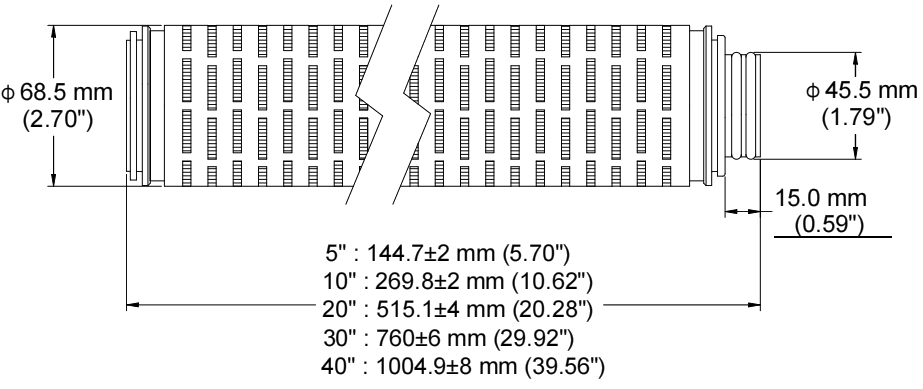
Single open end, 226 with finDrawing shows one representative size; the table below gives the exact diameter and length of each code.
Nominal lengthØA
5"68.5 mm144.7 ± 2 mm
10"68.5 mm269.8 ± 2 mm
20"68.5 mm515.1 ± 4 mm
30"68.5 mm760 ± 6 mm
40"68.5 mm1004.9 ± 8 mm

Ø = nominal outer diameter 68.5 mm (2.70"); A = overall length with end caps. Adapter OD Ø45.5 mm (1.79") with a 15.0 mm (0.59") fin section.

0.1 µm0.2 µm0.45 µm010.020.030.040.050.060.0L/min05.0010.015.0GPM010.020.030.040.050.060.0kPa02.505.007.50psi

UPW at 20 °C, single Ø68 mm 10" cartridge, clean initial ΔP Right axis shows the same values in psi.

A slightly higher ΔP than the curve on the first run after sterilisation is normal and settles back into range after flushing.

View data table
L/min / GPM0.1 µm0.2 µm0.45 µm
10.0 / 2.649.627.232.23
20.0 / 5.2819.214.54.45
30.0 / 7.9328.821.76.68
40.0 / 10.638.528.98.90
50.0 / 13.248.136.211.1
60.0 / 15.957.743.413.4

Where it fits

This sterilising-grade PES cartridge is the last barrier in an aseptic process: sterile filtration of vaccines, antibody drugs and water for injection before filling or entry into the sterile core. Unlike fine filtration, the pass criterion here is not that the filtrate looks clean but whether traceable retention and integrity evidence can be produced.

Key characteristics

The 0.2 µm grade is validated for complete retention under a Brevundimonas diminuta challenge of at least 1x10^7 CFU/cm2 to ASTM F838. That test is what defines a sterilising-grade filter — a 0.2 µm cartridge without it is fine filtration and cannot be claimed as sterilising.

The asymmetric polyethersulfone membrane is naturally hydrophilic with low protein binding, and for expensive biologics adsorptive loss is real yield loss. The cartridge withstands repeated 121 °C autoclave and steam-in-place cycles, is flushed with purified water and endotoxin tested before shipment, and sterile packaging is available on request.

Choosing between options

Against the general-purpose PES cartridge in the same family, it comes down to ratings and validation:

ItemSterilising-grade PES (this)General PES pleated
Rating0.1 / 0.2 / 0.45 µm0.05 – 5 µm
Bacterial challenge0.2 µm validated to ASTM F838
SterilisationRepeated 121 °C autoclave and steam-in-place
Choose it whenA sterile barrier needing traceable documentationFine filtration and clarification across scattered ratings

Operation & change-out

Naturally hydrophilic, so no alcohol pre-wetting. The user can verify integrity by bubble point or diffusive flow before and after use. Change out when ΔP reaches 3–5 times the clean initial value or 0.24 MPa (35 psi).

i
A slightly higher ΔP than the flow curve on the first run after sterilisation is normal and settles back into range once flushing stabilises — it is not by itself a sign of a faulty cartridge.
How is sterilization validated?
J-SteriPure-B is validated for B. diminuta bacterial retention, the recognized challenge organism for sterilizing-grade filters. With its asymmetric PES membrane, it ensures reliable microbial retention, a trusted sterile barrier for vaccines, antibody drugs and WFI.
Can it be repeatedly steam-sterilized?
It has passed repeated high-temperature sterilization testing and is designed for repeated steam sterilization such as SIP and autoclaving, suiting aseptic processes requiring recurring sterilization. Confirm supported cycles and conditions against the spec and with our engineers.
What is the benefit of asymmetric PES?
The asymmetric polyethersulfone structure maintains sterilizing retention while delivering high dirt-holding and flow, meaning longer life and higher throughput. For high-value vaccine and antibody feeds with heavier loads, it lowers changeout frequency and cost.

Further Reading

2026-05-04

Endotoxin Sources and Removal in Pharmaceutical Water: Key Filter Selection Criteria

Endotoxin (LPS) survives 0.22 µm sterile filtration intact, making it the hardest contaminant to control in pharmaceutical water. This article examines LPS molecular structure and thermal stability, traces endotoxin sources in pharmaceutical water systems — including dead legs, biofilm, and feed water — and systematically compares four removal technologies: ultrafiltration (UF, MWCO 6–30 kDa), charge-modified depth filtration, distillation, and RO+UF in series, with LRV data for each. Includes a filter selection decision tree and LAL/rFC validation workflow to help engineers achieve USP <85> WFI compliance (≤0.25 EU/mL).

2026-05-04

Endotoxin Filtration in WFI Manufacturing: Regulatory Requirements and Validation Workflow

Water for Injection (WFI) is the most stringently controlled water grade in pharmaceutical manufacturing, with all three major pharmacopeias (USP/EP/JP) requiring endotoxin ≤ 0.25 EU/mL. This article compares the evolving regulatory standing of distillation vs. membrane-based WFI production routes (EP 9.0 accepting membranes; JP still requiring distillation), details the four-phase DQ/IQ/OQ/PQ validation sequence, sterilizing filter pre-use/post-use integrity testing obligations, and 21 CFR Part 11 ALCOA+ data integrity requirements, with a curated list of the most common FDA/EMA inspection findings and their corrective actions.

2026-04-22

Polysulfone Family Filters: PPSU vs PSU vs PES Compared

PSU, PPSU, and PES share the same –SO₂– backbone but differ in the linker — yielding very different personalities. This article walks through a 14-spec comparison, common pitfalls, and a cross-comparison with PVDF/Nylon/MCE.