
Home/Products/Pleated Cartridge Filters/Semi-grade Nylon66 Pleated Filter
Semi-grade Nylon66 Pleated Filter

Semi-grade Nylon66 Pleated Filter

Product ID: semi-grade-nylon66-cartridge-filter|Semi-grade Nylon66

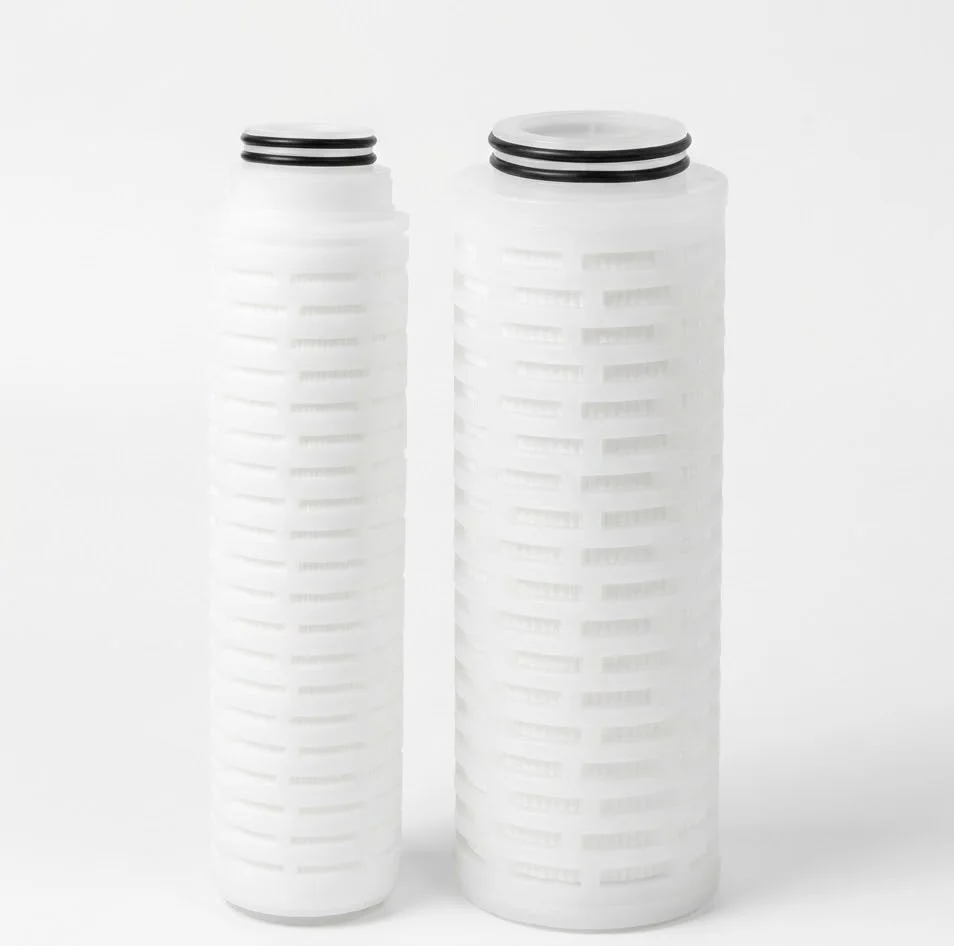
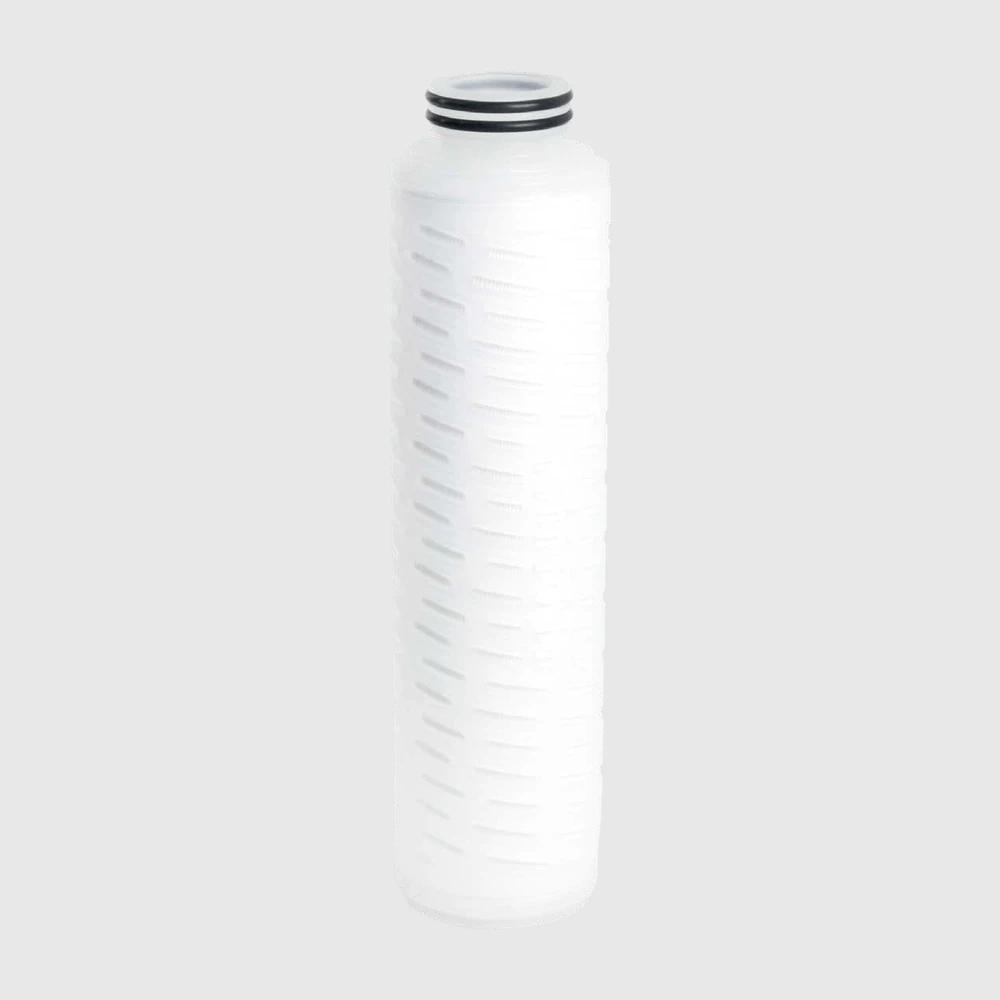
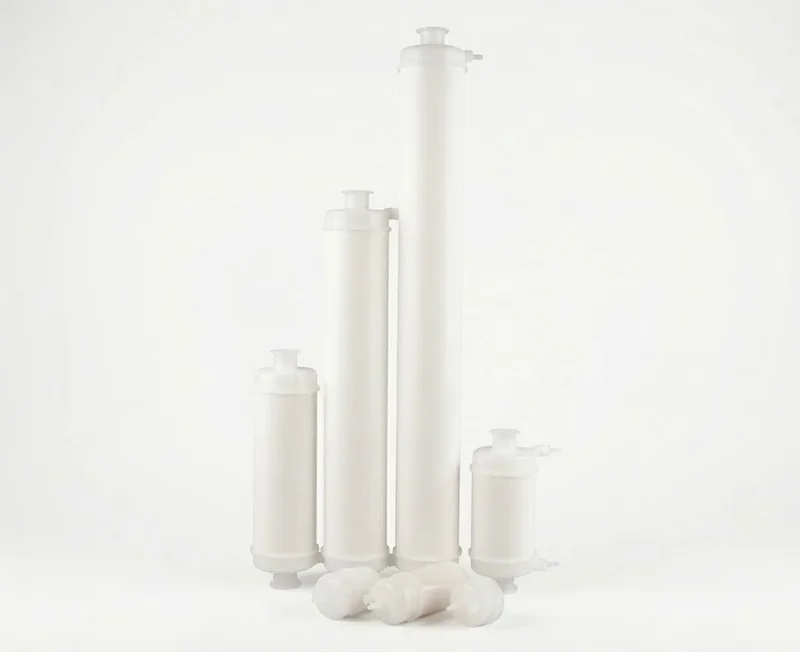
High-efficiency filter specially designed for SEMI-Photo lithography process. Constructed of naturally hydrophilic Nylon 66 membrane, providing nanometer-level precision from 2nm to 0.1µm. It has excellent organic cleanliness and low metal precipitation, and can effectively intercept fine particles in photoresist glue and solvents, ensuring the yield and stability of the yellow photolithography process.

  • Naturally hydrophilic Nylon 66 membrane suited to lithography
  • 2nm to 0.1µm nanoscale precision capturing ultra-fine particles
  • Excellent organic cleanliness lowering organic contamination risk
  • Low metal leaching to protect photo-process purity
  • Effectively captures fine particles in photoresist and solvents
  • Secures photolithography process yield and stability
Micron rating
2 nm – 0.1 µm
Max operating temperature
40 °C
Effective filtration area
Ø68 mm: 0.7 or 1.3 m²/10"
Nominal lengths
4" / 10" / 20"
Semiconductor photolithography (SEMI-Photo) processes
Photoresist filtration
Lithography solvent filtration
Nanoscale particle retention
Advanced-process yield control
Filter media / membrane
Naturally hydrophilic Nylon 66 membrane with very low organic extraction, intended for photoresist, solvent and other lithography chemistries
Support & drainage layers
HDPE or polypropylene support & drainage layers, selected to suit the chemistry
Cage, core & end caps
HDPE or polypropylene cage, core and end caps
Seals / O-rings
EPDM or TEV (modified EPDM) O-rings, 222 style
Micron rating
2 nm / 5 nm / 10 nm / 20 nm / 30 nm / 50 nm / 0.1 µm
Effective filtration area
Ø68 mm: 0.7 or 1.3 m²/10"
Nominal outer diameter
Ø68 mm
Nominal lengths
4" / 10" / 20"
End cap / connection
222 flat, single open end
Max operating temperature
40 °C
Max forward differential pressure
0.34 MPa (49 psi) @ 25 °C
Max reverse differential pressure
0.24 MPa (34 psi) @ 25 °C
Wetting & flushing
Naturally hydrophilic and wets out with UPW alone, so no alcohol pre-wet is required; displace stepwise with the process solvent when switching to solvent service
Extractables & cleanliness
Metal cleanliness selectable at < 3 / < 25 µg/device; organic extraction in solvents is very low
Integrity test
100% integrity tested before shipment
Packaging
Dry packed; UPW pre-wet packed
Regulatory & validation
Assembled and packed in a cleanroom
CodeOuter diameterMembrane area (10")
SXØ68 mm0.7 m²
SYØ68 mm1.3 m²

Note: actual compatibility and service life depend on chemical concentration, temperature, flow, differential pressure, upstream contamination load and housing design. Validate under your real process conditions.

Example part number
JY
-WE41
-68
-R05
-10
-E3W
JY
JIUNYUAN Technology
WE41
Naturally hydrophilic Nylon 66 membrane with very low organic extraction, for photoresist and solvent duty
68
Ø68 mm
R05
5 nm
10
10"
E3W
EPDM O-ring | grade 3 (< 3 µg/device) | UPW pre-wet
Selectable options by segment
01

Hardware material (appended to series code)

CodeSpecification
HHDPE support, cage and end caps
PPolypropylene support, cage and end caps

Hardware is chosen to suit the chemistry, e.g. JY-WE41H-68-R05-10-E3W is the HDPE build. Left unmarked, sales assigns it from the chemistry.

02

Outer diameter

CodeSpecification
68Ø68 mm

Ø68 mm only; the 0.7 m² (SX) and 1.3 m² (SY) membrane areas are specified in the remarks field.

03

Retention rating

CodeSpecification
R022 nm
R055 nm
R1010 nm
R2020 nm
R3030 nm
R5050 nm
P100.1 µm
04

Length

CodeSpecification
044"
1010"
2020"
05

O-ring material

CodeSpecification
EEPDM
VTEV (modified EPDM)
06

Cleanliness grade

CodeSpecification
3< 3 µg/device
5< 25 µg/device

The catalogue offers < 3 and < 25 µg/device (codes 3 and 5); cartridges are assembled and packed in a cleanroom.

07

Packaging

CodeSpecification
DDry packed
WUPW pre-wet packed

Naturally hydrophilic and wets out with UPW alone — no alcohol pre-wet needed; displace stepwise with the process solvent when switching to solvent service.

Not every combination is a stock item; uncommon combinations are made to order. Confirm with JIUNYUAN sales before ordering.

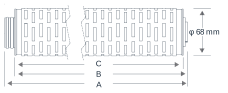
Single open end, 222 flat
Single open end, 222 flatDrawing shows one representative size; the table below gives the exact diameter and length of each code.
Diameter / nominal lengthABC
Ø68 mm 4"131.5 ± 2 mm117.0 ± 2 mm115.0 ± 2 mm
Ø68 mm 10"249.5 ± 2 mm235.0 ± 2 mm233.0 ± 2 mm
Ø68 mm 20"488.5 ± 2 mm474.0 ± 2 mm472.0 ± 2 mm

A = overall length; B = seal face to seal face; C = effective media length.

2 nm5 nm10 nm20 nm30 nm50 nm00.250.500.751.00GPM01.002.003.00LPM020.040.060.080.0kPa05.0010.0psi

UPW at 25 °C, single Ø68 mm 10" cartridge (0.7 m²), clean initial ΔP Right axis shows the same values in psi.

The axis stops at 1 GPM — at 2 nm the ΔP budget is nearly spent by 1 GPM. The 1.3 m² build roughly halves ΔP at the same flow.

View data table
GPM / LPM2 nm5 nm10 nm20 nm30 nm50 nm
0.25 / 0.9519.912.78.475.102.521.19
0.50 / 1.8939.825.516.910.25.042.38
0.75 / 2.8459.838.225.415.37.563.57
1.00 / 3.7979.750.933.920.410.14.76
ChemicalNylon 66PPEPDM
— 酸 —
Glacial acetic acidNRRR
Hydrochloric acid, conc.NRRNR
Hydrochloric acid, 6NNRRNR
Nitric acid, conc.NRRNR
Nitric acid, 6NNRRNR
Phosphoric acid, conc.NRRR
Sulfuric acid, conc.NRRNR
Hydrofluoric acid, 6NNRNRNR
— 鹼 —
Ammonium hydroxide, 1NRRR
Ammonium hydroxide, 3NRRLR
Potassium hydroxide, 3NRRR
Sodium hydroxide, 3NRRR
Sodium hydroxide, 6NRRR
— 醇類 —
Amyl alcoholRRR
Benzyl alcoholRRR
ButanolRRR
Isopropyl alcohol (IPA)RRR
MethanolLRRR
— 酮類 —
AcetoneRRR
CyclohexanoneRNR
Methyl ethyl ketone (MEK)LRRR
Methyl isobutyl ketone (MIBK)LRRR
— 油類 —
Cottonseed oilRRR
Lubricating oilRRR
Peanut oilRRR
Sesame oilRRR
— 芳香烴 —
BenzeneLRNRNR
TolueneNRNRNR
XyleneLRNRNR
— 鹵代烴 —
Carbon tetrachlorideLRLRNR
ChloroformLRLRNR
Ethylene dichlorideLRLRNR
Freon TFRLRNR
Freon TMCLRLRNR
DichloromethaneNRLRNR
PerchloroethyleneLRNR
TrichloroethyleneLRLRNR
— 二醇類 —
Ethylene glycolRRR
GlycerolRRR
Propylene glycolRRR
— 醚類 —
Diethyl etherNRLRNR
Isopropyl etherRNR
DioxaneRRNR
Tetrahydrofuran (THF)NRLRNR
— 酯類 —
Amyl acetateLRRR
Butyl acetateLRLRR
Cellosolve acetateRR
Ethyl acetateLRLRR
Methyl acetateLRRR
Isopropyl acetateRR
— 其他 —
AnilineLRLRR
Dimethylformamide (DMF)RRR
Formaldehyde, 37%RRR
GasolineLRLRR
Hexane (anhydrous)LRNR
KeroseneRNR
PhenolRRNR
PyridineLRLRR
WaterRRR
AcetonitrileLRLRR
  • R = resistant
  • LR = limited resistance, validate on site
  • NR = not resistant
  • — = no data

Ratings are general material-level guidance, not guarantees. Actual concentration, temperature, exposure time and mechanical stress all affect the outcome — validate with samples under your real process conditions before adoption.

Where it fits

This cartridge sits on the chemical supply side of the lithography module: the last filtration step before photoresist, thinner, developer and edge bead remover reach the wafer. Coating gives no second chance — one particle carried through is one defect on the wafer — so this element sits directly on yield.

Key characteristics

Nylon 66 is a naturally hydrophilic membrane that wets out with ultrapure water alone, so no isopropanol pre-wet procedure is needed. Dropping the alcohol introduction and displacement step after a change-out shortens start-up and removes one route for residual solvent to reach the process chemistry.

What lithography really cares about is organic cleanliness: solvents extract organics out of the filter materials and those go onto the wafer with the chemistry. Organic extraction in solvents is very low here, metal cleanliness is selectable at < 3 or < 25 µg/device, and assembly and packing are done in a cleanroom.

Choosing between options

The two workhorse lithography cartridges differ in wettability and available ratings:

ItemNylon 66 (this)UPE
MembraneNylon 66, naturally hydrophilicUPE, hydrophobic
Rating2 nm – 0.1 µm2 nm – 0.2 µm
Diameter / areaØ68 mm, 0.7 or 1.3 m2 per 10"Ø68 1.2 m2 / Ø83 1.8 m2 per 10"
Choose it whenAqueous or polar chemistry, alcohol-free start-up wantedGel capture in photoresist, more membrane area needed

Operation & change-out

Wet out with ultrapure water. When moving to a solvent-based chemistry, displace stepwise with that solvent rather than switching in one go. Maximum forward ΔP is 0.34 MPa and reverse 0.24 MPa, with a 40 °C ceiling.

There is a reason the flow curve axis stops at 1 GPM: at 2 nm the usable ΔP budget is nearly spent by that point. In practice nanometre ratings run at low flow with cartridges in parallel, and the 1.3 m2 build roughly halves ΔP at the same flow.
Why Nylon 66 for the photo process?
It is built for SEMI-Photo lithography. The naturally hydrophilic Nylon 66 membrane offers excellent organic cleanliness and low metal leaching, capturing fine particles in photoresist and solvents at 2nm-onward precision, protecting photo-process yield and stability.
What does 2nm retention solve?
2nm to 0.1µm retention captures extremely fine particles and gels in photoresist and solvents that, at advanced nodes, cause pattern defects and yield loss. Fine filtration keeps photoresist quality consistent, improving lithography resolution and yield.
Why is organic cleanliness vital?
Photoresist and solvents are highly sensitive to organic contamination, where leached organics can disrupt development and pattern transfer. This filter emphasizes organic cleanliness and low metal leaching to reduce secondary contamination, a key selection factor.