


Where it fits
Vessels and agitators are the two items with the largest wetted area in a chemical system: chemical stays far longer in a tank than in a pipe, and agitation keeps scouring the blade surfaces. Make the piping fully fluoropolymer but leave the tank in plain stainless steel, and the metal background simply comes back in the tank.
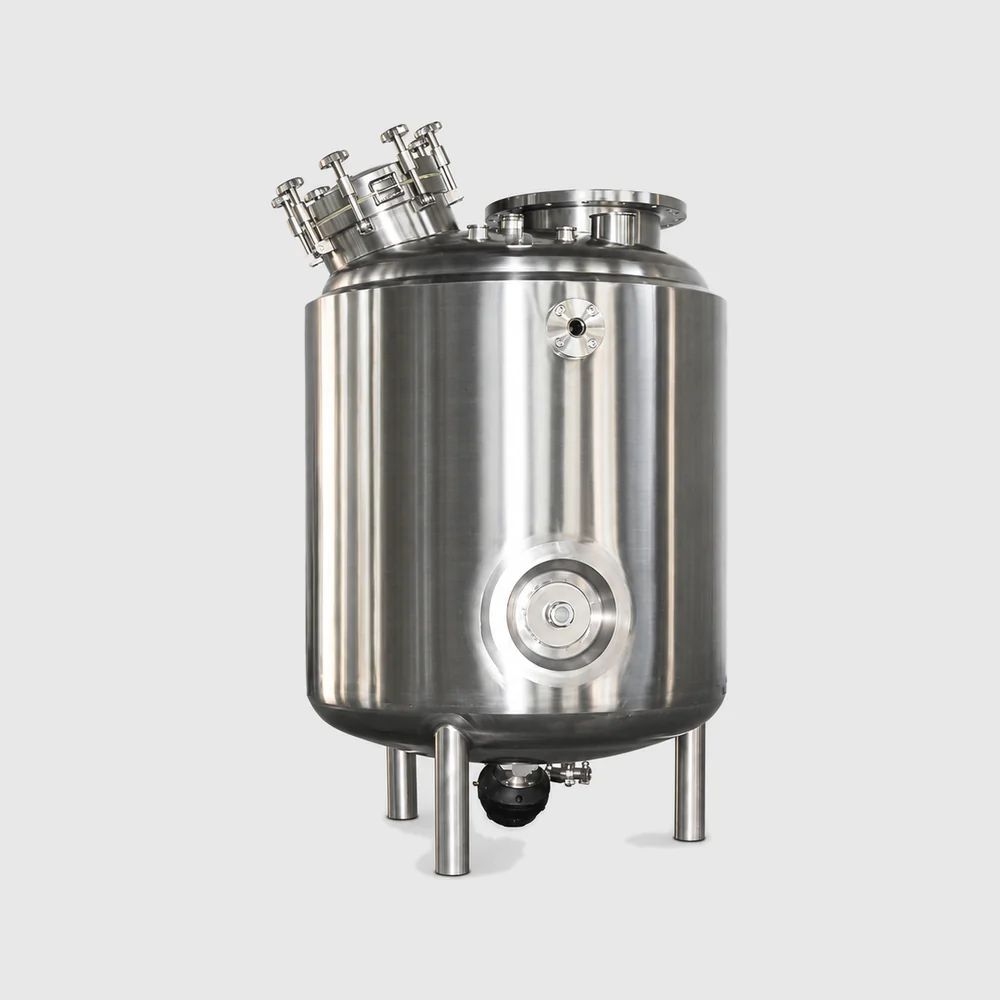
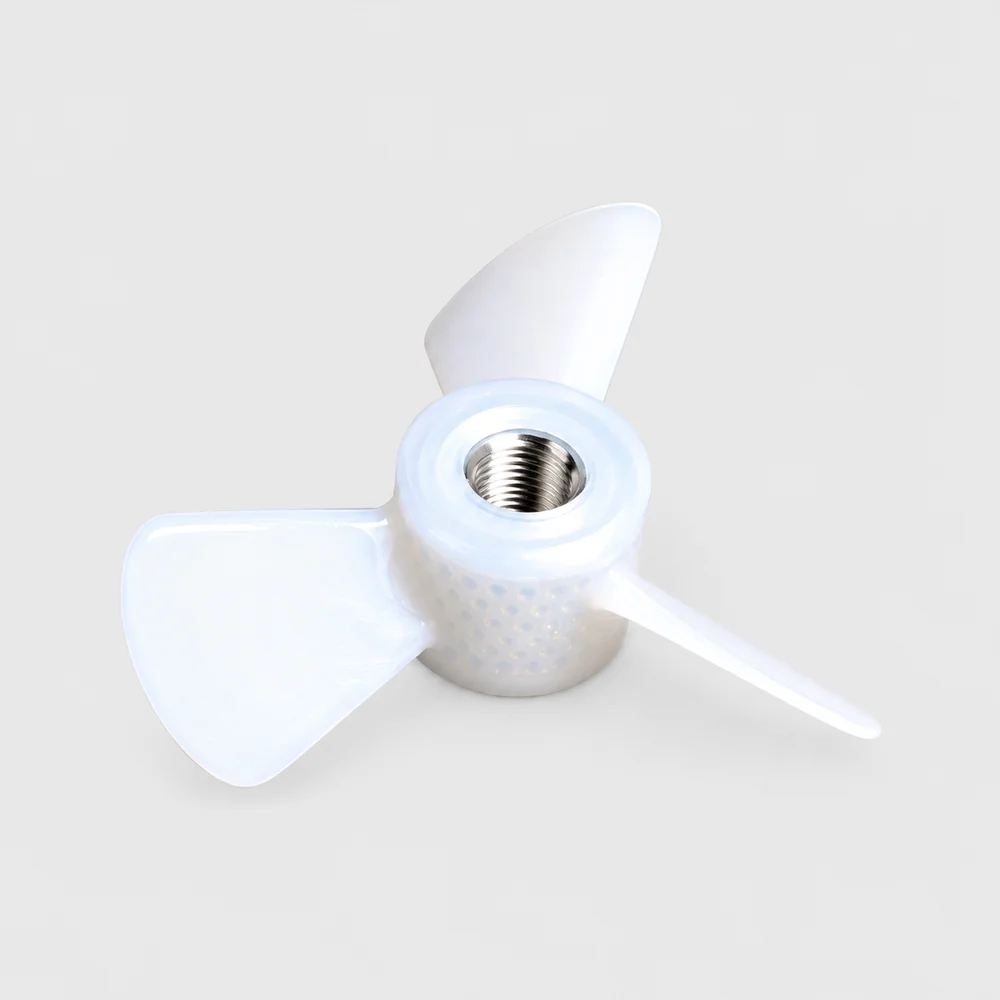
In this series the vessel is 316L stainless lined with high-purity PFA and the agitator is a 316L core encapsulated in white PFA; both are made to your requirement and drawing. They serve semiconductor chemical distribution systems (CDS), ultrapure fluids in wet processing, display and solar wet processing, and blending and buffer storage in pharmaceutical processes.
Key characteristics
- PFA inside, stainless outside: the 316L stainless shell provides the structural strength and the high-purity PFA lining keeps the wetted surface clean; Tri-Clamp nozzles with PFA gaskets.
- PFA-encapsulated agitator: the 316L core gives stiffness and is encapsulated in white PFA. How the shaft joins the hub decides which material the fluid meets at that joint, so confirm it against the drawing when enquiring.
- Arranged to drawing: volume to your requirement, with top nozzles, side sight glass, bottom valve and legs laid out to the drawing.
- Operating envelope: resistant to acids, alkalis, chemicals and steam; the vessel is rated -30 to +150 °C and vacuum to 1.0 MPa (at 20 °C), FDA compliant. The PFA resin can be specified to suit the cleanliness requirement — an ultra-high-purity grade from a leading international brand, or a cost-effective high-purity grade — and material certificates are available.
Choosing between options
For made-to-order equipment, these points set the direction of the design, so please include them with your enquiry:
| Item | Why it matters | What to send |
|---|---|---|
| Medium and concentration | Decides whether a PFA lining is enough; highly permeating media need separate assessment | Chemical name, concentration, whether it carries particles |
| Operating temperature and pressure | The higher the temperature, the lower the allowable pressure; vacuum duty counts too | Normal and worst-case temperature and pressure |
| Volume and space | Sets the vessel dimensions and leg height | Working volume, installation space |
| Nozzle layout | Which nozzles are needed for feed, discharge, vent, sampling and level measurement, and where | Nozzle list or sketch |
| Agitation | Determines the agitator design and shaft connection | Purpose of mixing, viscosity of the medium |
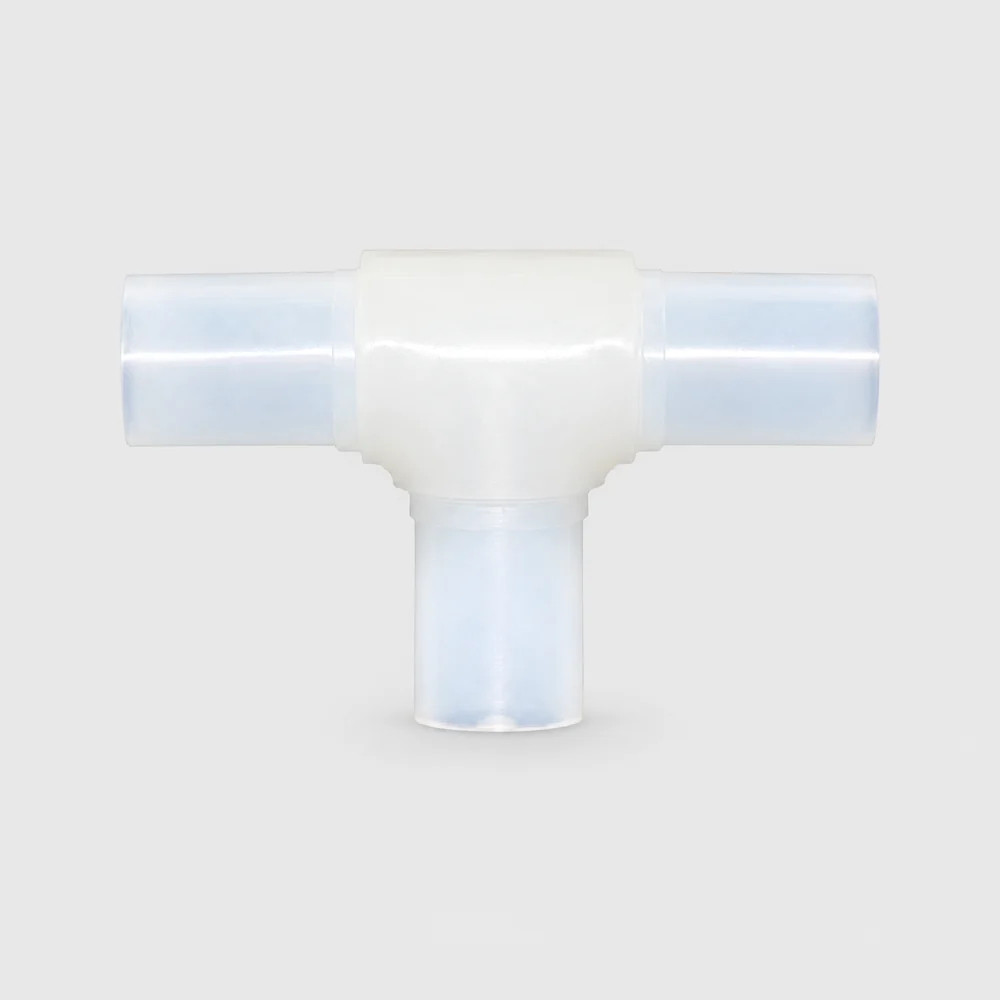
The valves around the vessel can come from this category too: the PFA-lined tank-bottom diaphragm valve for bottom discharge, the PFA-lined sampling valve for sampling and the PFA-lined Tri-Clamp vent breather for the vent. Confirm the connection specifications together with the drawing.
Operation & change-out
Mechanical damage is the main enemy of a lined vessel: a tool, the agitator or a fitting striking the wall leaves a scratch or dent in the PFA lining, which becomes a starting point for particle build-up and chemical permeation. Take particular care when installing the agitator and internal fittings, and avoid hard brushes when cleaning.
The higher the temperature, the less pressure the PFA lining can take, and vacuum duty and frequent thermal cycling put extra load on it — list your actual conditions when enquiring. The valves, sight glass and fittings mounted on the vessel each have their own rating, and the assembly is limited by the lowest of them.