
PP Capsule Filter

PP Capsule Filter

Product ID: j-ppa-capsule-filter-pp-material|PP

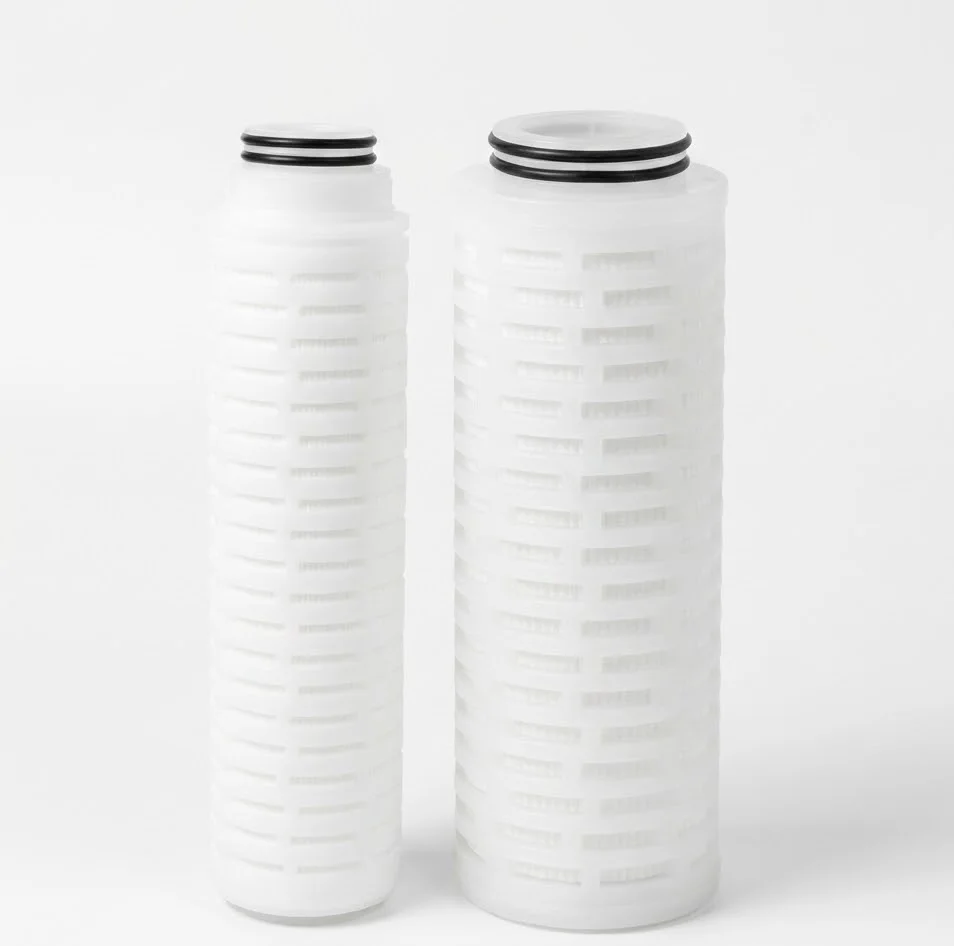
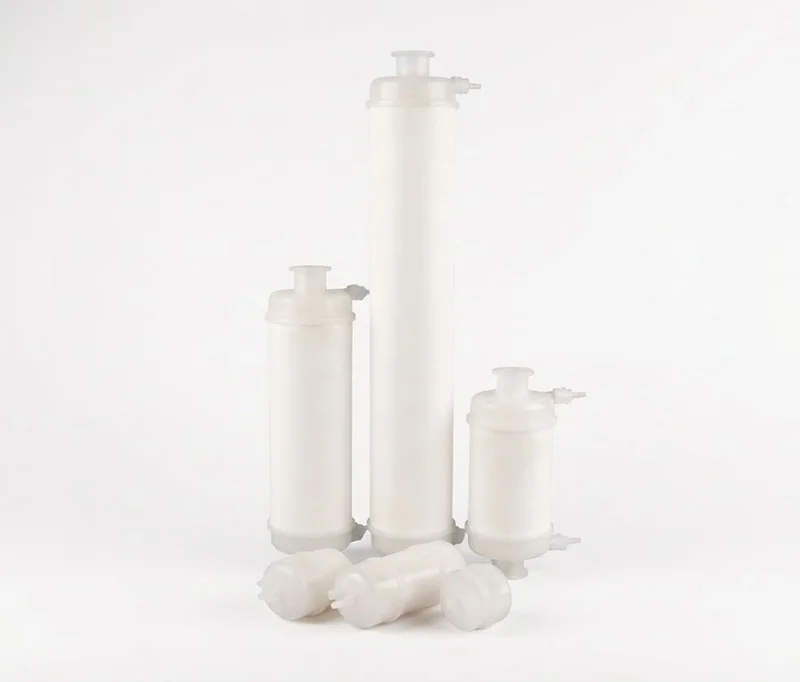
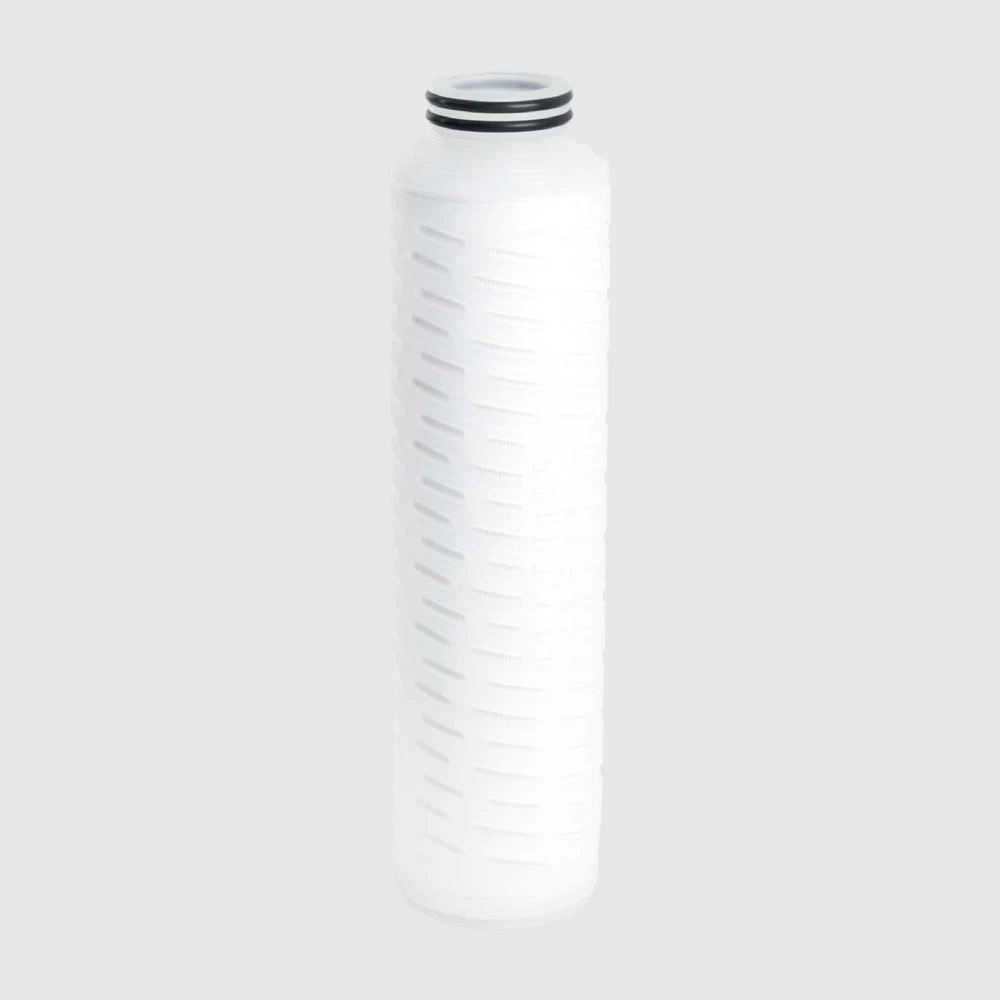
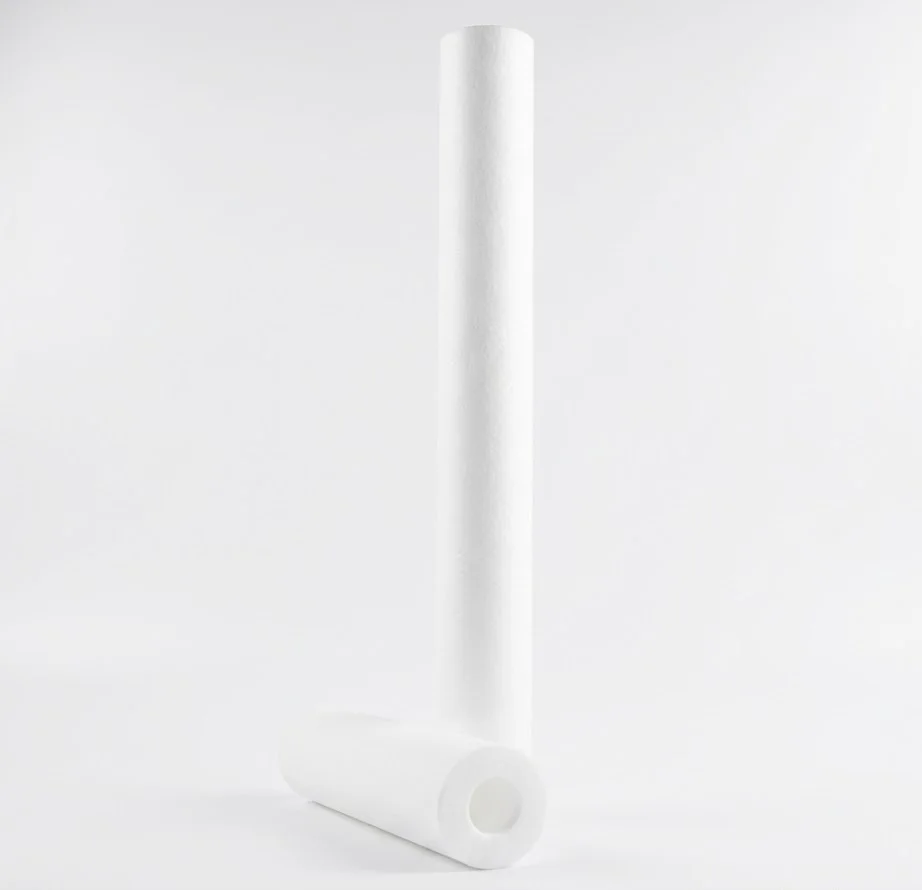
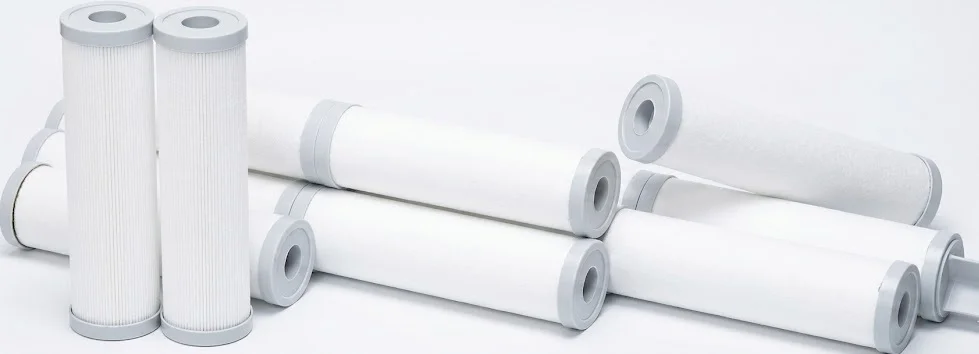
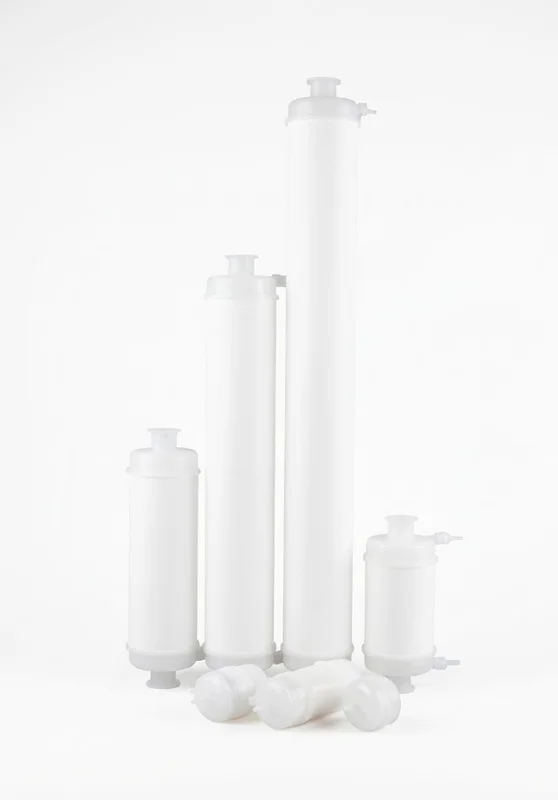
High-throughput capsule filter designed for biopharmaceutical and laboratory mass production. Constructed of gradient pore polypropylene (PP) microfibers with excellent dirt holding capacity and high flow rate characteristics. Offering a variety of sizes (C80/C150/C300, etc.) and connector options, it is the best economical solution for cell culture fluid clarification, serum prefiltration and gas pretreatment.

  • Graded-pore polypropylene microfiber
  • Excellent dirt-holding capacity
  • High flow rate
  • Multiple sizes: C80/C150/C300
  • Various connector options
Micron rating
0.1 – 10.0 µm
Max operating temperature
Up to 82 °C, with the pressure rating de
Effective filtration area
≥ 0.5 m² per 10" media section
Max forward differential pressure
Forward 5.2 bar (75 psi) @ 25 °C
Cell culture broth clarification
Serum pre-filtration
Gas pre-treatment
Small-batch biopharma production
Laboratory process pre-filtration
Filter media / membrane
Multi-layer polypropylene microfibre media with a graded pore structure — coarse solids are captured in the outer layers before fines reach the tight layer, giving far more dirt-holding capacity than a single-layer build
Support & drainage layers
High-strength polypropylene support and drainage layers that keep the media from collapsing or shifting at high flux
Body material
One-piece polypropylene shell and end caps, thermally welded throughout with no adhesives; no metal parts in the wetted path
Seals / O-rings
The body is thermally welded and has no main O-ring; port gaskets in silicone or EPDM, with FKM available for aggressive fluids
Micron rating
0.1 / 0.22 / 0.45 / 0.65 / 1.0 / 3.0 / 5.0 / 10.0 µm
Effective filtration area
≥ 0.5 m² per 10" media section; shorter capsules scale down proportionally by size code (C80 / C150 / C300)
Inlet / outlet connections
Inlet/outlet 1/4"–1-1/2" with hose barb, sanitary tri-clamp, threaded and quick-connect options; the connections are moulded into the same polypropylene body
Hold-up volume
Hold-up rises with the size code. Depth media itself holds liquid, so blow down with gas before draining if recovery matters
Vent & drain
One polypropylene vent valve on top and one drain valve underneath, both hand-operated; the vent can take a hydrophobic membrane cap to keep the sterile boundary intact
Max operating temperature
Up to 82 °C, with the pressure rating derated at temperature (see the next row)
Max forward differential pressure
Forward 5.2 bar (75 psi) @ 25 °C; 1.9 bar (28 psi) @ 82 °C; reverse 2.1 bar (30 psi) @ 25 °C
Recommended change-out ΔP
A single-use capsule cannot be backwashed or regenerated. Change out when ΔP reaches 3–5× the clean initial value or 2.0 bar (29 psi), whichever comes first
Sterilisation
The all-polypropylene build takes 121 °C / 30 min autoclave cycles, typically up to 3 cumulative cycles; the datasheet for the selected model governs
Wetting & flushing
Polypropylene depth media is hydrophobic: start aqueous service at low flow with the vent fully open and only ramp up once the outlet is bubble-free, otherwise trapped air pushes measured ΔP well above the curve
Extractables & cleanliness
Flushed with purified water before shipment; an electronic grade with low metal-ion extraction is available for electronic chemicals and developer / stripper pre-treatment
Integrity test
Nominally rated depth media, so bubble-point integrity testing does not apply; flow and ΔP are verified batch by batch, with particle removal efficiency reports available on request
Packaging
Individually double-bagged, assembled and sealed in a cleanroom; gamma pre-sterilised units available
Regulatory & validation
Produced in a cleanroom and thermally welded with no adhesives; wetted materials meet 21 CFR 177 food-contact requirements and material declarations can be supplied

Note: actual compatibility and service life depend on chemical concentration, temperature, flow, differential pressure, upstream contamination load and housing design. Validate under your real process conditions.

Example part number
JY
-GP35K
-L10
-P22
-HBEN
JY
JIUNYUAN Technology
GP35K
Multi-layer PP microfibre with a graded pore structure in a one-piece capsule; suffix K = kapsule
L10
10" 濾材段(≥ 0.5 m²)
P22
0.22 µm
HBEN
Hose barb | EPDM gasket | standard bag
Selectable options by segment
01

Capsule size (effective area)

CodeSpecification
C80Size code C80 (short capsule)
C150Size code C150 (short capsule)
C300Size code C300 (short capsule)
L1010" media section (≥ 0.5 m² area)

Short capsules scale their area down proportionally from the ≥ 0.5 m² of a 10" section, and hold-up volume rises with the size code. Depth media itself holds liquid, so blow down with gas before draining to improve recovery.

02

Retention rating

CodeSpecification
P100.1 µm
P220.22 µm
P450.45 µm
P650.65 µm
M0011 µm
M0033 µm
M0055 µm
M01010 µm

Nominally rated depth media, so bubble-point integrity testing does not apply. An electronic grade with low metal-ion extraction is available for electronic chemicals, developers and strippers — state this when requesting a quotation.

03

Inlet / outlet style

CodeSpecification
HBHose barb
TCSanitary tri-clamp
THThreaded
QCQuick connect

Ports run 1/4"–1-1/2"; specify the bore at order (the available range depends on the capsule size). Connections are moulded into the polypropylene body, so the wetted path carries no metal parts.

04

Port gasket material

CodeSpecification
SSilicone
EEPDM
FFKM / Viton

The body is thermally welded and has no main O-ring — this segment is the port gasket. FKM is only needed for aggressive fluids.

05

Supply condition

CodeSpecification
NStandard double cleanroom bag, non-sterile
GGamma pre-sterilised

Not every combination is a stock item; uncommon combinations are made to order. Confirm with JIUNYUAN sales before ordering.

0.1 µm0.22 µm0.45 µm1.0 µm3.0 µm10.0 µm010.020.030.040.0L/min02.505.007.5010.0GPM05.0010.015.020.025.0kPa01.002.003.00psi

Purified water at 20 °C (1 cP), single 10" media section, clean initial ΔP Right axis shows the same values in psi.

These curves are for the media section alone; the capsule shell and connections add their own drop, which can be significant with small ports at high flow. For fluids of different viscosity, multiply ΔP by the viscosity in centipoise.

View data table
L/min / GPM0.1 µm0.22 µm0.45 µm1.0 µm3.0 µm10.0 µm
10.0 / 2.645.673.132.662.211.390.97
20.0 / 5.2811.36.265.314.432.781.93
30.0 / 7.9317.09.397.976.654.172.90
40.0 / 10.622.712.510.68.865.563.86
ChemicalPPEPDM矽膠 Silicone
— 酸 —
Glacial acetic acidRRLR
Hydrochloric acid, conc.RNRNR
Hydrochloric acid, 6NRNRNR
Nitric acid, conc.RNRNR
Nitric acid, 6NRNRLR
Phosphoric acid, conc.RRNR
Sulfuric acid, conc.RNRNR
Hydrofluoric acid, 6NNRNRNR
— 鹼 —
Ammonium hydroxide, 1NRRR
Ammonium hydroxide, 3NRLRR
Potassium hydroxide, 3NRRLR
Sodium hydroxide, 3NRRR
Sodium hydroxide, 6NRRR
— 醇類 —
Amyl alcoholRRNR
Benzyl alcoholRRLR
ButanolRRR
Isopropyl alcohol (IPA)RRR
MethanolRRR
— 酮類 —
AcetoneRRNR
CyclohexanoneRNRNR
Methyl ethyl ketone (MEK)RRNR
Methyl isobutyl ketone (MIBK)RRNR
— 油類 —
Cottonseed oilRRR
Lubricating oilRRR
Peanut oilRRR
Sesame oilRRR
— 芳香烴 —
BenzeneNRNRNR
TolueneNRNRNR
XyleneNRNRNR
— 鹵代烴 —
Carbon tetrachlorideLRNRNR
ChloroformLRNRNR
Ethylene dichlorideLRNRNR
Freon TFLRNRNR
Freon TMCLRNRNR
DichloromethaneLRNRNR
PerchloroethyleneLRNRNR
TrichloroethyleneLRNRNR
— 二醇類 —
Ethylene glycolRRR
GlycerolRRR
Propylene glycolRRR
— 醚類 —
Diethyl etherLRNRLR
Isopropyl etherRNRNR
DioxaneRNRNR
Tetrahydrofuran (THF)LRNRNR
— 酯類 —
Amyl acetateRRNR
Butyl acetateLRRNR
Cellosolve acetateRRNR
Ethyl acetateLRRR
Methyl acetateRR
Isopropyl acetateRRLR
— 其他 —
AnilineLRRNR
Dimethylformamide (DMF)RRR
Formaldehyde, 37%RRR
GasolineLRRNR
Hexane (anhydrous)LRNRNR
KeroseneRNRNR
PhenolRNRNR
PyridineLRRNR
WaterRRLR
AcetonitrileLRR
  • R = resistant
  • LR = limited resistance, validate on site
  • NR = not resistant
  • — = no data

Ratings are general material-level guidance, not guarantees. Actual concentration, temperature, exposure time and mechanical stress all affect the outcome — validate with samples under your real process conditions before adoption.

Where it fits

The high-flow polypropylene capsule does clarification and pre-filtration: cell culture broth clarification, serum pre-filtration, gas pre-treatment, and guard duty ahead of electronic chemicals, developers and strippers. Its role is clear — hold the load here so the sterilising-grade or semiconductor-grade filter downstream can do the real gatekeeping.

Key characteristics

The multi-layer microfibre tightens layer by layer from the outside in: coarse solids are caught in the outer layers before fines reach the tight one. Against a single-density build, that gives far more dirt-holding capacity, and differential pressure climbs steadily instead of blinding all at once.

This is the widest operating window of the seven capsules — both temperature and pressure ratings sit clearly above the rest of the family, which saves a derating exercise on warm feeds or lines with plenty of pump head. As nominally rated depth media it is not bubble-point testable, so batch verification is by flow and differential instead.

Choosing between options

Among polypropylene capsules, and among capsule prefilters generally:

ProductMediaRating rangeReason to pick it
High-flow PP capsule (this)Multi-layer polypropylene microfibre, graded pores0.1 – 10 µmGeneral pre-filtration for biotech and electronic chemicals; wide operating window, electronic grade available
Glass fibre capsuleUltrafine glass fibre, three-dimensional depth0.5 – 20 µm nominalColloids and viscous feeds where dirt-holding comes first
Semiconductor PP CMP point-of-use capsuleMelt-blown or pleated polypropylene depth50 nm – 10 µmCMP slurry at the point of use, where the abrasive size distribution must survive

Operation & change-out

Short capsules are distinguished by size code, and both effective area and hold-up rise with the code. Depth polypropylene media itself holds liquid, so blow down with gas before draining if recovery matters. A single-use capsule cannot be backwashed or regenerated — change it at the differential threshold in the specification table.

i
Polypropylene depth media is hydrophobic: on aqueous service, start at low flow with the vent fully open and only ramp up once the outlet runs bubble-free. Trapped air pushes measured ΔP well above the flow curve and is easily mistaken for a defective element.
Why graded-pore media?
Graded pores trap different particle sizes at different depths, raising dirt-holding and flow. As a clarification or pre-filter it extends life and protects downstream filters.
What sizes and fittings?
It comes in C80, C150 and C300 sizes with various connectors, making it easy to match flow needs and on-site piping for biopharma and lab-scale production.
Is it a sterilizing filter?
No. This is a high-flow PP pre-filter for clarification, serum pre-filtration and gas pre-treatment. Pair it with a downstream sterilizing filter for sterility.