
Where it fits
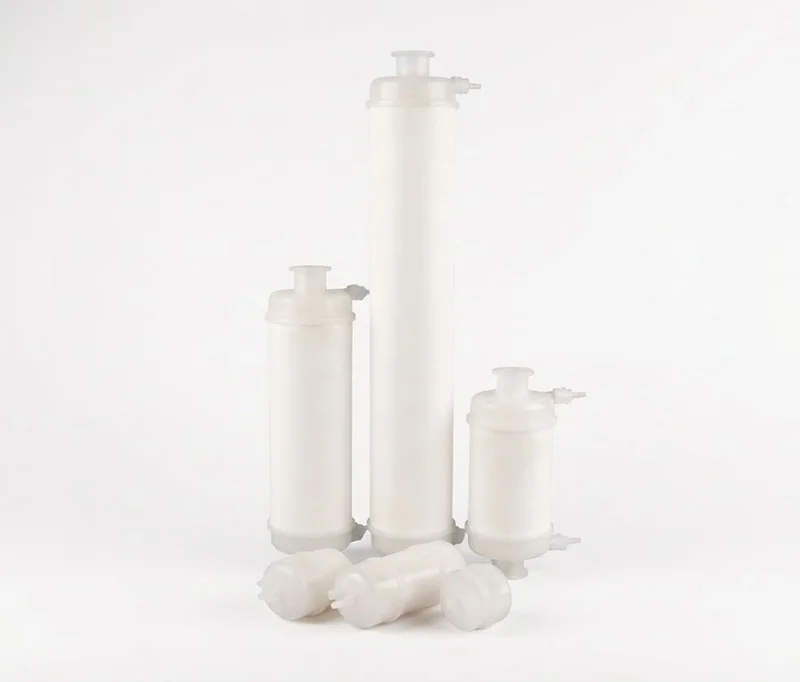
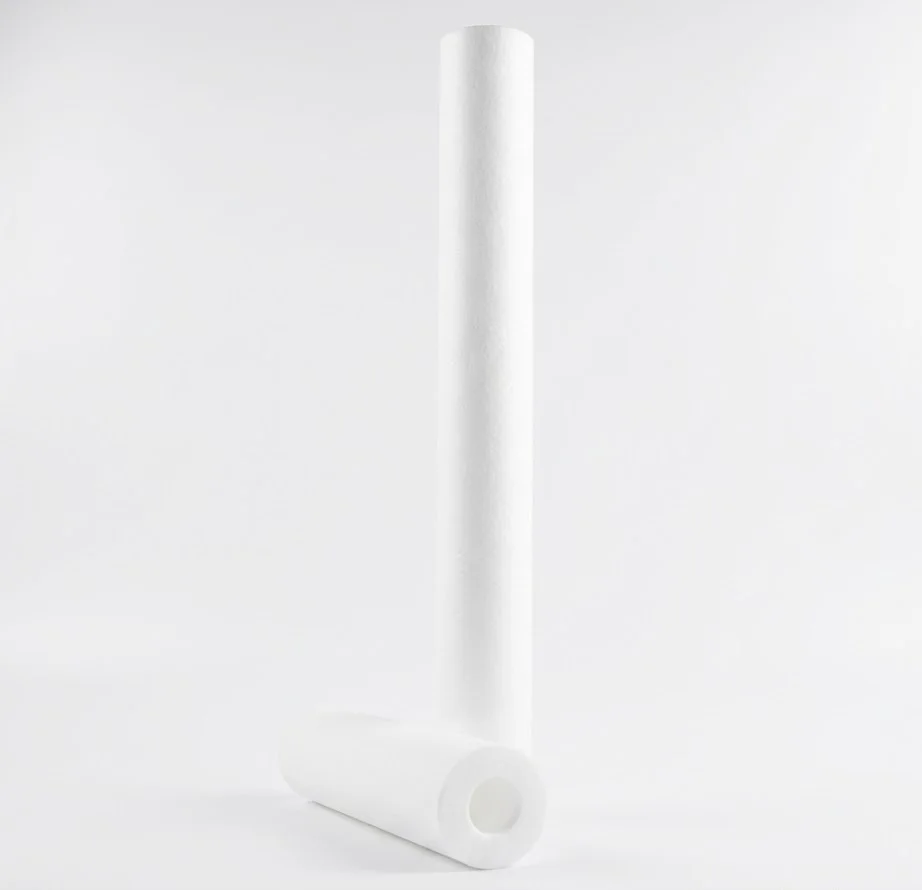
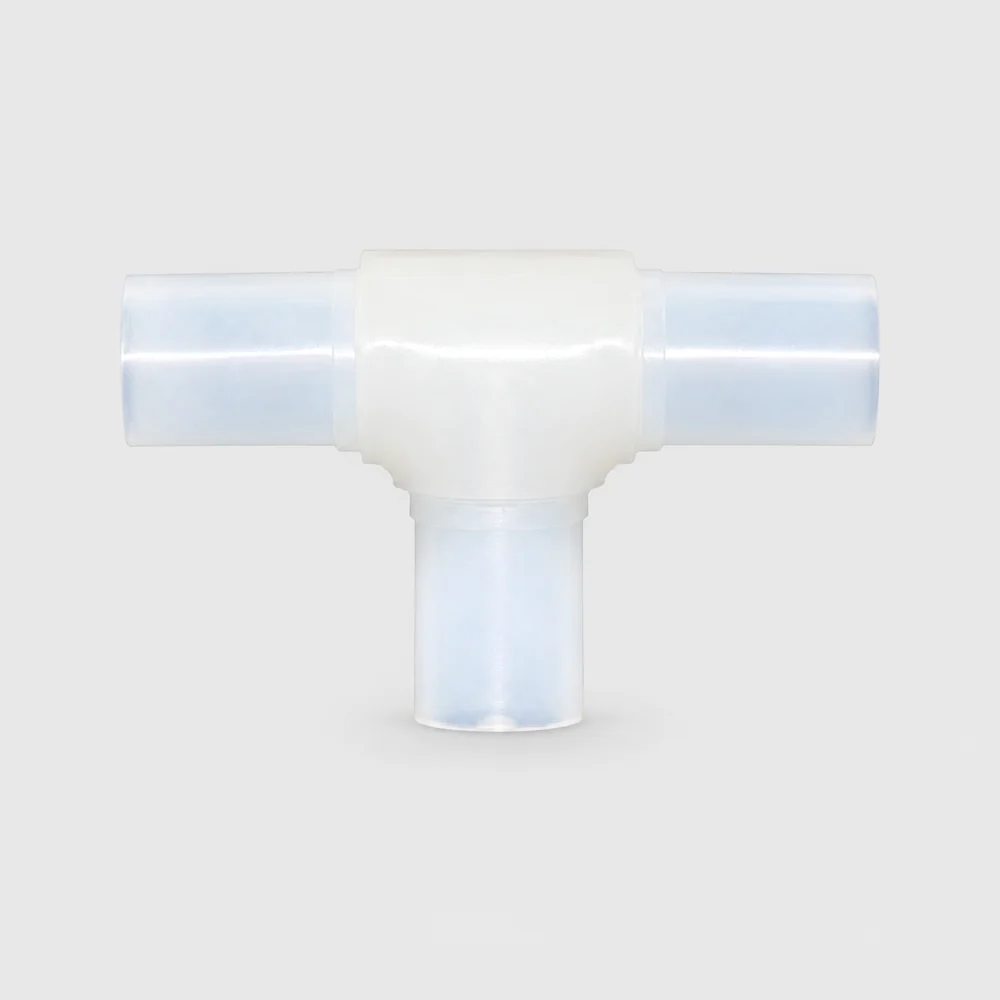
This hydrophobic PTFE capsule belongs on the gas side: fermenter inlet and exhaust air, sterile packaging gas, tank vents — and it also goes on lines carrying low-surface-tension solvents and corrosive reagents. Because the capsule welds element and shell into one device, a small fermenter, a mobile skid or a temporary sampling line does not need a separate housing and clamp set just to carry one filter.
Key characteristics
The membrane will not wet with water on its own, which is exactly what gas service needs: condensate in the line cannot block the pores, so flow holds up in humid duty. The same medium is also offered down into the nanometre range, so beyond gas sterilisation it covers particle control in process and specialty gases.
A hydrophobic membrane holds no liquid, so hold-up comes only from the shell flow path. On gas duty that volume drives purge time at start-up rather than product loss — a completely different trade-off from a hydrophilic capsule.
Choosing between options
Three hydrophobic PTFE products sit on this site; shell material and service are what separate them:
| Product | Shell and wetted build | Rating range | Choose it when |
|---|---|---|---|
| Hydrophobic PTFE capsule (this) | One-piece polypropylene shell with PTFE membrane | 0.001 – 1.0 µm | Gas sterilisation and venting, solvents and corrosives, with no separate housing |
| Semiconductor all-PTFE disposable capsule | PFA shell, support layers and end caps throughout | 10 nm – 1 µm | Semiconductor wet chemistry, service to 180 °C, metal cleanliness limits |
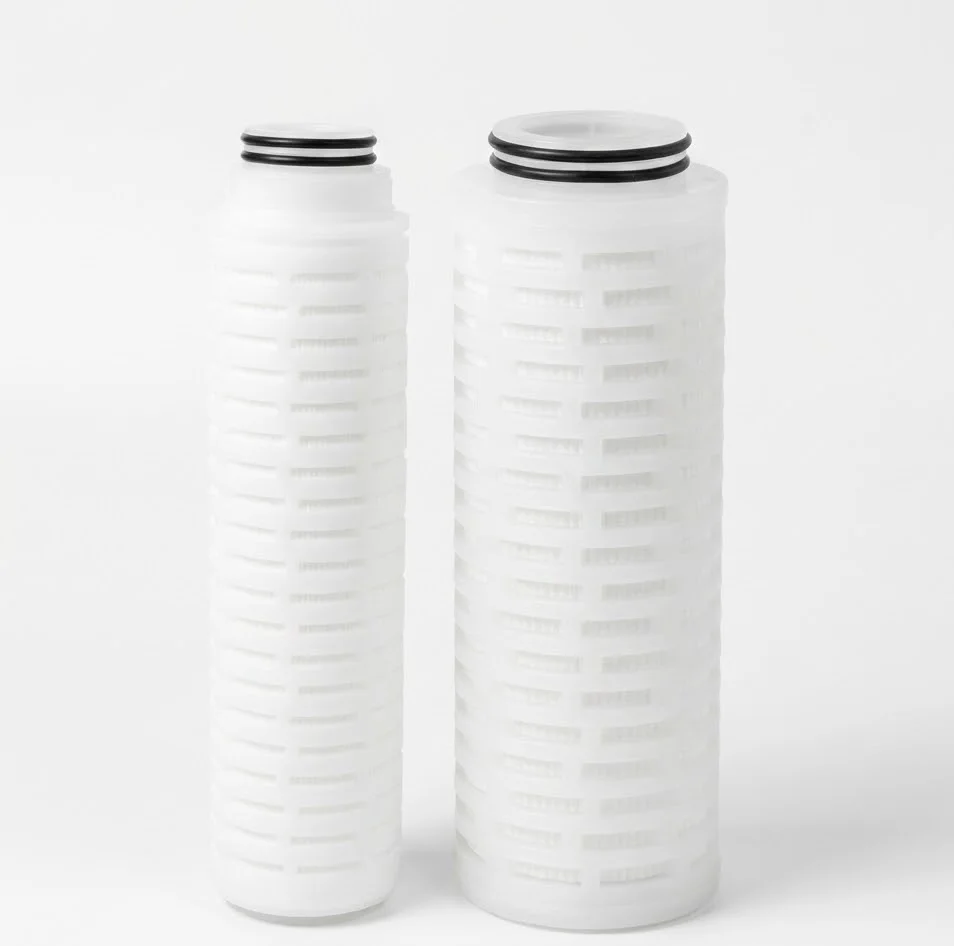
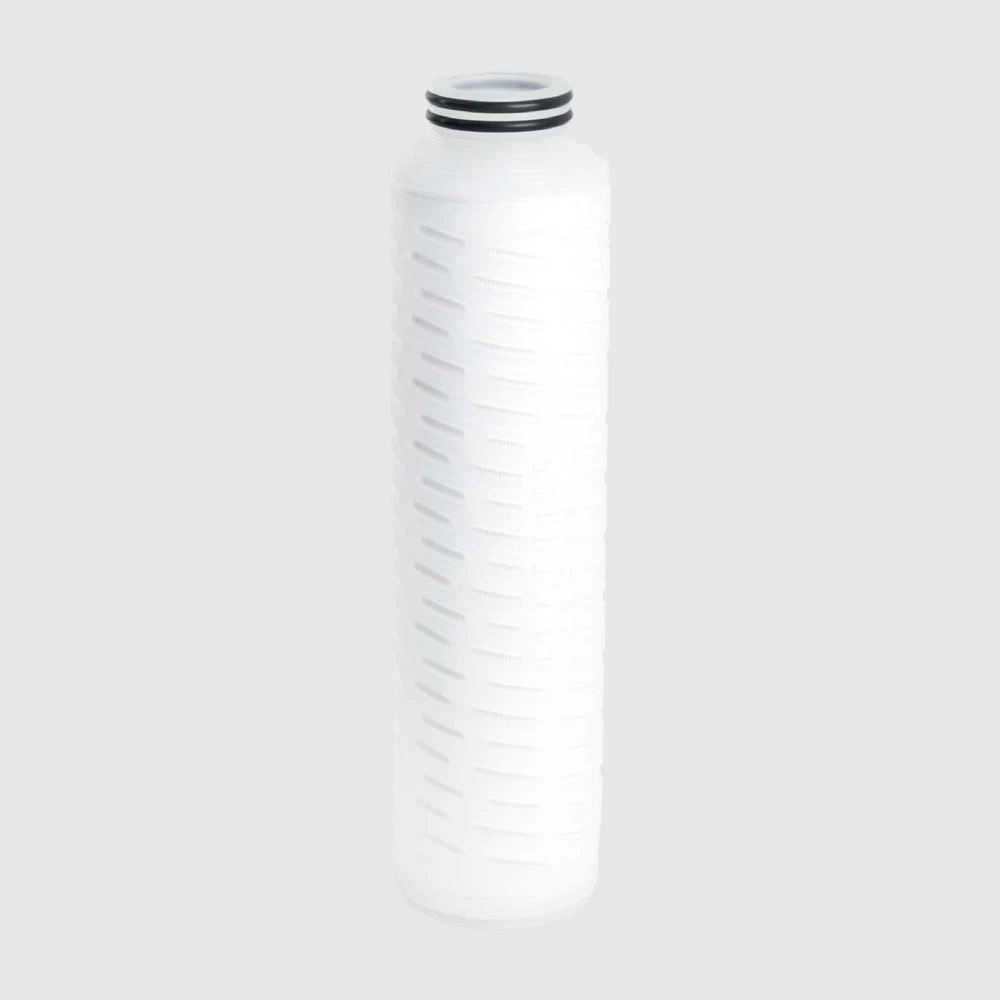
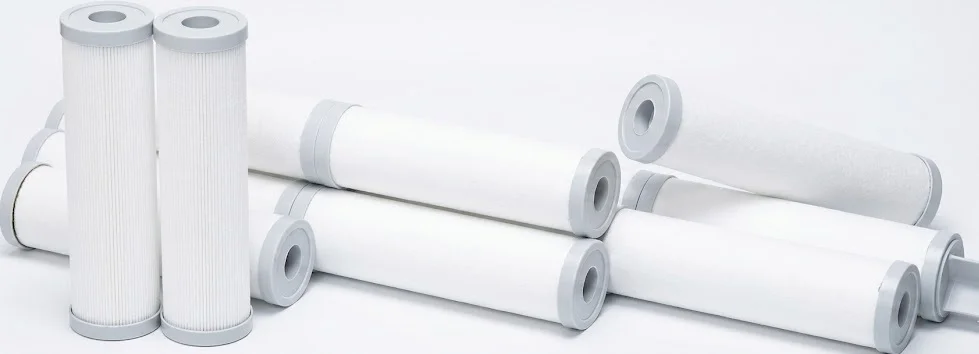
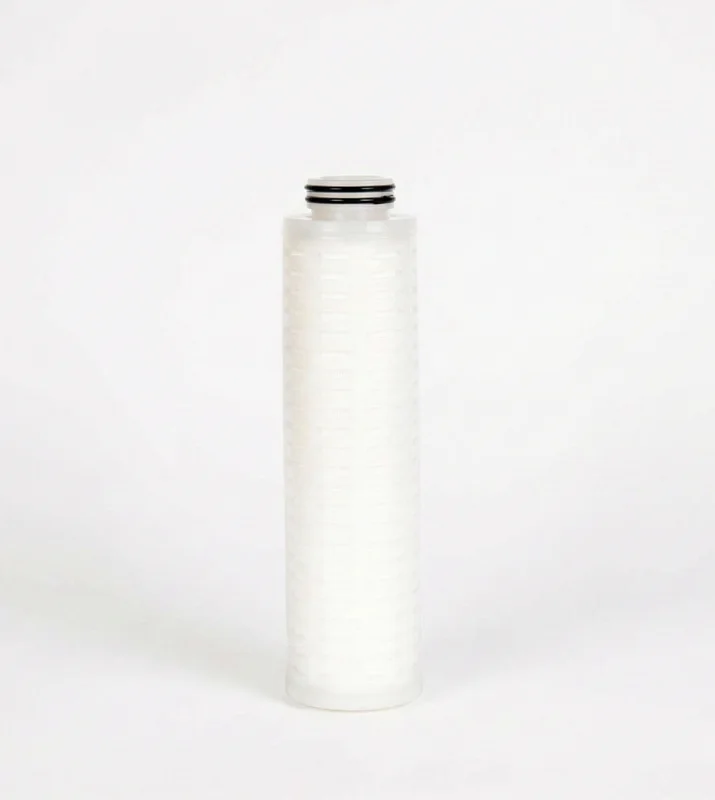
| Sterilising-grade PTFE pleated gas cartridge | Cartridge format, needs a housing | 0.001 – 1 µm | A fixed line that steam-sterilises repeatedly and reuses one housing |
Operation & change-out
Install dry for gas duty. The limit on autoclave cycles comes from the polypropylene shell rather than the membrane, so keep the cumulative count within the datasheet figure; where a fixed line needs many more cycles, a pleated cartridge is the cheaper answer. For liquid service, wet out with an alcohol first, then displace stepwise with the process fluid.