
Home/Products/Disposable & Capsule Filters/Sterile Positive Charge Nylon66 Capsule Filter
Sterile Positive Charge Nylon66 Capsule Filter

Sterile Positive Charge Nylon66 Capsule Filter

Product ID: sterile-positive-charge-nylon66-capsule-filter|Positively Charged Nylon66

Special modified filter designed to remove endotoxins and ultrafine particles. The MZ series uses positively charged Nylon 66 filter membrane, which uses the principle of electrostatic adsorption to effectively intercept negatively charged impurities (such as endotoxins) that are smaller than the membrane pore size. With high hydrophilicity and low precipitates, it is an economical solution for depyrogenation of pharmaceutical water, antibiotics and sterile preparations.

  • Positive-charge Nylon 66 membrane
  • Electrostatic adsorption of endotoxins
  • Captures contaminants smaller than pore size
  • High hydrophilicity
  • Low extractables
Micron rating
0.2, 0.45, 0.65, 1.2 µm
Max operating temperature
Continuous service to 60 °C
Effective filtration area
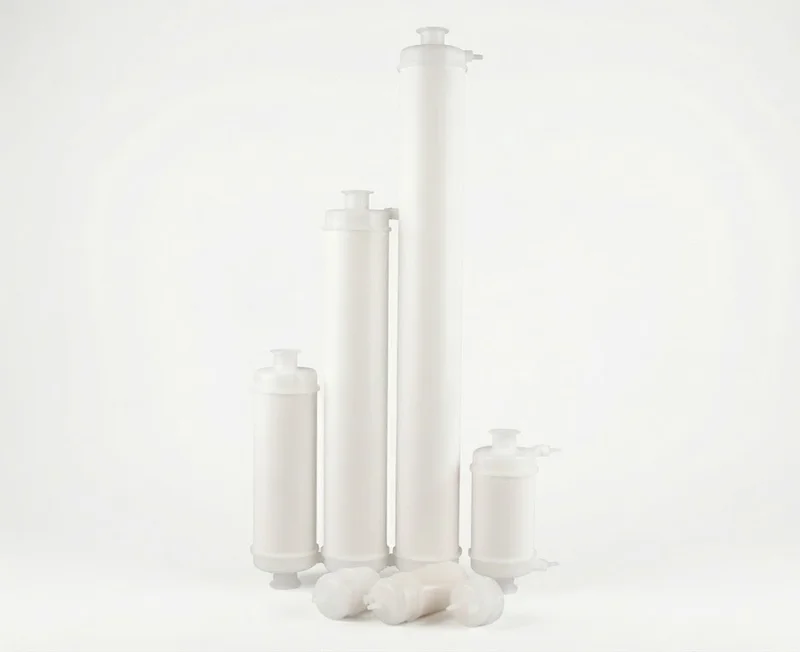
About 0.7 m² per 10" media section
Max forward differential pressure
Forward 4.0 bar (58 psi) @ 25 °C
Pharmaceutical water endotoxin removal
Antibiotic filtration
Sterile formulation depyrogenation
Ultra-fine particle removal
Electrostatic capture of charged contaminants
Filter media / membrane
Positively charged modified Nylon 66 membrane. On top of sieving by pore size, the charged surface electrostatically adsorbs negatively charged contaminants — endotoxin, colloids and ultrafine particles smaller than the pores are retained too, which a neutral membrane of the same rating cannot do
Support & drainage layers
Polypropylene support and drainage layers
Body material
One-piece polypropylene shell and end caps, thermally welded throughout with no adhesives; no metal parts in the wetted path
Seals / O-rings
The body is thermally welded and has no main O-ring; port gaskets in silicone or EPDM, with FKM available for aggressive fluids
Micron rating
0.2, 0.45, 0.65, 1.2 µm; 0.2 µm is the sterilising grade. The electrostatic contribution is not counted in the stated rating, which remains a sieving rating
Effective filtration area
About 0.7 m² per 10" media section; small capsules run about 0.02–0.2 m². Adsorptive capacity scales with area, so size with margin when the duty is depyrogenation
Inlet / outlet connections
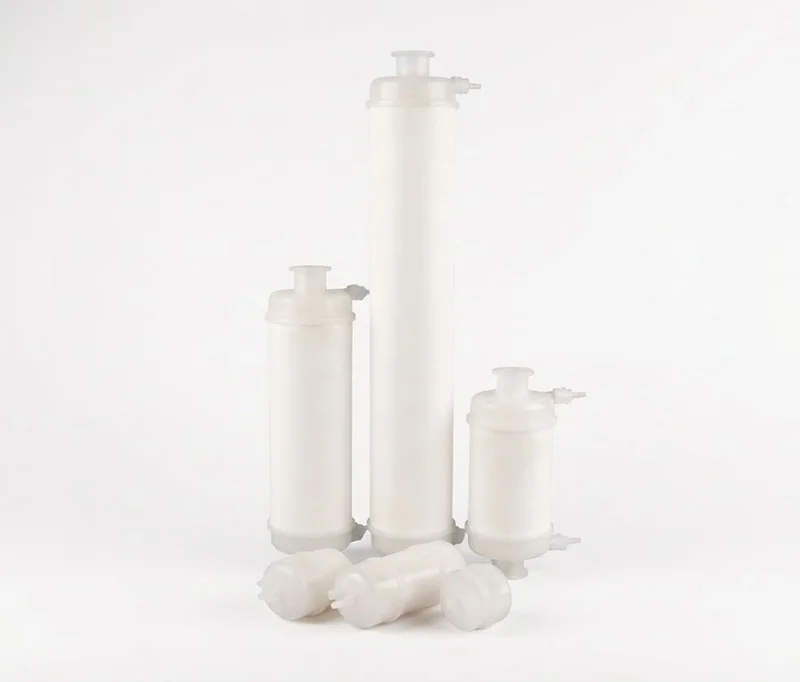
Inlet/outlet 1/4"–1-1/2" with hose barb, sanitary tri-clamp, threaded and quick-connect options; the connections are moulded into the same polypropylene body
Hold-up volume
Small (≈0.02 m²) ≈30 mL; mid (≈0.1 m²) ≈90 mL; 10" class (≈0.7 m²) ≈250 mL. Most of the hold-up is recoverable by blowing down through the open drain
Vent & drain
One polypropylene vent valve on top and one drain valve underneath, both hand-operated; the vent can take a hydrophobic membrane cap to keep the sterile boundary intact
Max operating temperature
Continuous service to 60 °C; withstands 121 °C saturated steam for sterilisation cycles
Max forward differential pressure
Forward 4.0 bar (58 psi) @ 25 °C; 1.0 bar (15 psi) @ 60 °C; reverse 2.0 bar (29 psi) @ 25 °C
Recommended change-out ΔP
A single-use capsule cannot be backwashed or regenerated. Adsorptive capacity is exhausted before ΔP rises noticeably, so on depyrogenation duty set the change-out on cumulative throughput rather than on ΔP
Sterilisation
Autoclave at 121 °C for 30 min, up to 3 cumulative cycles recommended; steam-in-place, EtO and gamma sterilisation are also available
Wetting & flushing
Strongly hydrophilic and wets out with aqueous feeds directly, no alcohol pre-wet. Adsorption depends on the feed ionic strength and pH — a high-salt feed screens the charge and weakens capture, so confirm with the real feed before adoption
Extractables & cleanliness
Flushed with purified water to conductivity and TOC limits before shipment; extractables, endotoxin (< 0.25 EU/mL) and TOC batch data available on request
Integrity test
100% integrity tested before shipment; a water-wet 0.2 µm membrane typically bubbles at ≥ 3.4 bar (50 psi). Validate depyrogenation separately with an endotoxin challenge — a bubble point says nothing about adsorptive capacity
Packaging
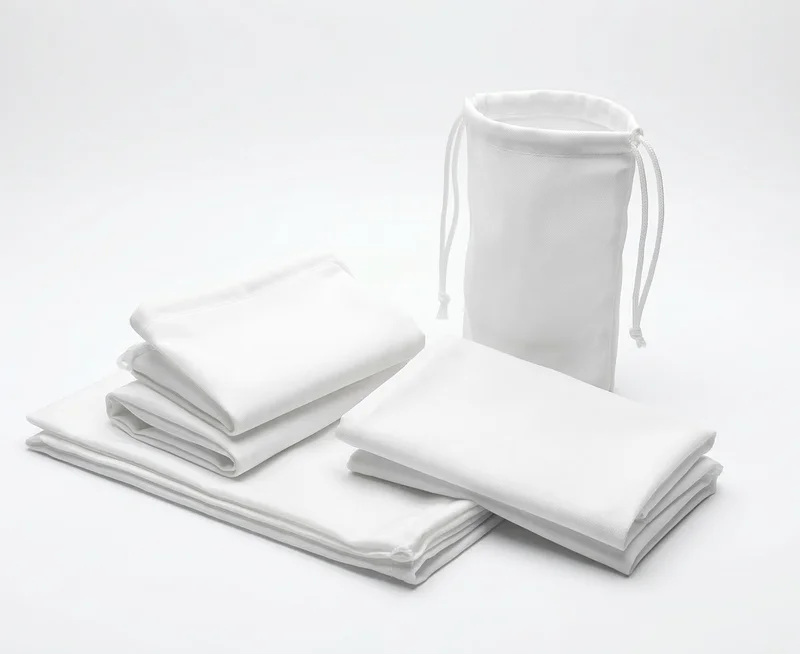
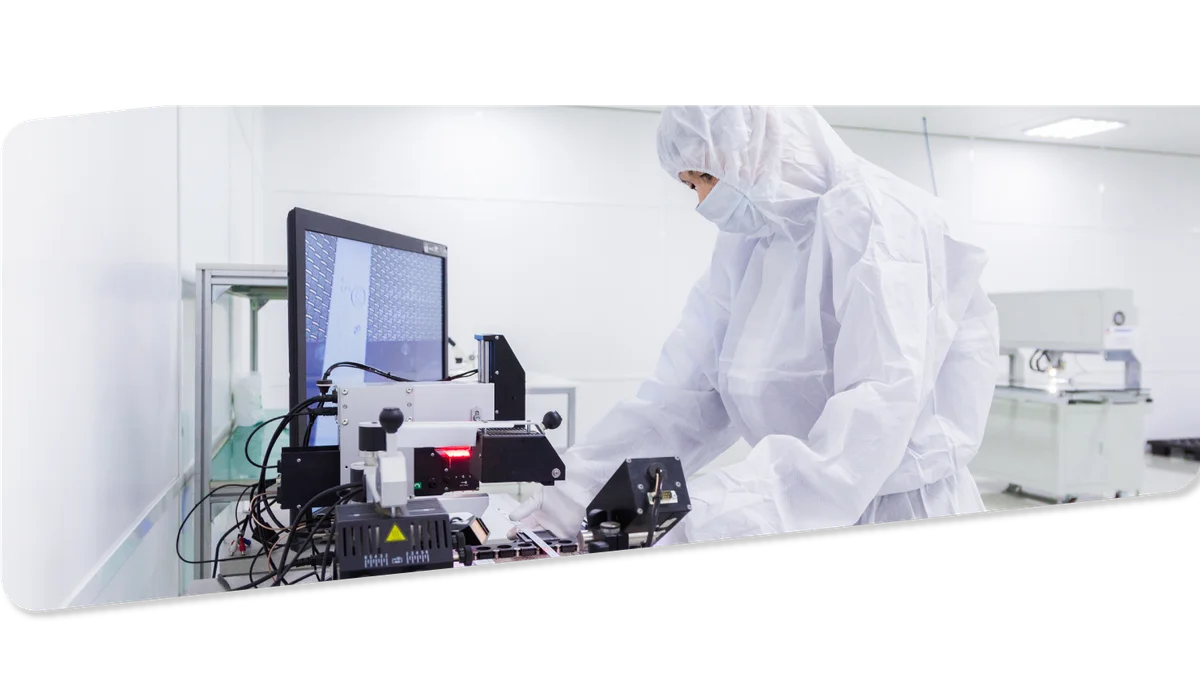
Individually double-bagged, assembled and sealed in a cleanroom; gamma pre-sterilised units available
Regulatory & validation
Wetted materials meet USP Class VI biological reactivity and 21 CFR 177 food-contact requirements; material certificates and batch test reports can be supplied with the shipment

Note: actual compatibility and service life depend on chemical concentration, temperature, flow, differential pressure, upstream contamination load and housing design. Validate under your real process conditions.

Values shown are typical for this product class; actual supply specification follows the quotation and sample datasheet.

Example part number
JY
-BP46K
-L
-P20
-TCSG
JY
JIUNYUAN Technology
BP46K
Positively charged Nylon 66 membrane: on top of sieving it electrostatically adsorbs negatively charged endotoxin and colloids; suffix K = kapsule
L
10" 濾材段(約 0.7 m²)
P20
0.2 µm
TCSG
Tri-clamp | silicone gasket | gamma pre-sterilised
Selectable options by segment
01

Capsule size (effective area)

CodeSpecification
SSmall (≈0.02 m² area, ≈30 mL hold-up)
MMid (≈0.1 m² area, ≈90 mL hold-up)
L10" media section (≈ 0.7 m² area, ≈250 mL hold-up)

Adsorptive capacity scales with area, so size with margin when the duty is depyrogenation.

02

Retention rating

CodeSpecification
P200.2 µm
P450.45 µm
P650.65 µm
P1201.2 µm

The 0.2 µm grade is the sterilising one. The stated rating counts sieving only; the electrostatic contribution is not included — validate depyrogenation with an endotoxin challenge, since a bubble point says nothing about adsorptive capacity. High-salt feeds screen the surface charge and weaken capture.

03

Inlet / outlet style

CodeSpecification
HBHose barb
TCSanitary tri-clamp
THThreaded
QCQuick connect

Ports run 1/4"–1-1/2"; specify the bore at order (the available range depends on the capsule size). Connections are moulded into the polypropylene body, so the wetted path carries no metal parts.

04

Port gasket material

CodeSpecification
SSilicone
EEPDM
FFKM / Viton

The body is thermally welded and has no main O-ring — this segment is the port gasket. FKM is only needed for aggressive fluids.

05

Supply condition

CodeSpecification
NStandard double cleanroom bag, non-sterile
GGamma pre-sterilised

Not every combination is a stock item; uncommon combinations are made to order. Confirm with JIUNYUAN sales before ordering.

ChemicalNylon 66PP矽膠 Silicone
— 酸 —
Glacial acetic acidNRRLR
Hydrochloric acid, conc.NRRNR
Hydrochloric acid, 6NNRRNR
Nitric acid, conc.NRRNR
Nitric acid, 6NNRRLR
Phosphoric acid, conc.NRRNR
Sulfuric acid, conc.NRRNR
Hydrofluoric acid, 6NNRNRNR
— 鹼 —
Ammonium hydroxide, 1NRRR
Ammonium hydroxide, 3NRRR
Potassium hydroxide, 3NRRLR
Sodium hydroxide, 3NRRR
Sodium hydroxide, 6NRRR
— 醇類 —
Amyl alcoholRRNR
Benzyl alcoholRRLR
ButanolRRR
Isopropyl alcohol (IPA)RRR
MethanolLRRR
— 酮類 —
AcetoneRRNR
CyclohexanoneRNR
Methyl ethyl ketone (MEK)LRRNR
Methyl isobutyl ketone (MIBK)LRRNR
— 油類 —
Cottonseed oilRRR
Lubricating oilRRR
Peanut oilRRR
Sesame oilRRR
— 芳香烴 —
BenzeneLRNRNR
TolueneNRNRNR
XyleneLRNRNR
— 鹵代烴 —
Carbon tetrachlorideLRLRNR
ChloroformLRLRNR
Ethylene dichlorideLRLRNR
Freon TFRLRNR
Freon TMCLRLRNR
DichloromethaneNRLRNR
PerchloroethyleneLRNR
TrichloroethyleneLRLRNR
— 二醇類 —
Ethylene glycolRRR
GlycerolRRR
Propylene glycolRRR
— 醚類 —
Diethyl etherNRLRLR
Isopropyl etherRNR
DioxaneRRNR
Tetrahydrofuran (THF)NRLRNR
— 酯類 —
Amyl acetateLRRNR
Butyl acetateLRLRNR
Cellosolve acetateRNR
Ethyl acetateLRLRR
Methyl acetateLRR
Isopropyl acetateRLR
— 其他 —
AnilineLRLRNR
Dimethylformamide (DMF)RRR
Formaldehyde, 37%RRR
GasolineLRLRNR
Hexane (anhydrous)LRNR
KeroseneRNR
PhenolRRNR
PyridineLRLRNR
WaterRRLR
AcetonitrileLRLR
  • R = resistant
  • LR = limited resistance, validate on site
  • NR = not resistant
  • — = no data

Ratings are general material-level guidance, not guarantees. Actual concentration, temperature, exposure time and mechanical stress all affect the outcome — validate with samples under your real process conditions before adoption.

Where it fits

The positively charged Nylon 66 capsule targets contamination smaller than the pores: endotoxin in pharmaceutical water, pyrogens in sterile formulations, and the colloids and ultrafine particles an ordinary membrane cannot hold. When final filtration is already at the sterilising grade and endotoxin still runs over limit, this is the stage that is missing.

Key characteristics

Two mechanisms work at once: sieving by pore size, plus electrostatic adsorption of negatively charged contaminants onto the charged surface. Endotoxin, colloids and ultrafine particles smaller than the pores are retained too — which a neutral membrane of the same rating cannot do.

The stated rating counts sieving only; the electrostatic contribution is not included. That is the easiest thing to get wrong at selection: the extra mechanism is not a licence to open up the pore size. Rate the pores as you otherwise would and treat the charge as a layer on top.

Choosing between options

The contrast with the neutral Nylon 66 capsule in the same family says it best:

ItemPositively charged Nylon 66 (this)Hydrophilic Nylon 66
Capture mechanismSieving plus electrostatic adsorptionSieving
Rating range0.2 – 1.2 µm0.1 – 1.2 µm
Change-out basisCumulative throughputDifferential pressure
ValidationBubble point plus endotoxin challengeBubble point plus bacterial retention
Choose it whenDepyrogenation, endotoxin and colloid removalGeneral sterile filtration and solvent feeds

Operation & change-out

Strongly hydrophilic and wets out with aqueous feeds directly, no alcohol pre-wet. Adsorption depends on the feed ionic strength and pH: a high-salt feed screens the surface charge and weakens capture, so confirm with the real feed rather than with pure water before adoption. Adsorptive capacity scales with area, so size with margin on depyrogenation duty.

!
Adsorptive capacity is exhausted before differential pressure rises noticeably. On depyrogenation duty, set change-out on cumulative throughput rather than on ΔP; a bubble point confirms the pores are intact but says nothing about how much capacity is left.
Why does it trap endotoxins?
Endotoxins are negatively charged. The positive-charge Nylon 66 membrane uses electrostatic adsorption to capture charged contaminants smaller than the pore size.
Which uses suit this filter?
It suits depyrogenation of pharmaceutical water, antibiotics and sterile formulations, offering electrostatic adsorption as an economical contamination-reduction route.
Does charging add extractables?
No. The filter is designed for low extractables and high hydrophilicity; the positive-charge modification adds adsorption while keeping a low extractables background.